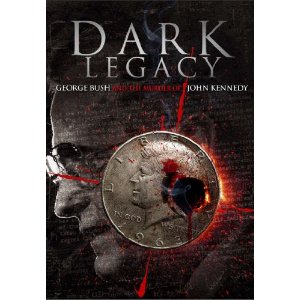
Review (DVD): Dark Legacy — Compelling Public Indictment of George Bush Senior as CIA Lead for Assassination of John F. Kennedy

6 Star Top 10%, Atrocities & Genocide, Crime (Government), Executive (Partisan Failure, Reform), Impeachment & Treason, Intelligence (Government/Secret), Justice (Failure, Reform), Politics, Power (Pathologies & Utilization), Reviews (DVD Only)
131Shares
Amazon Page
Amazon Page

John Hankey

5.0 out of 5 stars Six Star Special — Poetic, Compelling — Sufficient to Indict George Bush Sr., January 18, 2013

I have reviewed a number of the non-fiction books about the assassination of John F. Kennedy, and received this film as a gift from an Amazon reader who appreciated my book reviews.

First off, the film is superbly professional and poetic in its opening, a panoramic survey of John F. Kennedy and why he mattered, as a President representing the 99%, as a President striving for peace and against the US military industrial complex (books show that Khruschev had the same problem with his own military complex).

Crucifies ABC's Peter Jennings for being part of a cover-up and nationally-televised propaganda film lying to the public. As an intelligence professional who has written extensively about information pathologies, I hold the captured corporate media in great disdain, and consider all of them to be craven to the nth degree.

I have to say that as good as the movie is, it absolutely had to be valued in the context of the books that provide vastly more detail. This movie is a summary — a very compelling and gifted presentation of the totality of the assassination including details and excellent photographic and video reviews, but the movie is only good enough to INDICT George Bush Senior, not enough to convict.

Continue reading “Review (DVD): Dark Legacy — Compelling Public Indictment of George Bush Senior as CIA Lead for Assassination of John F. Kennedy”

Yoda: China — A Focal Point

02 China, 03 Economy, 03 Environmental Degradation, 07 Health, 11 Society, Earth Intelligence
0Shares
Got Crowd? BE the Force!

To be Jedi is to face the truth, and choose. Give off light, or darkness, Padawan. Be a candle, or the night.

–YODA, Dark Rendezvous

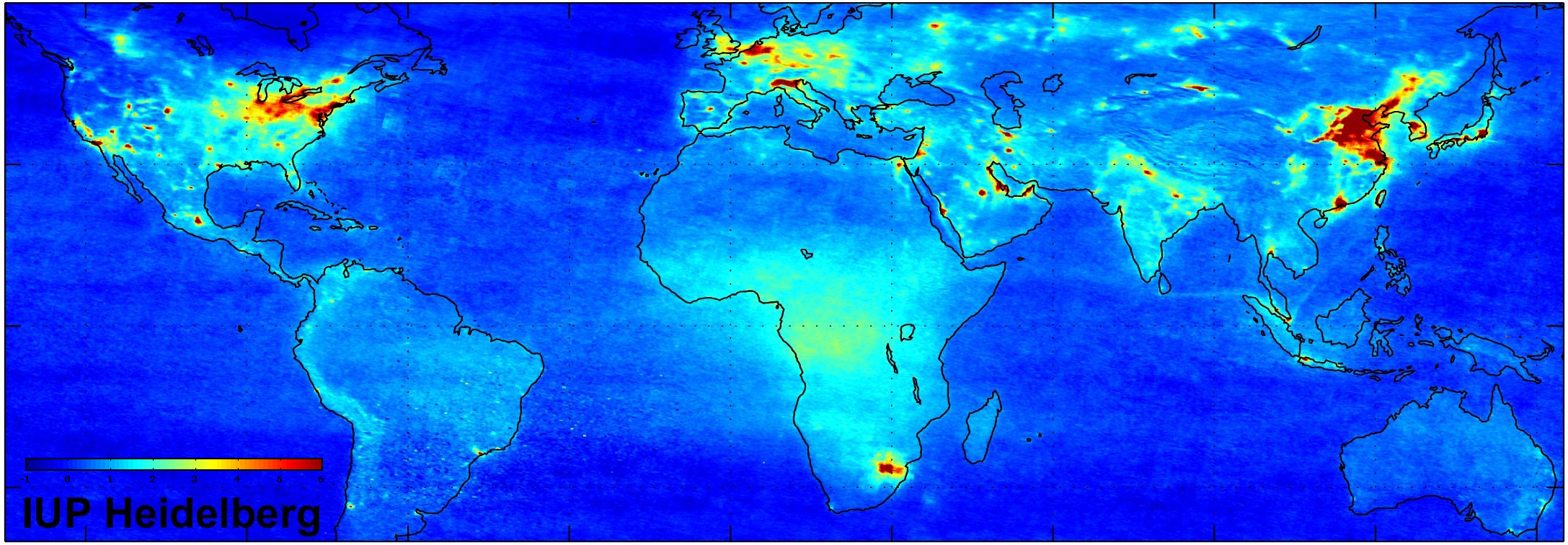
China's Urban Air Kills Rural Plants

As people in Beijing and northern China struggle with severe air pollution this winter, the toxic air is also making life hard for plants and even food crops of China, say researchers who have been looking at how China's plants are affected by air pollution.

china pollutionBeijing's extreme smog event this week has made headlines, with the American Embassy calling the pollution levels “hazardous” and Beijing writer Zheng Yuanjie blogging that “the air smells like sulfur perfume, as the capital city currently looks like a poisonous huge gas can,” according to a report on Al Jazeera.
BLOG: 7 of 10 Most Air-Polluted Cities Are in China

“In the last 50 years there has been a 16-fold increase in ozone pollution” in the Beijing area, said Hanqin Tian of Auburn University in Alabama, who studies the effects of China's pollution and climate change on plants. He said the soup of pollutants, including harmful sulfur and nitrogen compounds “is definitely expanding into new areas; into the countryside.”

Read full article.

Click on Image to Enlarge

Continue reading “Yoda: China — A Focal Point”

INTELLIGENCE with INTEGRITY: Enabling Hybrid Public Governance with Open-Source Decision-Support [Table of Contents]

Books w/Steele
14Shares
Click on Image to Enlarge

Table of Contents  (& Free Online DRAFT Chapters)

WARNING NOTICE:  The book will be UGLY and incomplete until each chapter reaches reaches 11 out of 15.

Crowd-sourcing of content is INVITED.

Send email with suggestions to robert.david.steele.vivas [at] gmail [dot] com.

.

.

.

.

.

.

Appreciation

i

Table of Contents

iii

Table of Figures

iii

Preface

vii

Technical Preface: Thinking & The Truth with Michael Kearns

ix

Part I:  Ethical Evidence-Based Decision-Support

1

Chapter 1:  Public Governance & Public Intelligence

3

Chapter 2:  The InfoSphere & Its Enemies

21

Chapter 3:  The Human Factor – Theory & Practice

23

Chapter 4:  Four Domains for Applied Intelligence

33

Chapter 5:  System Thinking & True Cost Economics

67

Part II:  Reality—What Do We Need to Know?

53

Chapter 6:  Seven Sins of Institutional Leaders

55

Chapter 7:  Legitimate Grievances

65

Chapter 8:  Ten High-Level Threats

75

Chapter 9:  Twelve Core Policies

85

Chapter 10:  Eight Tribes, Eight Demographics

95

Part III:  The Practice of Intelligence as Decision-Support

105

Chapter 11:  Intelligence as Process, Product, & Service

107

Chapter 12:  Open & Human Sources

117

Chapter 13:  Signals & Imagery Sources

127

Chapter 14:  The Functions of Intelligence

237

Chapter 15:  New Rules for the New Craft of Intelligence

247

Part IV:  Intangible Values, Practical Networks

257

Chapter 16:  Accountability, Ethics, Legitimacy, & Trust

259

Chapter 17:  Open Source Agency (OSA)

269

Chapter 18:  National Planning & Monitoring Center (NPMC)

279

Chapter 19:  Multinational Decision-Support Centre (MDSC)

289

Chapter 20:  United Nations Open-Source Decision-Support Information Network (UNODIN)

299

Epilogue:  Creating a Smart Nation: the Integration of Education, Intelligence, & Research

309

Terms of Reference

319

Glossary

325

Bibliography

327

Index

341


Stuart Umpleby: Limitations of Hand-Held Dashboards + Cyber-Brain RECAP

IO Impotency
0Shares
Stuart Umpleby
Stuart Umpleby

Before Fruit Ninja, Cybernetics

By WILL WILES

New York Times, November 29, 2012

EXTRACT (Conclusion)

The No. 10 Dashboard taps into the same desire to master available information — a desire that has only grown as the amount of information in circulation has increased. Where Cybersyn needed dedicated national infrastructure and rooms full of equipment, the app runs on a hand-held device. And yet, the dashboard is actually less sophisticated.

It is not truly cybernetic because it lacks a mechanism to translate all that data into action. It can display information; it cannot consult and control. Less a driver’s dashboard, it is more a window out of which a passenger can observe the national scenery speeding past. Government might be given the illusion of hand-held, one-stop manageability, but no actual managing is going on.

The app could thus be an apt metaphor for politicians reduced to spectators by the surges and shocks of the globalized world. Mr. Cameron should remember that there’s at least one other instance of government-by-app: the team that worked on restructuring Greece’s debt used iPads too, equipped with an app purpose-built for the job.

However that turns out, we can at least say this: in terms of distractions, these apps are marginally more useful than Fruit Ninja.

Read full article.

Continue reading “Stuart Umpleby: Limitations of Hand-Held Dashboards + Cyber-Brain RECAP”

Steve Wheeler: Learning with e’s Series

04 Education, Advanced Cyber/IO, Knowledge, Science
0Shares
Steve WheelerClick for BIo Page
Steve Wheeler
Click for BIo Page


At the end of each year many of us tend to focus on the future, wondering what it will bring. We wish each other a happy New Year, and hope that life will treat us kindly. We try to shape our own futures by making New Year resolutions, many of which fall by the wayside after a week or two. Much of our future is not ours to shape. But still we persist in trying to predict the future.  Many of our predictions about the future are based on speculation or wishful thinking.


When discussing the future, especially the future of technology, there are some writers who almost always seem to be quoted. Near the top of the list is the futurologist Ray Kurzweil, who has much to say about our technological future, and also about the growth in human intelligence. His views are quite optimistic, especially around computers and the nature of knowledge.


In my previous blog post I examined the debate about whether we are becoming more intelligent or less intelligent as a result of our prolonged and habituated uses of technology.


What will be the future of school classrooms? It is unlikely that we will see the demise of the classroom in the next decade. Those who study the future of education often suggest that the demise of traditional classrooms is not only inevitable, but imminent.

Parts 04-09 Below the Line.

Continue reading “Steve Wheeler: Learning with e's Series”

David Isenberg: How Responsible is the Chain of Command? IS THERE a “Chain of Command?” Does Yamashita Standard Apply to Commander in Chief?

07 Other Atrocities, 09 Justice, 11 Society, Ethics, Government, Military
0Shares
David Isenberg
David Isenberg

Military Justice

Lawbreakers at War: How Responsible Are They?

By David Isenberg   Jan. 18, 2013

Anybody around here remember Tomoyuki Yamashita?

He was an Imperial Japanese Army general during World War II. In terms of battles he was most famous for conquering the British colonies of Malaya and Singapore.

But his historical legacy comes from being tried in late 1945 by an American military tribunal in Manila for war crimes relating to the massacre of civilians in Manila, and atrocities in Singapore against civilians and prisoners of war, such as the Sook Ching massacre.

Even though the massacre in the Philippines was carried out by a subordinate commander, Imperial Japanese Navy Rear Admiral Sanji Iwabuchi, against Yamashita’s specific order – and without his knowledge or approval – a U.S. military tribunal held Yamashita responsible for the conduct of his troops. He was executed on February 23, 1946.

Nowadays most legal scholars acknowledge that Yamashita’s execution was a case of victor’s, not legal, justice. Nevertheless his case become a precedent regarding the command responsibility for war crimes and is known as the Yamashita Standard.

An interesting tidbit of history, you’re thinking, but what’s its relevance to today’s U.S. military?

Read full article.

Phi Beta Iota: Morality is even more important in war than in peace. Extreme violations will have a lasting negative effect.  The USS Liberty, 34 KIA, 171 WIA, is a classic modern example.  No one is Israel has been held accountable for this atrocity, and for over 30 years no one in Washington has been held accountable for covering it up and abusing the surviving crew and families.  We continue to recommend Truth & Reconciliation — educating the public on what has actually happened, why, and its consequences — rather than individual punitive measures that do nothing for the greater good of society.

SchwartzReport: Is PTSD Contagious? What Cost War to Society Over Generations?

Corruption, Government, IO Deeds of War, Military
0Shares

schwartz reportIs PTSD Contagious?

It's rampant among returning vets—and now their spouses and kids are starting to show the same symptoms.

—By

Mother Jones | January/February 2013 Issue

EXTRACTS:

Brannan Vines has never been to war, but her husband, Caleb, was sent to Iraq twice, where he served in the infantry as a designated marksman. He's one of 103,200, or 228,875, or 336,000 Americans who served in Iraq or Afghanistan and came back with PTSD, depending on whom you ask, and one of 115,000 to 456,000 with traumatic brain injury. It's hard to say, with the lack of definitive tests for the former, undertesting for the latter, underreporting, under or over-misdiagnosing of both. And as slippery as all that is, even less understood is the collateral damage, to families, to schools, to society—emotional and fiscal costs borne long after the war is over.

. . . . . . . . .

Whatever is happening to Caleb, it's as old as war itself. The ancient historian Herodotus told of Greeks being honorably dismissed for being “out of heart” and “unwilling to encounter danger.” Civil War doctors, who couldn't think of any other thing that might be unpleasant about fighting the Civil War but homesickness, diagnosed thousands with “nostalgia.” Later, it was deemed “irritable heart.” In World War I it was called “shell shock.” In World War II, “battle fatigue.” It wasn't an official diagnosis until 1980, when Post Traumatic Stress Disorder made its debut in psychiatry's Diagnostic and Statistical Manual of Mental Disorders, uniting a flood of Vietnam vets suffering persistent psych issues with traumatized civilians—previously assigned labels like “accident neurosis” and “post-rape syndrome”—onto the same page of the DSM-III.

Read full article.

Phi Beta Iota: This may be the single most important article we have pointed to since we started. Please consider reading it in full.  This is the home cost.  Those we attack suffer, apart from the same casualties we do but on an order of magnitude scale, and also the effects of depleted uranium, now known as the “Fullujah mutant babies” effect.  This is not something to be proud of, nor is it something that can be justified as being in the public interest once total true costs are understood.  Having a dumbed down population is one thing — driving the population insane, at the same time that the elites are is such isolation as to be criminally insane, is another matter entirely.