George Martinez for New York's 7th Congressional District
About
The Bum Rush premise is simple: Controlling politics without money is power, people power.
Our goal is to create an open-source, crowd-sourced DIY campaign. All of the resources we need to accomplish this goal are available to us due to the fantastic technology that we now have access to. We started this campaign with no money, and are using our resources in a very efficient and frugal manner.
Our resources come directly from our people. We look toward whomever is involved. We are not seeking to hire anyone. We are seeking those who like us want to see a game change in politics.
OpenBTS is t he open-source software/hardware combination that replicates cellular phone services using open spectrum, enabling free and very low-cost communications. Combined with mesh networks and other means of disconnecting from the government/telecommunications monopoly of the grid, OpenBTS is the foundation “liberation technology” and is central to the release of humanity from corrupt hierarchies and their “rule by secrecy.”
When the five billion poor receive OpenBTS and have access to the Internet, everything will change.
. . . . . . . . .
It is my personal and professional belief–as someone deeply concerned about both security and intelligence–that security can only be achieved through pure transparency not secrecy. Intelligence can only be maximally effective if it is open and collective. At present, the contract between the secret intelligence community and the alternative open-source intelligence community could not be starker. This illustrates the failure of banks, corporations, governments, and non-governmental organizations (such as global charities, with the Red Cross coming to mind) to act purely in the public interest. There are two reasons for this: one, because they can hide behind secrecy and not be accountable for some or all of their acts; and two, because in the absence of public intelligence, the public is impotent.
My colleague Jeannine Lemaire from the Core Team of the Standby Volunteer Task Force (SBTF) recently pointed me to Geofeedia, which may very well be the next generation in crisis mapping technology. So I spent over an hour talking with GeoFeedia's CEO, Phil Harris, to learn more about the platform and discuss potential applications for humanitarian response. The short version: I'm impressed; not just with the technology itself and potential, but also by Phil's deep intuition and genuine interest in building a platform that enables others to scale positive social impact.
Situational awareness is absolutely key to emergency response, hence the rise of crisis mapping. The challenge? Processing and geo-referencing Big Data from social media sources to produce live maps has largely been a manual (and arduous) task for many in the humanitarian space. In fact, a number of humanitarian colleagues I've spoken to recently have complained that the manual labor required to create (and maintain) live maps is precisely why they aren't able to launch their own crisis maps. I know this is also true of several international media organizations.
There have been several attempts at creating automated live maps. Take Havaria and Global Incidents Map, for example. But neither of these provide the customi-zability necessary for users to apply the platforms in meaningful ways. Enter Geofeedia. Lets take the recent earthquake and 800 aftershocks in Emilia, Italy. Simply type in the place name (or an exact address) and hit enter. Geofeedia automatically parses Twitter, YouTube, Flickr, Picasa and Instagram for the latest updates in that area and populates the map with this content. The algorithm pulls in data that is already geo-tagged and designated as public.
This is one big chocolate mess. It illustrates the strategic vulnerability arising from the grand strategic blowback effects of the extrajudicial liquidation program that is America's drone war … which is viewed by the White House and Defense Secretary Panetta as the only game in town.
SALANG PASS, Afghanistan — Nowhere is the impact of Pakistan’s ban on NATO truck traffic more visible than here at the top of the Hindu Kush, on one of the only alternative overland routes for supply convoys to reach Kabul and the rest of the country.
For 20 miles north and south of the old Soviet-built tunnel at Salang Pass, thousands of trucks are idled beside the road, waiting for a turn to get through its perilous, one-and-a-half-mile length.<
This is the only passable route for heavy truck traffic bringing NATO supplies in from the Central Asian republics to the north, as they now must come.
There are other roads, but they are often single-lane dirt tracks through even higher mountain passes, or they are frequently subject to ambushes by insurgents and bandits. So a tunnel built to handle 1,000 vehicles a day, and until the Pakistani boycott against NATO in November handling 2,000, now tries — and often fails — to let 10,000 vehicles through, alternating northbound and southbound truck traffic every other day.
“It’s only a matter of time until there’s a catastrophe,” said Lt. Gen. Mohammad Rajab, the head of maintenance for the Salang Pass. “One hundred percent certain, there will be a disaster, and when there is, it’s not a disaster for Afghanistan alone, but for the whole international community that uses this road.” He said 90 percent of the traffic now was trailer and tanker trucks carrying NATO supplies.
When we allowed for the “taking” of Earth resources for private profit, without regard to the true cost of the taking to the ninety-nine percent as well as future generations, we broke the Whole Earth System, literally. We began corrupting the smooth feedback loops and ecologies that had been centuries in the making, in essence poking holes in t he fabric of nature within which man had been a component, but not a dominant nor even a decisive change agent.
. . . . . . . . . .
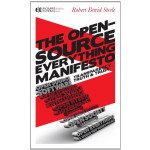
The heart of F/OSS is not in avoiding financial costs, but rather in avoiding opportunity costs imposed by the proprietary or concealed source code that cannot be improved upon by others at will.
. . . . . . . . . .
Quoting from the Open-Source Initiative under the leadership of Michael Tiermann:
Open-Source is a development method for software that harnesses the power of distributed peer review and transparency of process. The promise of Open-Source is better quality, higher reliability, more flexibility, lower cost, and an end to predatory lock-in.
Phi Beta Iota: What is so pathetic about all this is that governments have learned nothing in the quarter century since Winn Schwartau, Bill Caelli, Jim Anderson, Robert Steele, and a handful of others sounded the alarm. 25 years of dereliction of duty.