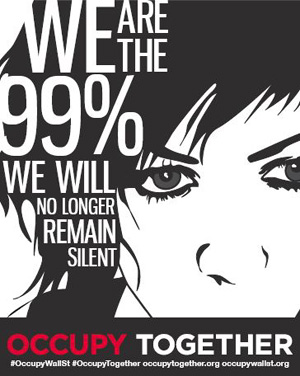
Graphic: Occupy Together – No Longer Silent
Citizen-Centered
The truth at any cost lowers all other costs — curated by former US spy Robert David Steele.

Victim of the Agency getting it wrong…bet nobody took a hit for screwing this guy over.
Veteran counterspy Brian Kelley, 68, broke the Moscow code
By T. Rees Shapiro, Published: September 22
Brian Kelley, 68, a CIA counterintelligence officer who was falsely accused of being a Russian mole in an espionage case that ended in the arrest of perhaps the nation’s most damaging turncoat, FBI agent Robert Hanssen, died Sept. 19 at his home in Vienna.
Continue reading “Marcus Aurelius: Brian Kelley, Screwed by CIA, Dies”
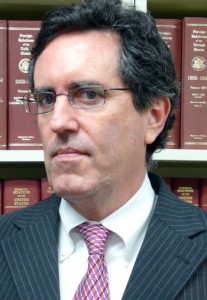
September 26th, 2011 by Steven Aftergood
The Brennan Center for Justice will sponsor a panel discussion October 5 at the National Press Club in Washington DC on overclassification and “Curbing Needless Secrecy” to accompany the release of a new report on the subject. Participants include former Rep. Christopher Shays, former ISOO director J. William Leonard, former NRO director and chair of the Public Interest Declassification Board Martin C. Faga, and Elizabeth Goitein of the Brennan Center.

Three dimensions of resilience.
Arrests at OccupyWallStreet.
Those around Fukushima make their own radiation maps and clean up affected areas themselves.
Dave explains why Facebook scares him.

What are new pedagogic approaches for learning with mobile platforms? What are the limitations of the “digital literacies” paradigm and its first world/third world assumptions?
How do we promulgate digital fluency as an understanding of the particular features of global information flows in which data, attention, capital, and reputation might move both to and from individual actors and communities?
How can mobile media platforms be used for more than the one-way delivery of content? What are new pedagogical approaches for real-time mobile learning that make full use of the potential of mobile phones, iPods, laptops, PDAs, smart phones, Tablet PCs, and netbooks in formal and informal contexts? How can global participants use mobile media to create rich social contexts around important learning tasks? How can such platforms be leveraged to teach digital rights and the value of collaboration across cultures?
How can we dispel the myth of the digital native?
How can mobile networks reshape our experiences of space and place through interactive architecture, locative art, geo-caching games, and real-time object recognition? What opportunities for networked teaching and learning might we find in such media-rich, responsive environments?
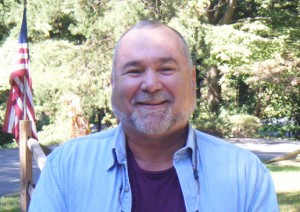
One of our contributors passed this to me and asked me to comment in relation to the alarm that Winn Schwartau, Bill Caeli, Jim Anderson, and I sounded in 1994, in writing, to Marty Harris, then head of the National Information Infrastructure (NII).
First, the item.
From the man who discovered Stuxnet, dire warnings one year later
Mark Clayton
Christian Science Monitor, 22 September 2011
Stuxnet, the cyberweapon that attacked and damaged an Iranian nuclear facility, has opened a Pandora's box of cyberwar, says the man who uncovered it. A Q&A about the potential threats.
EXTRACT:
CSM: How would you characterize the year since Stuxnet – the response by nations, industry and government?
LANGNER: Last year, after Stuxnet was identified as a weapon, we recommended to every asset owner in America – owners of power plants, chemical plants, refineries and others – to make it a top priority to protect their systems…. That wakeup call lasted only about a week. Thereafter, everybody fell back into coma. The most bizarre thing is that even the Department of Homeland Security (DHS) and Siemens [maker of the industrial control system targeted by Stuxnet] talked about Stuxnet being a wakeup call, but never got into the specifics of what needed to be done.
Continue reading “Robert Steele: Ignored 1994, Ignored 2011–Deja Vu”

