Cheery Waves: Four of Five CIA Bay of Pigs History Books Released by National Security Archive

04 Inter-State Conflict, 07 Other Atrocities, 10 Security, 11 Society, Corruption, Cultural Intelligence, Director of National Intelligence et al (IC), Government, Power Behind-the-Scenes/Special Interests, Secrecy & Politics of Secrecy
0Shares
Cheery Waves

Archive Cuba Project posts Four Volumes; calls for declassification of still secret Volume 5

National Security Archive Electronic Briefing Book No. 355

Posted – August 15, 2011

By Peter Kornbluh

For more information contact:
Peter Kornbluh – 202/374-7281 or by email

EXTRACT

  • In perhaps the most important revelation of the entire official history, the CIA task force in charge of the paramilitary assault did not believe it could succeed without becoming an open invasion supported by the U.S. military. On page 149 of Volume III, Pfeiffer quotes still-secret minutes of the Task Force meeting held on November 15, 1960, to prepare a briefing for the new President-elect, John F. Kennedy: “Our original concept is now seen to be unachievable in the face of the controls Castro has instituted,” the document states. “Our second concept (1,500-3000 man force to secure a beach with airstrip) is also now seen to be unachievable, except as a joint Agency/DOD action.”

This candid assessment was not shared with the President-elect then, nor later after the inauguration. As Pfeiffer points out, “what was being denied in confidence in mid-November 1960 became the fact of the Zapata Plan and the Bay of Pigs Operation in March 1961”—run only by the CIA, and with a force of 1,200 men.


Tom Atlee: Citizen Deliberations – Chart and Options

Advanced Cyber/IO, Civil Society, Counter-Oppression/Counter-Dictatorship Practices, Cultural Intelligence, Ethics, Government, InfoOps (IO), Methods & Process, Open Government, Policies, Real Time, Threats
0Shares
Tom Atlee

Dear Friends

I am quite excited about the progress that has been made in various citizen political participation proposals. All of these clearly have tremendous potential and the articulations of their rationales are becoming quite compelling.

With such innovative deliberative democracy proposals, I want them to be thought through well beforehand, engaging a variety of authorities and perspectives in a search of answers that can embrace that diversity with greater wisdom than otherwise. I am especially interested in finding out people's concerns and what solutions appear when we seriously seek to understand and address those concerns (this being a basic principle of creative consensus processes and of collective wisdom in general). I consider this vital if we seek to inject sane, powerful initiatives into the kind of toxic political environment that exists today. There is just too much at stake to fail simply because we didn't explore our design issues sufficiently ahead of time.

With that intention in mind, I have the following twelve thoughts and inquiries to offer. I would love to be part of a serious inquiry into questions like these, both in person and online.

Coheartedly,
Tom

Observations

Comparison Chart

Review: International Intelligence Cooperation and Accountability

4 Star, Intelligence (Government/Secret)
0Shares
Amazon Page

Hans Born (Editor), Ian Leigh (Editor), Aidan Wills (Editor)

4.0 out of 5 stars Four for Content, Zero for Price,August 16, 2011


There are some good contributions in this book, and it is certainly recommended for institutional purchase, but the price is utterly outrageous and completely unacceptable for the individual professional, scholar, or practitioner interest in learning from these authors. The book should be offered immediately at no more than $35.00.

The book is focused on governments. Worse, it is focused on governments exchanging secret or sensitive information with one another.  While there is one extraordinary chapter on intelligence in international operations, the book as a whole is government centric a decade (or two) after the rest of us began routing around government. The new meme is M4IS2: Multinational, Multiagency, Multidisciplinary, Multidomain Information-Sharing and Sense-Making, and the eight tribes that do M4IS2 (when properly led, which is almost never) are academic, civil society, commerce, government, law enforcement, media, military, and non-government/non-profit.

The general concept of the book, that a frame of reference for accountability is needed, is a good one, but overlooks the obvious fact that 80-90% of information sharing must be multinational, multiagency, and not secret–unclassified open sources and methods are the vast majority of what needs to be shared.  In that context, I would suggest that all governments fail the most basic accountability test: they persist in spending taxpayer money on secret intelligence that provides, “at best” 4-10% of what the full range of government needs for decision-support are.  It's time we start holding secret intelligence accountable for being largely worthless in the overall scheme of human affairs, and in relation to the ten high-level threats identified and prioritized by the United Nations High Level Panel on Threats, Challenges, and Change.

See Also: [Amazon insert a link remains broken for books]

Continue reading “Review: International Intelligence Cooperation and Accountability”

Jon Stewart Slams Commentators on Ignoring Ron Paul

07 Other Atrocities, 11 Society, Corruption, Counter-Oppression/Counter-Dictatorship Practices, Cultural Intelligence, Media
0Shares
Michael Ostrolenk

Jon Stewart skewers the media, and especially the right-wing media, for obviously and deliberately refusing to name Ron Paul or mention his various victories.

Monday August 15, 2011

Indecision 2012 – Corn Polled Edition – Ron Paul & the Top Tier

Even when the media does remember Ron Paul, it's only to reassure themselves that there's no need to remember Ron Paul.

Phi Beta Iota:  The corruption of the media, including CNN and Bloomberg, is despicable.  They dishonor the public from whom they derive their public commissions to do business.

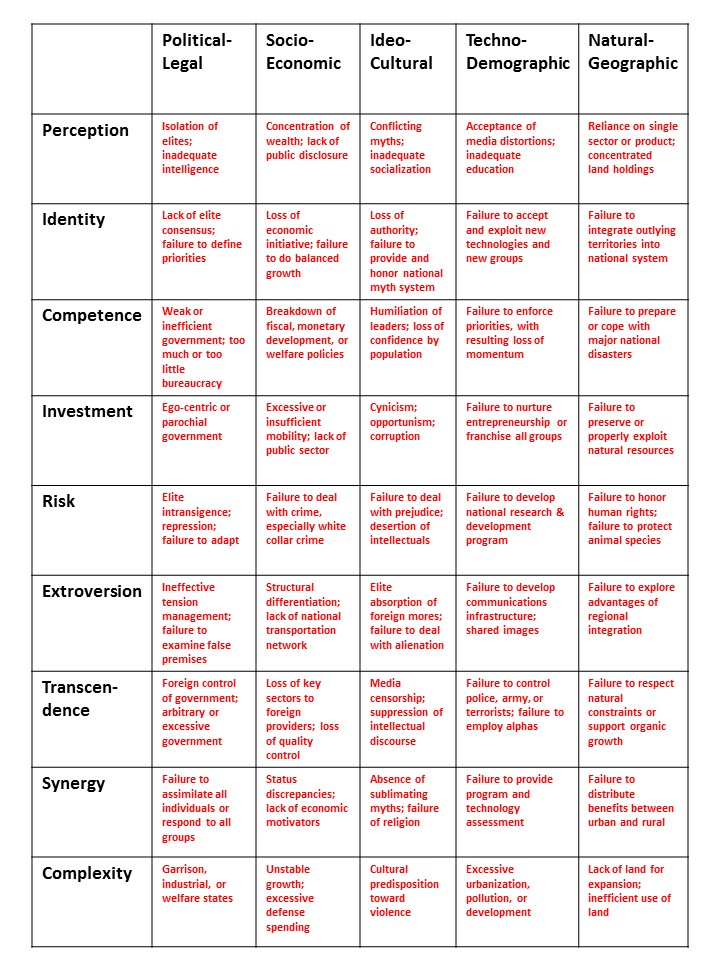
Graphic: Preconditions of Revolution in the USA Today

About the Idea, Advanced Cyber/IO, Analysis, Balance, Citizen-Centered, Corruption, Earth Orientation, Leadership-Integrity, Policies-Harmonization, Strategy-Holistic Coherence, Tribes
53Shares

Updated 2017.

SHORT URL: http://tinyurl.com/Steele-Revolution

NEW FIGHT BACK: Electoral Reform via OpenPower

Phi Beta Iota: To those who have been leveraging the below, thank you for your interest.  It seemed like a good idea to go ahead and post a version of the chart showing in red all of the pre-conditions of revolution in the USA that are now actively present. The failure of leadership to manifest ethics and to nurture education is particularly harmful–white collar criminals do not prosper when the political leadership is ethical and upholds its responsibility to protect the public interest.  The ONLY thing–the one RIGHT thing–that needs to be done to make everything else possible is Electoral Reform (1 Page, 9 Points).  If the various parties and committees and alliances claiming to represent the public interest fail to sponsor this one simple fix, they reveal themselves for what they are: partisan quasi-criminal organizations operating in betrayal of the public trust, with no interest in restoring America the Republic, America the Beautiful.

EDIT:  For those who really do not understand the integrity of the above in today's context, we will make this explicit:

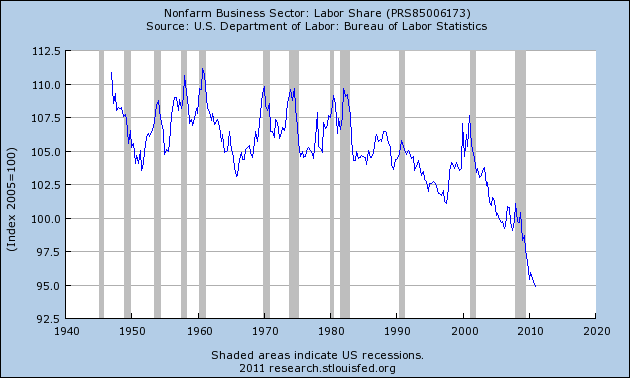
1.  The country has been run into the ground–the bottom 98% have had their seed corn stolen and eaten by the top 2%.  There is no going back, neither revenge nor expropriation will do.  What has been done is done, get over it.

2.  There isn't a leader or leadership team or party or “elite” network on the planet that can put the USA back together again [except perhaps We the People Reform Coalition].

3.  HOWEVER, “bottom up” collective intelligence is agile, intuitive, ethical in the aggregate, and so on.  This is REALLY SIMPLE: restore the integrity of the electoral system (local to national) and get out of the way.  This is called Epoch B Leadership.  It is also the root “good” of Advanced Information Operations  You start by empowering your own public and not lying to them.

Graphic: Pre-Conditions of Revolution

Graphic: Revolution Model Simplified

2011 Thinking About Revolution

1976 Thesis: Theory, Risk Assessment, and Internal War: A Framework for the Observation of Revolutionary Potential

Review: Theory, risk assessment, and internal war–A framework for the observation of revolutionary potential

Review: Revolutions and Revolutionary Movements

Revolution @ Phi Beta Iota

Search: davies j 1969 curve

Search: rm maciver the web of government summary

Search: smart nation intelligence reform electoral reform national security reform

We the People Reform Coalition

John Robb: Urban Farming, Urban Zoning in Flux

Advanced Cyber/IO, Civil Society, Commerce, Commercial Intelligence, Cultural Intelligence, Earth Intelligence, Ethics, Government, Methods & Process, Policies
0Shares
John Robb

Portland Oregon is working on revising zoning regulations regarding urban market farms.  Early debate indicates that the protection of traditional approaches to real-estate value (ornamental residences, noise/traffic abatement, etc.) is the priority.  Given the scale of the economic crisis that is already upon us, this approach is completely broken.  They should be focused on building a simple platform for accelerating a local food economy.

Phi Beta Iota:  Portland in particular, and the Pacific Northwest generally, keep popping up as bastions of ethical sanity.  The combination of intelligence and integrity visible there is quite heartening.