Call for mandatory sustainable reporting

Advanced Cyber/IO, Civil Society, Commerce, Commercial Intelligence, Earth Intelligence, Ethics, Government, InfoOps (IO), Key Players, Methods & Process, Open Government, Policies, Reform, Standards, Strategy, Threats
0Shares

Call for mandatory sustainable reporting

By Ruth Sullivan

Financial Times, April 24 2011

Sustainability experts have called on global regulators to ask companies to report on their sustainable policy and performance, disclosing results in a similar way to financial reporting.

“A ‘report or explain’ approach could persuade more companies to report rather than explain why they don’t,” said Teresa Fogelberg, deputy chief executive of the Global Reporting Initiative (GRI).

. . . . . .

About 4,000 global companies report their sustainability performance, using reporting guidelines recently updated by the GRI.

These focus on 79 issues including consulting stakeholders on important topics, human rights, the impact on local communities and gender matters.

Rest of article….

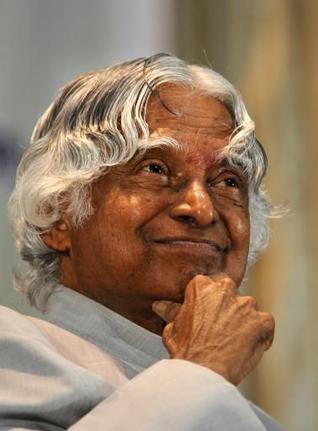
Reference: APJ Abdul Kalam–Pure Wisdom

01 Poverty, 03 Environmental Degradation, 03 India, 04 Education, 05 Energy, 08 Proliferation, 11 Society, Advanced Cyber/IO, Articles & Chapters, Cultural Intelligence, Earth Intelligence, Ethics
0Shares
APJ Abdul Kalam

‘To create better world, it is necessary to alleviate poverty’

Chicago, Apr 24:

Former President, Mr A P J Abdul Kalam today said that to create a better world, it is necessary to alleviate poverty, safeguard drinking water, use clean energy and ensure quality education and values for all.

Mr Kalam, who was honoured at a public reception by the Indo-American Centre (IAC) here, said: “The world is integrally connected through the environment, economy, people and ideas.”

He said that we need an educational value system, and ideas and innovations should not be politically inclined.

On political unrest in the Middle East, Mr Kalam explained how the Egyptian revolution for a change to democracy has spread to the Arab world.

“We need to stop corruption,” he said.

Continue reading “Reference: APJ Abdul Kalam–Pure Wisdom”

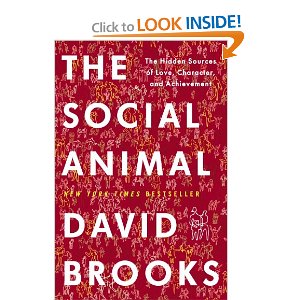
VIDEOS: David Brooks The Social Animal

Civil Society, Cultural Intelligence
0Shares
Amazon Page

Phi Beta Iota: The videos are vastly better than the book at cutting to the chase.  In our view his subtitle was poorly chosen–this is not about love, it is about trust and emotional or spiritual intuition.  On that point, as a supporting note, see our review of The Hidden Wealth of Nations as well as our review of Pedagogy of Freedom–Ethics, Democracy, and Civic Courage.

.

David Brooks: The social animal (TED)

David Brooks: “Social Animal”? (CBS)

From THE SOCIAL ANIMAL by David Brooks (Animation)

See Also:

Economics of Happiness: Going Local

Reference: Happiness Ten Precepts

Reference: Trust and Networks

Journal: Statecraft, Soulcraft, & Well-Being

Review: Making Learning Whole–How Seven Principles of Teaching can Transform Education

Review (Guest): Cognitive Surplus–Creativity and Generosity in a Connected Age

Review: Reality Is Broken–Why Games Make Us Better and How They Can Change the World

Review: Building Social Business–The New Kind of Capitalism that Serves Humanity’s Most Pressing Needs

What Presidents Don’t Know About Education Plus RECAP of 6 Star Plus Books Relevant to Creating a Smart Nation with a Strategic Narrative that WORKS

Seth Godin: The [Public] Opportunity is Here II of II

Cultural Intelligence
0Shares
Seth Godin Home

I of II: Seth Goden: The [Public] Realization is Now

II of II:  The [public] opportunity is here

At the same time that our economic engines are faltering, something else is happening. Like all revolutions, it happens in fits and starts, without perfection, but it's clearly happening.

The mass market is being replaced by multiple micro markets and the long tail of choice.

Google is connecting buyers and sellers over vaster distances, more efficiently and more cheaply than ever before.

Manufacturing is more of a conceptual hurdle than a practical one.

The exchange of information creates ever more value, while commodity products are ever cheaper. It takes fewer employees to generate more value, make more noise and impact more people.

Most of all is this: every individual, self-employed or with a boss, is now more in charge of her destiny than ever before. The notion of a company town or a stagnant industry with little choice is fading fast.

Right before your eyes, a fundamentally different economy, with different players and different ways to add value is being built. What used to be an essential asset (for a person or for a company) is worth far less, while new attributes are both scarce and valuable.

Are there dislocations? There's no doubt about it. Pain and uncertainty and risk, for sure.

The opportunity, though, is the biggest of our generation (or the last one, for that matter). The opportunity is there for anyone (with or without a job) smart enough to take it–to develop a best in class skill, to tell a story, to spread the word, to be in demand, to satisfy real needs, to run from the mediocre middle and to change everything.

¡Note! Like all revolutions, this is an opportunity, not a solution, not a guarantee. It's an opportunity to poke and experiment and fail and discover dead ends on the way to making a difference. The old economy offered a guarantee–time plus education plus obedience = stability. The new one, not so much. The new one offers a chance for you to take a chance and make an impact.

¡Note! If you're looking for ‘how', if you're looking for a map, for a way to industrialize the new era, you've totally missed the point and you will end up disappointed. The nature of the last era was that repetition and management of results increased profits. The nature of this one is the opposite: if someone can tell you precisely what to do, it's too late. Art and novelty and innovation cannot be reliably and successfully industrialized.

In 1924, Walt Disney wrote a letter to Ub Iwerks. Walt was already in Hollywood and he wanted his old friend Ubbe to leave Kansas City and come join him to build an animation studio. The last line of the letter said “PS I wouldn't live in KC now if you gave me the place—yep—you bet—Hooray for Hollywood.” And, just above, in larger letters, he scrawled, “Don't hesitate—Do it now.”

It's not 1924, and this isn't Hollywood, but it is a revolution, and there's a spot for you (and your boss if you push) if you realize you're capable of making a difference. Or you could be frustrated. Up to you.