Phi Beta Iota: One of our colleagues serving in the wilderness has brought to our attention the reading selections and associated reviews of R. ARANT. 127 as of today, both the choice of books and the integrity inherent in the reviews are for our collective, an inspiration. We urge one and all to appreciate this individual's reviews with a vote.
Air Force officer, former NGO staffer in Thailand and translator for the United Nations in Cambodia, with interests in the Thai, Khmer and Lao languages.
Reviews of special value to Public Intelligence (below the line)
In the fall of 2010, CACI of Arlington, a major player in the U.S. government's cyber security business, held a symposium entitled “Cyber Threats to National Security,” in partnership with the U.S. Naval Institute to discuss the issue of Cyber Security. CACI is chasing roughly $2 billion worth of cyber-related contracts over the next few years and company executives said they sponsored the symposium pro bono.
The symposium's conclusions: There are redundancies, little coordination and a lack of clarity among the various government agencies, organizations and military command posts that do cyber work. The symposium report notes, “agencies have overlapping and uncoordinated responsibilities for cyber security activities.”
The Obama administration's new Comprehensive National Cybersecurity Initiative (CNCI), it says, “faces substantial challenges that cannot be overcome unless roles and responsibilities of all key CNCI participants are fully coordinated.” That includes several agencies: “Commerce, Defense, and Homeland Security; the Intelligence Community and other executive branch entities,” all with “various overlapping and potentially competing responsibilities.”
Cybercom under General Alexander is not even going to come close to addressing these problems. Indeed the whole CNCI Program looks increasingly like yet another ploy to grow the U.S. National Security Establishment and spread the government largesse to a new party of contractors. There is no evidence that I have seen that any persons of consequence in the U.S. Government have actually examined the concept of U.S. cyberspace, much less explored methods and techniques that could be employed to provide it with minimum security.
The reason this suggests that the whole CNCI is a scam is that in point of fact that concepts such as ‘cyberspace’ and securing cyberspace have been extensively studied by computer and telecommunications experts in and out of government. No less a government authority than the U.S. National Defense University (a DOD institution) published a detailed and accurate study of these topics in the book Cyberpower and National Security. So the ignorance and confusion over the development of a comprehensive cybersecurity plan on the part of the leaders of the CNCI Program, including General Alexander, is really inexcusable.
That is not to say that the people leading the CNCI are not intelligent, but it is to say they are not serious. They are detached from the real world of cyber threats and information operations and live in a world where all problems are solved by what Robert Steele accurately refers to as contactor vapor ware.
The Mesh networks research group is formed by research and developer teams throughout all the world which are involved in active wireless mesh networks projects.
The Mesh Networks Research Group is focused in the mesh networks field and cover aspects like privacy, security, routing protocols, mobile mesh networks and roaming. All the members of this group are concerned about the importance of open source projects when sharing and spreading knowledge. The open source concept applies to use open routing protocols for ensuring interoperability among networks and open monitoring and test platforms.
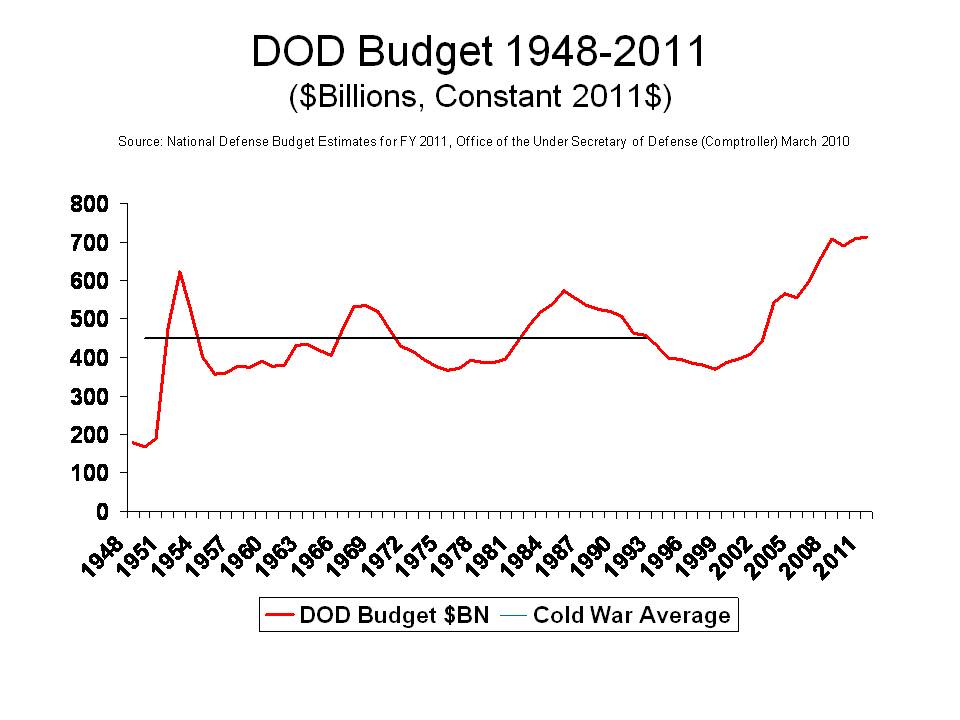
Polling from Pew and Gallup reveals major public misconceptions about the defense budget. Fifty-eight percent of Americans know that Pentagon spending is larger than any other nation, but almost none know it is up to seven times that of China. Most had no idea the defense budget is larger than federal spending for education, Medicare or interest on the debt.
The scurrilous in Washington promote the misimpression of an under-funded Pentagon. They imply it is smaller than during the Cold War by saying it was at 8 percent of gross domestic product in the late 1960s, but only 4 percent of GDP now. Therefore, it's gone down and is now low, right?
Some use hyperventilated rhetoric to pressure for more defense dollars. Sadly, this category now must include Secretary of Defense Robert Gates, who termed “catastrophic” the recommendations of the Obama deficit commission to merely maintain defense spending at its post-WWII high, and who deemed a “crisis” the idea of a 1 percent – $5 billion – reduction in the 2011 defense budget compared to 2010.
Phi Beta Iota: Lying is not patriotic. Screwing most of the people most of the time is neither patriotic nor sensible. The irresponsibility of the US Government today, across all domains, is breathtakingly insane. It's not stupid–this is the last phrase of legalized looting of the Republic–but it is insane in relation to the Constitution and the values that are supposed to be the foundation of the Republic.
Phi Beta Iota: A one-day global block party or a one-day sick-out would make much more sense. This is however an important example of both the scale that is possible and the seeding that is emergent. The times they are a-changing.
Cybercom is intended to integrate and coordinate DOD cyber defenses that previously were based in the individual military services. Led by Army Gen. Keith Alexander, Cybercom also oversees offensive cyber capabilities, and that involves developing weapons and the doctrine that governs when and how those weapons can be used. When he took command of Cybercom, Alexander retained his post as director of the nation’s largest intelligence agency, the National Security Agency, which is responsible for signals intelligence and information assurance. Source