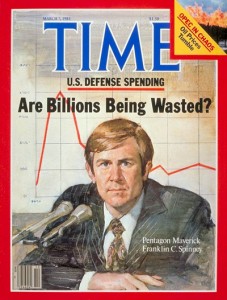
Army Runs PSYOP on US Senators….

Corruption, Cultural Intelligence, Government, IO Secrets, Military
0Shares
Chuck Spinney Recommends....

Another blockbuster by Rolling Stone raises a basic question of just who the military views as the real enemy — the threat posed by the Taliban or the threat to its money flow posed by Congress and the American people.

Another Runaway General: Army Deploys Psy-Ops on U.S. Senators

Michael Hastings, Rolling Stone, 23 February 2011

The U.S. Army illegally ordered a team of soldiers specializing in “psychological operations” to manipulate visiting American senators into providing more troops and funding for the war, Rolling Stone has learned – and when an officer tried to stop the operation, he was railroaded by military investigators.

The orders came from the command of Lt. Gen. William Caldwell, a three-star general in charge of training Afghan troops – the linchpin of U.S. strategy in the war. Over a four-month period last year, a military cell devoted to what is known as “information operations” at Camp Eggers in Kabul was repeatedly pressured to target visiting senators and other VIPs who met with Caldwell. When the unit resisted the order, arguing that it violated U.S. laws prohibiting the use of propaganda against American citizens, it was subjected to a campaign of retaliation.

“My job in psy-ops is to play with people’s heads, to get the enemy to behave the way we want them to behave,” says Lt. Colonel Michael Holmes, the leader of the IO unit, who received an official reprimand after bucking orders. “I’m prohibited from doing that to our own people. When you ask me to try to use these skills on senators and congressman, you’re crossing a line.”

The list of targeted visitors was long, according to interviews with members of the IO team and internal documents obtained by Rolling Stone. Those singled out in the campaign included senators John McCain, Joe Lieberman, Jack Reed, Al Franken and Carl Levin; Rep. Steve Israel of the House Appropriations Committee; Adm. Mike Mullen of the Joint Chiefs of Staff; the Czech ambassador to Afghanistan; the German interior minister, and a host of influential think-tank analysts.
Read rest of story….

Who’s Who in Collective Intelligence: Gordon Cook

Alpha A-D, Collective Intelligence
0Shares


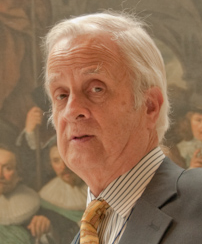
Gordon Cook

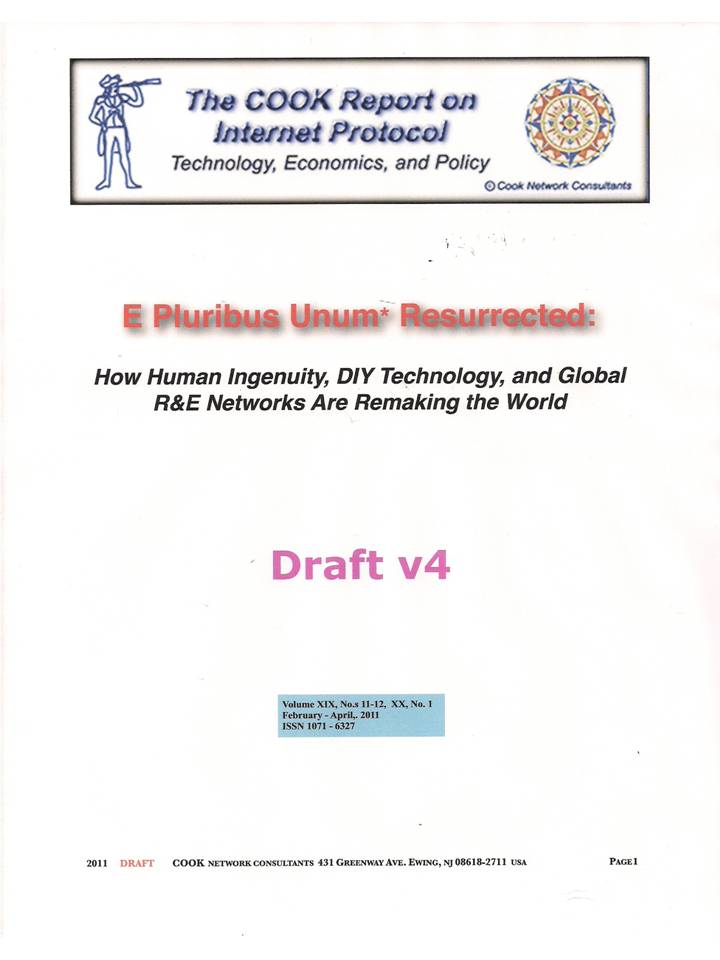
Dr. Gordon Cook is a Hacker inspired by Dave Hughes to create a living document, The Cook Report on Internet Protocol, that manifests itself in both a Blog, Cook's Collaborative Edge, and a document, now in Version 4, E Pluribus Unum* Resurrected: How Human Ingenuity, DIY Technology, and Global R&E Networks Are Remaking the World (February 2011).

His background includes two years as Senior Analyst at the US Congress Office of Technology Assessment (1990-1992), three years as Senior Editor at the John von Neumann National Supercomputer Center (1987-1990), and long period at Policy Analyst and Technical Writer for Delta Data and Computer Sciences (1977-1986).

http://duckduckgo.com/?q=Douglas+Johnson+faith+religion
Structured Web Hits

His education includes a BA from Columbia (1965), an MSc in Economics from the London School of Economics (1966), a PhD from Duke University (1972), and an MLS from Rutgers (1976).

Tip of the Hat to Contributing Editor and Who's Who in Collective Intelligence: Venessa Miemis for the pointer.

Review: Government Secrecy

3 Star, Secrecy & Politics of Secrecy
0Shares
Amazon Page

Susan Maret (Author, Editor)

3.0 out of 5 stars 5 for Content, ZERO for Pricing

February 25, 2011

This is an important work recommended by Berto Jongman as well as myself, but the pricing is utterly outrageous. The authors should post a copy of this work free on the Internet since the publisher has made the book unaffordable by most.

Here are some reasonably priced books on Secrecy that I recommend instead. I can not buy this book, despite its important content, for lack of funds.

Continue reading “Review: Government Secrecy”

Worth a Look: Books on Government Secrecy

Worth A Look
0Shares
Berto Jongman Recommends...

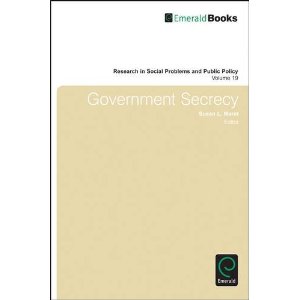
Government Secrecy

Susan Maret, Contributing Editor

Emerald Group, January 2011

$164.95 shipping within 2-3 weeks

Government secrecy (GS) is a significant social, political, and policy issue and often presents as a barrier to civic participation, public right-to-know, historical understanding, and institutional accountability. This volume examines GS in a variety of contexts, including comparative examination of government control of information, new definitions, categories, censorship, ethics, and secrecy's relationship with freedom of information and transparency. It investigates GS in terms of its current theoretical descriptions as power over and concealment of information (Bok 1983), a ‘tampering of communications' (Friedrich 1972), the ‘compulsory withholding of knowledge, reinforced by the prospects of sanctions for disclosure' (Shils), or Georg Simmel's (1906) idea of secrecy creating the ‘possibility of a second world'. Following the introduction this book is divided into the following six sections: Government Secrecy: Theoretical Musings; Government Secrecy and the Media; Government Secrecy and Technology; Freedom of Information; Government Secrecy: Current Policy; and Ethics. Articles are sourced from around the world and include some from USA, Mexico, Africa, Israel and Britain.

Continue reading “Worth a Look: Books on Government Secrecy”

Event: 12-13 April, MIT campus, Forum on Future Cities

Technologies
0Shares

Forum on Future Cities hosted by the MIT SENSEable City Lab and the Rockefeller Foundation 12-13th April 2011 | MIT Campus, Cambridge, Massachusetts.

The Forum on Future Cities will bring together leading thinkers in academia, industry and government from around the world to discuss the most pressing issues of urbanization, and explore how they are being impacted by a wave of new distributed technologies.

Confirmed participants:
Adele Santos, Dean of the School of Architecture and Planning, MIT, Anthony Townsend, Technology Forecaster and Strategist, Institute for the Future, Antoine Picon, Harvard Graduate School of Design, Department of Architecture, Harvard, Beatriz Lara, Director of Strategy and Innovation, BBVA, Dennis Frenchman, Department of Urban Studies and Planning, MIT, Frank Jensen, Lord Mayor, Copenhagen, Irving Wladawsky- Berger, Strategic Advisor, Citigroup, Joe Paradiso, Director of Responsive Environments Group, MIT, Jonathan Rose, Founder & President, Jonathan Rose Companies, Mark Spelman, Global Head of Strategy, Accenture, Martin Fleming, Vice President, Corporate Strategy, IBM, Nancy Odendaal, Snr. Lecturer in City and Regional Planning, University of Cape Town, Nicholas Negroponte, Founder & Chairman, OLPC, Nicola Villa, Global Director of Connected Urban Development Group, Cisco, Peter Ong, Head of the Civil Service, Singapore, Simon Giles, Partner, Accenture, Stefan Köhler, Mayor of Friedrichshafen, Thomas Menino, Mayor of Boston

Thriving on Chaos–Brings out the “Right Stuff”

Collective Intelligence
0Shares
Seth Godin Home

Making a straighter ruler

It's not easy. It's hard to get straighter than straight.

Over time, processes that seek to decrease entropy and create order are valued, but improving them gets more difficult as well. If you're seeking to make the organized more organized, it's a tough row to hoe.

Far easier and more productive to create productive chaos, to interrupt, re-create, produce, invent and redefine.

See Also:

Robert Garigue: Feedback for Dynamic System Change

Reference: Russell Ackoff on Doing Right Things Righter

Review: Reflexive Practice–Professional Thinking for a Turbulent World