Our government and food industry both encourage more “personal responsibility” when it comes to battling the obesity epidemic and its associated diseases. They say people should exercise more self-control, make better choices, avoid overeating, and reduce their intake of sugar-sweetened drinks and processed food. We are led to believe that there is no good food or bad food, that it's all a matter of balance. This sounds good in theory, except for one thing…
New discoveries in science prove that industrially processed, sugar-, fat- and salt-laden food — food that is made in a plant rather than grown on a plant, as Michael Pollan would say — is biologically addictive.
Phi Beta Iota: This is a HUGE story that merits more emphasis at The Huffington Post. It is a perfect example of a newly-discovered “true cost” of the industrialization of agriculture which IS a contradiction in terms. It is a perfect example of government complacency, ignorance, and ultimately irresponsibility. This is precisely what public intelligence in the public interest is about.
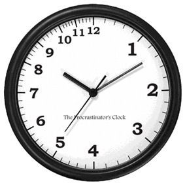
The article, “Supply Chain Management and Sustainability: Procrastinating Integration in Mainstream Research” presents the results of a study conducted by several university researchers in The Netherlands. The researchers noted that “procrastination can be viewed as the result of several processes, determined not only by individual personality, but also by the following factors:
– availability of information;
– availability of opportunities and resources;
– skills and abilities;
– dependence on cooperation with others.”
In addition, in a review of more than 100 additional studies on procrastination, the following additional items were found to likely to influence procrastination:
– the nature of the task, and
– the context of the issue.
It is these last two issues that the authors raised as primary reasons for procrastination, especially regarding embedding sustainability research and practices in supply chain operations and management. The authors found that “the nature of the task”, because it’s often complex and requires many internal and external stakeholders, and therefore tends to “generate conflicts”. Also, the roots of supply chain management and related research are generally grounded in operations management and operations/logistics. Therefore, the researchers noted that environmental and social aspects of supply chain management are foreign, “out of context” and not wholly integrated into supply chain management and research. I would also argue that dependence on others is a key issue as well given the widespread, outward facing challenges associated with supply chain coordination.
Phi Beta Iota: Public Intelligence addresses this in two ways. First, it harnesses cognitive surplus while also integrating education, intelligence, and research to MAKE the information available to BOTH the public and the enterprises in question. Second, when the public sees an enterprise that is NOT making use of the information, the public begins to buycott (Jim Turner's term) that enterprise. Public Intelligence is going to shape markets starting in 2012 and starting with Health. See Summit '11.
Crowdsourcing is often used for fairly menial tasks: correcting databases, screening offensive images, transcribing audio. But what if you could make those little bits of human labor even more menial, discrete and interchangeable? That’s what the Finnish company Microtask does. I met with Microtask CEO Wili Miettinen and CTO Otto Chrons earlier this week while they were in town for CrowdConf, the first major gathering for the crowdsourcing industry.
The World's First Conference on the Future of Distributed Work
Crowdsourcing is the act of engaging distributed groups of people to complete microtasks or generate information. It represents an expanding sphere of innovation, organization, data collection, and creativity.
Crowdsourcing raises complex questions about the future of work; the technical and organizational infrastructure used to complete large-scale tasks; and the relationships between computers, people, and the networks that connect us.
Phi Beta Iota: What we consider important about this is the clear profit incentive to integrate games and work. This is huge. It opens a number of almost infinitely scalable options that connect dots and people and money.
November 30th, the Federal Communications Commission (FCC) could
potentially engage in one of the largest federal power grabs we have ever
seen.
At the FCC’s November meeting – note the coincidental date of choice,
AFTER the impending election – three unelected bureaucrats (of five) could
simply vote themselves rulers of 1/6th of our entire economy – the
information and technology sector.
Meaning the Internet that you currently enjoy – that has been a marvel of
economic and information innovation and success – will be subject to vast
new governmental regulations. You didn’t elect these people – but they
are on the verge of electing themselves Internet overlords.
November 30th, the Federal Communications Commission (FCC) could potentially engage in one of the largest federal power grabs we have ever seen.
After two years of this Presidential Administration and this Congress, that is saying an awful lot about an awful lot.
And what’s worse, the FCC would be doing it without Congress weighing in. At the FCC’s November meeting – note the coincidental date of choice, AFTER the impending election – three unelected bureaucrats (of five) could simply vote themselves rulers of 1/6th of our entire economy – the information and technology sector.