Review: IDENTITY ECONOMICS–How our Identities Shape Our Work, Wages, and Well-Being

5 Star, America (Founders, Current Situation), Best Practices in Management, Civil Society, Consciousness & Social IQ, Economics
0Shares
Amazon Page
5.0 out of 5 stars Concise, Relevant, Documents New Knowledge, Respects Work of Others
July 6, 2010

George Akerlof and Rachel Kranton

This book is a solid five, and one of those instances when brevity adds value. While I was concerned to see no discussion of “true cost” economics and the book is overly fawning on Goldman Sachs (written before Goldman Sachs was exposed for its multiple fiscal crimes against both investors and governments), the superior References, Notes, and Acknowledgements balanced this out. This work began in 1995.

This is an engrossing book and it immediately overcame my general disdain for economists, most of whom have only recently discovered information asymmetries and most of whom refuse to recognize that corruption in the US government and cheating across the US economy is fully the equivalent of transnational organized crime in cost to society.

Overall I consider this book very useful as both an overview (with most impressive “by name” citation of prior art on every page) and as a critique of conventional economics. This book is an excellent complement to the book I just reviewed, The Hidden Wealth of Nations and will be complemented by the book I will review next week, Building Social Business: The New Kind of Capitalism That Serves Humanity's Most Pressing Needs. See also my review of Nobel-worthy The Fortune at the Bottom of the Pyramid, Revised and Updated 5th Anniversary Edition: Eradicating Poverty Through Profits.

Core concept: IDENTITY is actualized psychological norms within a social context.

QUOTE (page 8): Identity economics restores human passions and social institutions into economics.”

Continue reading “Review: IDENTITY ECONOMICS–How our Identities Shape Our Work, Wages, and Well-Being”

Journal: Multi-Polarity Here to Stay….

08 Wild Cards
0Shares
Chuck Spinney Recommends

Very good summary of Turkey's emerging regional influence. CS

Turkey, America, and Empire’s Twilight

by Conn Hallinan, Antiwar.com,  July 06, 2010

When U.S. forces found themselves beset by a growing insurgency in Iraq following their lightning overthrow of Saddam Hussein, the most obvious parallel that came to mind was Vietnam: an occupying army, far from home, besieged by a shadowy foe. But Patrick Cockburn, the Independent‘s ace Middle East reporter, suggested that the escalating chaos was more like the Boer War than the conflict in Southeast Asia.

It was a parallel that was lost on most Americans, very few of whom know anything about the short, savage, turn-of-the-century war between Dutch settlers and the British Empire in South Africa.

But the analogy explains a great deal about the growing influence of a country like Turkey, and why Washington, despite its military power and economic clout, can no longer dominate regional and global politics.

FULL STORY ONLINE

Event: 12-13 Oct 2010, Wash D.C, Naked Intelligence

Commerce, Commercial Intelligence, Government, Law Enforcement
0Shares
Event link

Naked Intelligence 2010

TUESDAY, OCTOBER 12, 2010


Keynote Address
Dr. Jerry Lucas, President TeleStrategies, Inc
Jed Grant, Founding Partner, Sandstone
Chuck Cohen, Cohen Training and Consulting

Corporate Intelligence
Tyler Drumheller, Chief Operations Officer, DMC Worldwide

Continue reading “Event: 12-13 Oct 2010, Wash D.C, Naked Intelligence”

Who’s Who in Earth Intelligence: Stuart Umpleby

Alpha Q-U, Earth Intelligence
0Shares

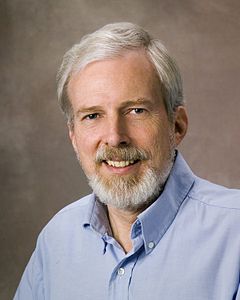
Stuart Anspach Umpleby (born March 5, 1944) is an American cybernetician and a professor in the Department of Management and Director of the Research Program in Social and Organizational Learning in the School of Business at the George Washington University.

He is a past president of the American Society for Cybernetics (ASC). In 2007 Stuart Umpleby was awarded The Wiener Gold Medal of the American Society for Cybernetics for outstanding lifelong contributions to both cybernetics and the ASC.  In 2010 he was elected an Academician in the International Academy of Systems and Cybernetic Sciences, an honor society created by the International Federation for Systems Research.

Among several other major interests, he has been a pioneering explorer of the potential for academic globalization.  See especially:

Transforming the Global University System into a Resource for Social Improvement (2003)

A Global University for A Global Village (2007)

Academic Globalization: The Growth of International Collaboration in Education and Research (2007)

Academic Globalization: Results of a Participatory Strategic Planning Exercise (2007)

Adopting Service Learning in Universities around the World (2008)

Wikipedia

Home Page

Service Learning

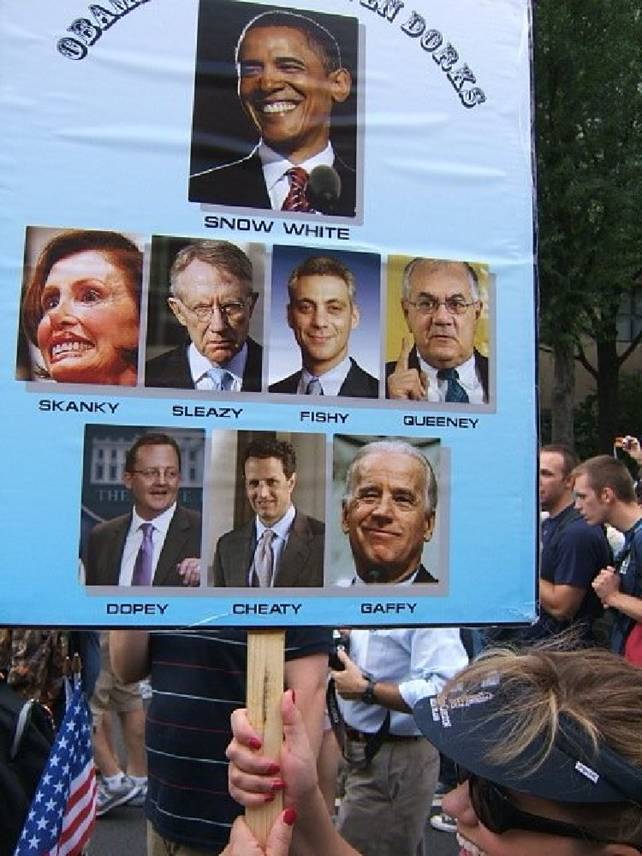
Journal: Snow White & the Seven Dorks

Collective Intelligence
0Shares
Marcus Aurelius Recommends

(COMMENT:  If GEN McChrystal had had THIS poster displayed in his headquarters, then maybe there would have been some cause for Presidential concern….)

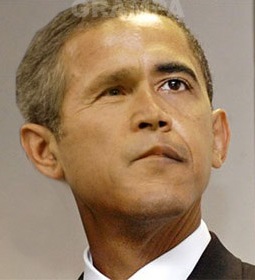
Same Bird Two Faces

Phi Beta Iota: Over 43% of the eligible voters in America are now self-described Independents, at the same time that our fraudulent and hijacked electoral process no longer qualifies the US as  a “democracy” because none of the other 63 parties can gain ballot access and many states have rigged their entire process to block both write-in votes and third party challenges.  The two photos below represent the death of democracy and the death of the Republic, a Republic that can only be revised with Electoral Reform.  There is nothing wrong with America that cannot be fixed by restoring the integrity of the electoral process and the integrity of the three branches of government that are supposed to be, but are not, Of, By, and For We the People of the United STATES of America.


. .

Obama and the Seven Dorks

Politicians are like diapers; They need to be changed frequently,
and for the same reason!

Worth a Look: G-2 Make-Over “Public Intelligence”

Worth A Look
0Shares

Why is FEMA trying to cover up NLE 10?

Public Intelligence

Public Intelligence has received a request from FEMA to remove a “For Official Use Only” document regarding the National Level Exercise 2010 (NLE 10), which was scheduled for this coming May.  The exercise was to be based on National Planning Scenario 1 which simulates a nuclear detonation in a U.S. city.

Full Post Online

Phi Beta Iota: FEMA may actually have noticed the earlier public posting of how to take down Law Vegas, reported here inJournal: Strong Signals–Las Vegas as Next 9/11.  “Homeland Security” as well as “Global Security” are non-existent in large part because the US Government is its own worst enemy.

See Also:

Journal: US Government Party to $4 Trillion Fraud

Journal: Pentagon as VERY Slow Learner….

Journal: DoD Mind-Set Time Lags Most Fascinating

Journal: Cyber-Idiocy Two, Cyber-Sense Zero

Review: Willful Neglect–The Dangerous Illusion of Homeland Security

2002 NSA in Las Vegas The New Craft of Intelligence: What Should the T Be Doing to the I in IT?

Journal: PSYOP Dies, Renamed, Still Dead

Augmented Reality, Cultural Intelligence, info-graphics/data-visualization, InfoOps (IO), Military, Officers Call, Peace Intelligence
0Shares

Marcus Aurelius Recommends

PSYOP has long had problems being PSYOP.  Overseas they often work as “Military Information Support Teams” (MISTs).  If you want to get them significantly spun up, try to discuss with them “perception management” or “deception.”  Try that and they tend to go to ground very quickly.  As for nefarious, spooky, and master manipulators, US PSYOP has always been dwarfed by the British; e.g., “Soldatensender Calais,” documented in Sefton Delmer's “Black Boomerang.”  Personally, I just don't think the current Executive Branch of the USG has the will to play a full-up, full-spectrum game in the national security/foreign policy arena.  Now, soon, or later, we will pay for that in needless loss of life.  Remember always John Stewart Mill:  “War is an ugly thing but not the ugliest of things. …”

“Psychological Operations” Are Now “Military Information Support Operations”

3 July 2010

By Kevin Maurer
Associated Press
July 2, 2010

The Army has dropped the Vietnam-era name “psychological operations” for its branch in charge of trying to change minds behind enemy lines, acknowledging the term can sound ominous.

The Defense Department picked a more neutral moniker: “Military Information Support Operations,” or MISO.

U.S. Special Operations Command spokesman Ken McGraw said Thursday the new name, adopted last month, more accurately reflects the unit’s job of producing leaflets, radio broadcasts and loudspeaker messages to influence enemy soldiers and civilians.

One of the catalysts for the transition is foreign and domestic sensitivities to the term ‘psychological operations’ that often lead to a misunderstanding of the mission,” McGraw said.

Fort Bragg is home to the 4th Psychological Operations Group, the Army’s only active duty psychological operations unit. Psychological operations soldiers are trained at the post.

The name change is expected to extend to all military services, a senior defense official said in Washington. The official, who has direct knowledge of the change, spoke on condition of anonymity because not all services have announced how they will revamp or rename their psychological operations offices.

The change was driven from the top, by Pentagon policymakers working for Defense Secretary Robert Gates. It reflects unease with the Cold War echoes of the old terminology, and the implication that the work involved subterfuge.

The change, however, left some current practitioners of psychological operations cold. Gone is the cool factor, posters to online military blogs said. With a name like MISO, one wrote, you might as well join the supply command.

Alfred H. Paddock, Jr., a retired colonel who was Director for Psychological Operations in the Office of the Secretary of Defense from 1986 to 1988, said the term has always had some baggage and been difficult to explain.

“Somehow it gives a nefarious connotation, but I think that this baggage can be overcome,” said Paddock, who also served three combat tours with Special Forces in Laos and Vietnam.

He said the military was giving in to political correctness by changing the name.

Psychological operations have been cast as spooky in movies and books over the years portraying the soldiers as master manipulators. The 2009 movie “The Men Who Stare at Goats,” staring George Clooney, was about an army unit that trains psychic spies, based on Jon Ronson’s nonfiction account of the U.S. military’s hush-hush research into psychic warfare and espionage.

But the real mission is far more mundane. During the 2003 invasion of Iraq, psychological operations units dropped leaflets urging Iraqis to surrender.

In Vietnam, a psychological operations effort called the Open Arms Program bombarded Viet Cong units with surrender appeals written by former members. The program got approximately 200,000 Viet Cong fighters to defect.

McGraw said the name change was approved by Defense Secretary Robert Gates and Adm. Eric Olson, the Special Operations commander, in mid-June.

Many in the psychological operations community, including Paddock, dislike the new name.

“Military Information Support Operations, or MISO, is not something that rolls off the tip of your tongue,” Paddock said. “It makes it even more difficult for psychological operations personnel to explain what they do. That they still have the capability to employ programs and themes designed to influence the behavior of foreign target audiences.”

Original Source

Phi Beta Iota: PSYOP is 80% fraud, waste, and abuse, and that percentage is kind.  They are still teaching enlisted people at Fort Bragg how to load aircraft propaganda cannisters to deliver leaflets to people who by and large cannot read.  80% of PSYOP billets, dollars, and facilities should be immediately transferred to the Civil Affairs Corps, and used to transition to the regional brigades that include a single multinational Civil Affairs Brigade for each region, along with direct support multinational battalions for military police, combat engineers, medical, and organic land, sea, and air units, all built around a US C4I hub with both regional and donor country (e.g. Nordics) participation.