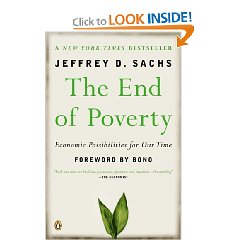
Review: The End of Poverty–Economic Possibilities for Our Time (Paperback)

5 Star, Consciousness & Social IQ, Peace, Poverty, & Middle Class
0Shares

Amazon Page
Amazon Page

5.0 out of 5 stars Nobel Prize Material with One Small Flaw,

April 6, 2006
Jeffrey Sachs
From an American perspective, now that everyone knows Senator John Edwards has focused on poverty as the underpinning for his revisitation of the “two Americas” divide (see also Barbara Ehrenreich Nickel and Dimed: On (Not) Getting By in America and David Shipler's The Working Poor: Invisible in America, this book should receive even more attention.

The author is extraordinary, and I take issue with some of the quibbling pot shots (when you are in fact so central to something that both the UN Secretary General and the President of Columbia University want you in the top position, perhaps you just might *be* central).

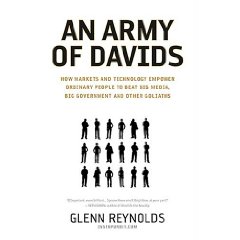
The most important thing I can say about this book is that the timing is perfect–there is a “correlation of forces” emerging that combines An Army of Davids: How Markets and Technology Empower Ordinary People to Beat Big Media, Big Government, and Other Goliaths (see my review of that book), The Left Hand of God: Taking Back Our Country from the Religious Right (ditto), Collective Intelligence (see my review of Tom Atlee, The Tao of Democracy: Using Co-Intelligence to Create a World That Works for All) and a massive public awareness that both the Republican and Democratic parties are corrupt and dysfunctional (see Peter Peterson's Running on Empty: How the Democratic and Republican Parties Are Bankrupting Our Future and What Americans Can Do About It and Tom Coburn's Breach of Trust: How Washington Turns Outsiders Into Insiders ), and that the rampant unilateral evangelical militarism and immoral capitalism that the Bush dynasty has imposed on the earth is in fact a stake in the heart of the American Republic.

It may not be an exaggeration to say that this book represents the pinnacle of “new thinking” in which the public is energized into realizing three great precepts:

1) Republics belong to the people–the government of a Republic can be dissolved by the people when it becomes pathologically dysfunctional. See The Vermont Manifesto.

2) Sovereignty as defined by the Treaty of Westphalia is passe, in that it supports 44 dictators and massive corruption, censorship, genocide, state crime, and so on. There is a place for sovereignty, but only when certain standards of legitimacy, morality, transparency, and sustainability are present. See Breaking the Real Axis of Evil: How to Oust the World's Last Dictators by 2025 and Philipp Allott's The Health of Nations: Society and Law beyond the State.

3) Poverty is the fulcrum issue for the world, just as democracy is the fulcrum issue for America. If one reads this book in combination with C. K. Prahalad's The Fortune at the Bottom of the Pyramid: Eradicating Poverty Through Profits (Wharton School Publishing Paperbacks), it is crystal clear that a shift of money from militarism to education, health, wireless access, and micro-cash economics will unleash the entrepreneurial innovation of five billion people, and literally save the world.

There are a number of stellar aspects to this book.

The author warms my heart when he slams the International Monetary Fund (IMF) and World Bank for being ignorant and having the wrong economic model. His articulations of the need for “differential diagnosis,” and for the development of “clinical economics” are Nobel Prize material. He is right on target when he lambastes the IMF for overlooking “poverty traps, agronomy, climate, disease, transport, gender, and a host of other pathologies.” A different take on the IMF and World Bank is provided by John Perkins in Confessions of an Economic Hit Man while the contributing delinquency of immoral multinational corporations is addressed by William Grieder in The Soul of Capitalism: Opening Paths to a Moral Economy and US insanities are addressed by Clyde Prestowitz in Rogue Nation: American Unilateralism and the Failure of Good Intentions.

The author has clearly been influenced by Paul Farmer and his book Pathologies of Power: Health, Human Rights, and the New War on the Poor (California Series in Public Anthropology, 4) and uses the emergency medicine model to discuss how clinical economics varies from developmental economics. One could say that some nations need to learn to read and feed themselves first, and only after doing so, are they capable of moving up the rung. Lest anyone think the author is over-reaching, he is quite clear on limiting his objective to the elimination of EXTREME poverty, not all poverty.

The bottom line is quite clear: for just 1% of the US GDP, or a 5% surcharge on families making over $200,000 a year, extreme poverty can be eliminated by the year 2025. Anyone familiar with Hans Morgenthau and the “sources of national power” will understand that people rather than geography or resources or military power are the fundamental unit. People can think and share information and innovate. The author clearly discusses how disease destroys labor–including the entire male working class in Africa, and how disease, poverty, and education interact. The checklist for “medical triage” of a country, on page 84, is superb. The “big five” interventions are Agricultural, Health, Education, power-transport-communications, and safe drinking water-sanitation.

The author takes special care to dispel a number of myths, chief among them the myth that African corruption makes foreign aid irrelevant. While there is a great deal to be said for aid mis-management leading to black markets and such (see William Shawcross, Deliver Us from Evil: Peacekeepers, Warlords and a World of Endless Conflict) the bottom line is clear: the US Government is both well behind other more enlightened governments in its rate of giving, and downright incompetent at “doing” aid. Indeed, the author can be noted for his general critique of all “official advice” as being generally ignorant.

This is not an ivory tower idealist. He discusses ten examples of global scale success stories from the Green Revolution to cell phones in Bangladesh, and settles on Stabilization, Liberalization, Privatization, Social Safety Net, and Institutional Harmonization as the steps needed to migrate from failed state to stabilized state.

Interestingly, he disassociates himself from the Harvard professors that helped the Russian oligarchs loot the Russian state through predatory privatization, and deliberately slams Professor Andrew Shleifer's role on page 144.

The author appears to be the first person to write a fifteen page plan for migrating a country (Poland) from a socialist economy to a market economy, writing from midnight to dawn due to local time pressures. This book is nothing short of riveting. It will stand the test of time as a prescription that can be explained to the voters, understood by politicians, and enforced by democratic elections.

There is only one small flaw: ending poverty will increase the number of stronger beings jostling for a move up in the pecking order. The program will need to be accompanied by both very strong militaries and police, and by very strong conservation efforts to keep increasingly strong billions from fighting over decresing resources.

EDIT of 11 Dec 07: Since reading this book, 24 of us have come together to co-found the Earth Intelligence Network, and we have a vision for teaching the five billion poor “one cell call at a time” using Telelanguage.com and 100 million volunteers with Skype and Internet access, covering among them the needed 183 languages. By creating wealth locally (see below list of representative books), this is stabilizing and addresses my own concern from the earlier review.

See also:
Infinite Wealth: A New World of Collaboration and Abundance in the Knowledge Era
The Wealth of Knowledge: Intellectual Capital and the Twenty-first Century Organization
Powershift: Knowledge, Wealth, and Power at the Edge of the 21st Century
Revolutionary Wealth: How it will be created and how it will change our lives

and most importantly,
The Wealth of Networks: How Social Production Transforms Markets and Freedom


Vote on Review
Vote on Review

Review: Pathologies of Power–Health, Human Rights, and the New War on the Poor (Hardcover)

4 Star, Atrocities & Genocide, Humanitarian Assistance
0Shares

Amazon Page
Amazon Page

4.0 out of 5 stars Foundation Work With Two Core Concepts,

April 4, 2006
Paul Farmer
This is a foundation book, if you have the time, money, and willingness to read broadly. If you want only one book on the cycle of health, human rights, poverty, and violence, buy Jeffrey Sachs' book on The End of Poverty: Economic Possibilities for Our Time in which this author, Paul Farmer, is praised, recognized, and clearly valued as a pioneer.

There are two bottom lines in this book:

1) Providing adequate low-cost health care for every human is the non-negotiable first step in eliminating human rights violations writ large (e.g. a year in a Russian prison could be an automatic death sentence from tuberculosis), poverty, and violence among the poor and between the poor and the more affluent.

2) Governments are failing. Here the author is in harmony with Philip Alcott, whose book The Health of Nations: Society and Law beyond the State calls for the over-turning of the Treaty of Westphalia (no more respect for the sovereignty of dictators–as in America, when government become too destructive, the People have the right to abolish the government). The author believes that a larger non-governmental network, and public pressure to force governments to apply more money to health and less money to the military killing machine, will in fact not only end poverty, but unleash sustainable indigenous wealth.

His case studies are of necessity somewhat tedious and can be skimmed if one's mindset is inherently in agreement with his propositions–they do however provide deep documentation for the skeptical.

Another book that might be substituted for this one (especially if buying and reading Sachs) is the pioneering work of Laurie Garrett, Betrayal of Trust: The Collapse of Global Public Health which documents the global collapse of public health. A very long book, my Amazon review of it is summative and may suffice.

Dr. Farmer also makes the rather helpful point that doctors doing good can go places where human rights inspectors would be considered intrusive. He praises Cuba, and rightly so. Any country that can put 10,000 medical practitioners into Venezuela, and thereby earn “first call” on Venezuelan oil, is operating at a strategic level of insight that the USA simply does not match today. Readers may not like hearing that the USA is slipping down into the middle ranks of “has been” nations, but that is the reality. On our present course, we are importing poverty, allowing pandemic disease to rear its ugly head through bird flu, mad cow disease and other mutations that will jump to humans, and we have also busted the national piggy bank with the double deficits (trade and debt).

When Dr. Farmer talks about the pathologies of power, he reminds me of Norman Cousin's book by the same title, but does so in a very practical personal way. If human beings are a primary source of national power, then having uneducated human beings subject to disease, poverty, crime, and terror has got to be the single dumbest thing any great power can allow to happen, at home or abroad. Lest anyone dispute my contention on this point, see my reviews of Barbara Ehrenreich, Nickel and Dimed: On (Not) Getting By in America and also David Shipler's The Working Poor: Invisible in America and Off the Books: The Underground Economy of the Urban Poor See my review of Sachs for more detail on the specific topic of global poverty and why it matters to every citizen.

All ten of the high-level threats to humanity are connected, and all twelve of the stabilizing policies from Agriculture to Water must be connected as well.

Vote on Review
Vote on Review

Review: An End to Poverty?–A Historical Debate (Hardcover)

Peace, Poverty, & Middle Class
0Shares

Amazon Page
Amazon Page

5.0 out of 5 stars Brilliant Historical Underpining to Sachs' Current Work,

April 4, 2006
Gareth Stedman Jones
It is very disappointing to see so little information provided by the publisher on this book, not even a table of contents. The time has come for Amazon to demand a higher standard of due diligence by publishers.

For those who wish to immerse themselves on the pros and cons of the debate over poverty, this is an essential intellectual foundation to the current work by Jeffrey Sachs who is both the advisor to the Secretary General of the UN on the Millennium project, and the head of the Columbia Earth Institute.

Thomas Jefferson said that “A Nation's best defense is an educated citizenry.” He probably would have agreed to amend that to say an educated, healthy citizenry able to work. A historical appreciation of the phrase “pursuit of happiness” suggests that Jefferson actually meant, in lieu of selfish pleasure, the pursuit of self- actualization.

This book completes a circle with C. K. Prahalad's The Fortune at the Bottom of the Pyramid: Eradicating Poverty Through Profits (Wharton School Publishing Paperbacks) which suggests that there is a four trillion a year marketplace among the five billion poorest, and that unleashing their entrepreneurial initiative could save the world, and the definitive work by Jeffrey Sachs, on how can end poverty for $70 per year per person.

Vote on Review
Vote on Review

Review: An Army of Davids–How Markets and Technology Empower Ordinary People to Beat Big Media, Big Government, and Other Goliaths (Hardcover)

4 Star, Intelligence (Collective & Quantum), Intelligence (Wealth of Networks)
0Shares

Amazon Page
Amazon Page

4.0 out of 5 stars 5 for Horizontal Knowledge, 3 for the Rest, 4 on Balance,

April 4, 2006
Glenn Reynolds
There are two “five star” ideas in this book:

1) That horizontal knowledge, peer to peer and distributed network knowledge, is quickly burying bureaucratic “top down” or vertical knowledge.

2) That “technological capitalism,” the author's term, enables the information works to control the means of production, finally achieving what I call “communal capitalism.”

3) Against bureaucracies, terrorists have the learning curve advantage. Against civilians, they did not.” The author is referring to the fact that the entire US intelligence and defense apparatus failed to stop the first two 9-11 planes whose attack was two years in the making, but citizens armed with a cell phone figured it out in 109 minutes and stopped the third plane.

4) Further to this, the author provides a riveting discussion of a story overlooked by the mass media on 9-11, the “improvised Navy” that helped evacuate lower Manhattan in what some call an American Dunkirk.

5) The author discusses the explosion in consumer creation and sharing, and makes a compelling case of suggesting that traditional aggregators of information are dead. Google is likely to die in the next five years, but something after Google will help structure, filter, link, and monetize. We are in a transition period and need to reach a place where all historical information, all current scholarship, and all future online publications, both formal and informal, can be leveraged through semantic web and synthetic information architectures.

Now to bring this full circle, I want to mention just a couple of other books, because what is happening in the USA today, ahead of the rest of the world, are three things:

1) The public was sparked by Howard Dean, and now is becoming empowered and mobilized. Citizen advocacy groups are integrating localized observation, information sharing technologies, and collective brainpower to the point that they are more competent and quicker than the government or corporate or media bureaucracies.

2) This Collective Intelligence or Army of Davids is becoming enraged over the end of the cheap oil (which the government knew about in 1974-1979 and concealed in order to keep the bribes from oil companies coming), the end of free water, the rise of pandemic disease, the decline in education and morality and responsible foreign policy.

3) Intelligent observations are being made by stellar thinkers just as Jeffrey Sachs The End of Poverty: Economic Possibilities for Our Time and C. K. Prahalad The Fortune at the Bottom of the Pyramid: Eradicating Poverty Through Profits (Wharton School Publishing Paperbacks) with the result that this Collective Intelligence, now mobilized and incited by the Bush Administration, sees a better way–a path into the future where we spend on peace and ending poverty, instead of war and invading other countries on a web of lies.

Bottom line: this is a useful book that provides a fragment of the total mosaic. I am very glad I got it, and hope that this review will not only lead you to buy the book, but to read my other reviews, which in the aggregate, provide a free graduate education on global issues in about two hours.

EDIT of 11 Dec 07: See also, with reviews:
Group Genius: The Creative Power of Collaboration
The Global Brain: Your Roadmap for Innovating Faster and Smarter in a Networked World
Smart Mobs: The Next Social Revolution
The Wisdom of Crowds
The Wealth of Networks: How Social Production Transforms Markets and Freedom

Vote on Review
Vote on Review

Review: A Farewell to Justice–Jim Garrison, JFK’s Assassination, and the Case That Should Have Changed History (Hardcover)

5 Star, Atrocities & Genocide, Censorship & Denial of Access, Congress (Failure, Reform), Corruption, Crime (Government), Executive (Partisan Failure, Reform)
86Shares

Amazon Page
Amazon Page

5.0 out of 5 stars

Sufficient to Impeach the Warren Commission; CIA Now Proven Complicit,

April 4, 2006
Joan Mellen
Edit of 11 Dec 07: Since I wrote this review, another book has come out, Someone Would Have Talked: The Assassination of President John F. Kennedy and the Conspiracy to Mislead History and it conclusively documents two points:

1) JFK was assassinated by a Cuban exile team trained by CIA to assassinate Castro, that used their training against JFK, ostensibly for the Bay of Pigs mess. CIA then covered this up.

2) JFK was warned by Bobby that there were strong indications of a plot to kill him, and JFK himself blew it off, entrusting his safety to a Secret Service with no idea a professional CIA hit team was coming in.

As a former clandestine case officer for the CIA who served in Latin America and also lived in Viet-Nam during the ten coups, one of which killed Ngo Dinh Diem, I picked this book up with some trepidation.

It is an exhausting review, a truly incredible accomplishment for a single human being without any visible corporate resources for doing machine processing or visualization of all of the information.

Here's my bottom line as a 54-year old with over 30 years government service:

1) The Warren Commission, like the 9-11 Commission, blew it and mis-served the nation. They are retrospectively impeachable for dereliction of duty.

2) The Central Intelligence Agency, and Ted Shackley in particular, have a lot to answer for, and continue to lie and withhold key documents from the American people. We need the moral equivalent of a truth & reconciliation commission on covert action–I thought the Church Commission had done some of that, but clearly there is more to be done.

3) We clearly do not have a government that is capable of being consistently honest, at the same time that we have thousands of dedicated government employees who have no idea what the “cowboys” are doing. The recent outrage over CIA renditions and torture are all too familiar for those who have studied the Phoenix assassination program in Viet-Nam, or the JMWAVE efforts against Castro that blew back against John F. Kennedy and his brother Robert Kennedy.

4) The time has come for the people to arm themselves with open source intelligence. I want to cut the spines off all these books that are creating new revelations and new detail, put it all in a machine, and makes some sense out of it. We are a few years away from that point, but the day is coming, and when that day comes, we need to hand down some public indictments, including posthumous indictments, and begin to set the stage for honorable governance and ethical intelligence.

This book may not be completely accurate–it tends to assume the worst of CIA at all points–but it is assuredly enough to persuade me that US intelligence has much to answer for, and the Warren Commission *should* be retrospectively impeached.

For those who under-estimate the value of history, see Robert Parry on Lost History: Contras, Cocaine, the Press & ‘Project Truth'(Ted Shackley played a big role there as well, allegedly running guns to Central America, drugs back through America to Europe, and cash from Europe home), and also the complaints of the official Department of State historians, who are outraged that the CIA will still not release documents from the 1960's without which we cannot properly evaluate our foreign policy misadventures in retrospect.

See also Legacy of Ashes: The History of the CIA and Dark Alliance: The CIA, the Contras, and the Crack Cocaine Explosion.

Vote on Review
Vote on Review

Review: The End of Poverty–Economic Possibilities for Our Time (Hardcover)

5 Star, Peace, Poverty, & Middle Class
0Shares

Amazon Page
Amazon Page

5.0 out of 5 stars Silver Bullet for John Edwards? Solid Thinking for the Rest of Us,

April 4, 2006
Jeffrey D. Sachs
Now that everyone knows Senator John Edwards has focused on poverty as the underpinning for his revisitation of the “two Americas” divide (see also Barbara Ehrenreich “Nickel and Dimed” and David Shipler's “Working Poor,” this book should receive even more attention.

The author is extraordinary, and I take issue with some of the quibbling pot shots (when you are in fact so central to something that both the UN Secretary General and the President of Columbia University want you in the top position, perhaps you just might *be* central).

The most important thing I can say about this book is that the timing is perfect–there is a “correlation of forces” emerging that combines “An Army of Davids” (see my review of that book), “The Left Hand of God (ditto), Collective Intelligence (see my review of Tom Atlee, “The Tao of Democracy,”) and a massive public awareness that both the Republican and Democratic parties are corrupt and dysfunctional (see Peter Peterson's “Running on Empty” and Tom Coburn “Breach of Trust”), and that the rampant unilateral evangelical militarism and immoral capitalism that the Bush dynasty has imposed on the earth is in fact a stake in the heart of the American Republic.

It may not be an exaggeration to say that this book represents the pinnacle of “new thinking” in which the public is energized into realizing three great precepts:

1) Republics belong to the people–the government of a Republic can be dissolved by the people when it becomes pathologically dysfunctional.

2) Sovereignty as defined by the Treaty of Westphalia is passƩ, in that it supports 44 dictators and massive corruption, censorship, genocide, state crime, and so on. There is a place for sovereignty, but only when certain standards of legitimacy, morality, transparency, and sustainability are present.

3) Poverty is the fulcrum issue for the world, just as democracy is the fulcrum issue for America. If one reads this book in combination with C. K. Prahalad's “The Fortune at the Bottom of the Pyramid,” it is crystal clear that a shift of money from militarism to education, health, wireless access, and micro-cash economics will unleash the entrepreneurial innovation of five billion people, and literally save the world.

There are a number of stellar aspects to this book.

The author warms my heart when he slams the International Monetary Fund (IMF) and World Bank for being ignorant and having the wrong economic model. His articulations of the need for “differential diagnosis,” and for the development of “clinical economics” are Nobel Prize material. He is right on target when he lambastes the IMF for overlooking “poverty traps, agronomy, climate, disease, transport, gender, and a host of other pathologies.” A different take on the IMF and World Bank is provided by John Perkins in “Confessional of an Economic Hit Man” while the contributing delinquency of immoral multinational corporations is addressed by William Grieder in “The Soul of Capitalism” and US insanities are addressed by Clyde Prestowitz in “Rogue Nation.”

The author has clearly been influenced by Paul Farmer and his book “The Pathologies of Power,” and uses the emergency medicine model to discuss how clinical economics varies from developmental economics. One could say that some nations need to learn to read and feed themselves first, and only after doing so, are they capable of moving up the rung. Lest anyone think the author is over-reaching, he is quite clear on limiting his objective to the elimination of EXTREME poverty, not all poverty.

The bottom line is quite clear: for just 1% of the US GDP, or a 5% surcharge on families making over $200,000 a year, extreme poverty can be eliminated by the year 2025. Anyone familiar with Hans Morgenthau and the “sources of national power” will understand that people rather than geography or resources or military power are the fundamental unit. People can think and share information and innovate. The author clearly discusses how disease destroys labor–including the entire male working class in Africa, and how disease, poverty, and education interact. The checklist for “medical triage” of a country, on page 84, is superb. The “big five” interventions are Agricultural, Health, Education, power-transport-communications, and safe drinking water-sanitation.

The author takes special care to dispel a number of myths, chief among them the myth that African corruption makes foreign aid irrelevant. While there is a great deal to be said for aid mis-management leading to black markets and such (see William Shawcross, “Deliver Us From Evil,”) the bottom line is clear: the US Government is both well behind other more enlightened governments in its rate of giving, and downright incompetent at “doing” aid. Indeed, the author can be noted for his general critique of all “official advice” as being generally ignorant.

This is not an ivory tower idealist. He discusses ten examples of global scale success stories from the Green Revolution to cell phones in Bangladesh, and settles on Stabilization, Liberalization, Privatization, Social Safety Net, and Institutional Harmonization as the steps needed to migrate from failed state to stabilized state.

Interestingly, he disassociates himself from the Harvard professors that helped the Russian oligarchs loot the Russian state through predatory privatization, and deliberately slams Professor Andrew Shleifer's role on page 144.

The author appears to be the first person to write a fifteen page plan for migrating a country (Poland) from a socialist economy to a market economy, writing from midnight to dawn due to local time pressures. This book is nothing short of riveting. It will stand the test of time as a prescription that can be explained to the voters, understood by politicians, and enforced by democratic elections.

Vote on Review
Vote on Review

Review: The Covenant with Black America (Paperback)

Economics, Justice (Failure, Reform), Peace, Poverty, & Middle Class
0Shares

Amazon Page
Amazon Page

5.0 out of 5 stars Many Excellent Reviews, Some Additional Related Reading,

April 4, 2006
Tavis Smiley
There are some really excellent reviews of this book, and I recommend they all be read as the authors are better qualified than I to comment on the book's weaknesses.

I want to focus on its strengths. This is a five-star piece of work that is extremely well developed and well-presented. The ten covenants merit listing because all Americans need these covenants, and if the Latinos and the Americans of color can form their own parties and demand equality, then these ten covenants work for all of us:

I. Securing the right to healthcare and well-being. See my review of Paul Farmer's Pathologies of Power: Health, Human Rights, and the New War on the Poor (California Series in Public Anthropology, 4) and Andrew Price Smith's The Health of Nations: Infectious Disease, Environmental Change, and Their Effects on National Security and Development

II. Establishing a System of Public Education… See my varied reviews of the work of the university. Thomas Jefferson said “A Nation's best defense is an educated citizenry.” We've been blowing it since Viet-Nam.

III. Correcting the System of Unequal Justice. Not only do people of color get cheated, but so do white people that are not part of the corporate white collar crime world. See my reviews of both books by Kurt Eichenwald (The Informant: A True Story and also Conspiracy of Fools: A True Story)–U.S. law enforcement is joke in strategic terms, not just with illegal immigration.

IV. Fostering Accountable Community-Centered Policing. Makes sense, with an emphasis on community-building. More recently I have been promoting the need for a “bottom-up” community warning network with 119 and 114 numbers that help National Guard watchstanders “see” patterns that can be used for preventive policing.

V. Ensuring Broad Access to Affordable Neighborhood that Connect to Opportunity. This one really grabbed me, the author pointing out that the Department of Transportation spends 60% of its budget on roads for cars driven mostly by white people, and a fraction on mass transit of greater value to those who cannot afford a car.

VI. Claiming Our Democracy. This short section could have benefited from some mention of the reforms proposed by Ralph Nader (voting on week-ends, instant run-offs, end to gerrymandering), but it is right on target in pointing out that we have a corrupt democracy that does NOT deliver representative accountable representation. Since this is a Republic, we have the authority to dissolve the government and start over–now wouldn't that be something?

VII. Strengthening Our Rural Roots. There is a growing understanding that the centralized models of agriculture and energy are not only bad models from an oil-demand point of view, but they also destroy communities. “Localized” communities spread out and doing their own agriculture, energy production, and moral networking, are the way to go.

VIII. Accessing Good Jobs, Wealth, and Economic Prosperity. All well and good, but it starts with education. We have to give everyone a good education, and that is not happening in the inner cities or the rural areas, in part because we still have an education system built to train docile factory workers, not creative free spirits suited for the age of networked information.

IX. Assuring Environmental Justice for All. See my review of Max Manwaring (editor), “Environmental Security,” and Jeffrey Sachs The End of Poverty: Economic Possibilities for Our Time

X. Closing the Racial Digital Divide. Every church needs to become a Collective Intelligence Center where the members can come together to strategic on lowering their mortgage rates, sharing cars, increasing their income with online second jobs, etcetera.

Each section concludes with a Facts sheet, and then sections on what the community, the individual, and leaders can do, as well as short sections on what works.

Over-all this is an elegant collection of very educated views that should yield a very fine “summit” between John Edwards and Al Sharpton.

I completely agree with the reviewer that is disdainful of any attempt to shop this covenant to the Democratic or Republican parties. Both are completely corrupt and out of touch with America. A separate party is exactly the way to go, co-equal to the Greens, Libertarians, and others, but ideally, also helping to bring together the various minority parties, including a Latino party, under a federated American Independence Party. Peter Peterson in Running on Empty: How the Democratic and Republican Parties Are Bankrupting Our Future and What Americans Can Do About It has it right: BOTH the Democratic and Republican parties need to be closed down (conservative Democrats and moderate Republicans can form their own minority parties and come together with those listed above as well as the Deaniacs).

EDIT of 11 Dec 07: as I write this We the People appear to be stirring. There is now clear evidence that Dick Cheney is a proven liar and a nakely amoral person, and that Congress betrayed us all, the Republicans by being foot-solders for the White House, the Democrats for being their door-mats. 100 million “opt out” voters could come back into politics in November 2008, and help us take back our government. I for one am absolutely committed to reducing the size of the federal government while at the same time assuring free public health care just as we get “free” police and fire safety, and the same quality education for everyone through high school and thereafter as needed.

Vote on Review
Vote on Review