Journal: Taliban Unscathed by Attacks, Standing Pat…

Military, Peace Intelligence
Chuck Spinney Recommends

Entirely predictable!

Washington Post

October 27, 2010

Pg. 1

Taliban Unscathed By U.S. Strikes

Insurgents appear confident they can outlast troop buildup

By Greg Miller

An intense military campaign aimed at crippling the Taliban has so far failed to inflict more than fleeting setbacks on the insurgency or put meaningful pressure on its leaders to seek peace, according to U.S. military and intelligence officials citing the latest assessments of the war in Afghanistan.

Escalated airstrikes and special operations raids have disrupted Taliban movements and damaged local cells. But officials said that insurgents have been adept at absorbing the blows and that they appear confident that they can outlast an American troop buildup set to subside beginning next July.

“The insurgency seems to be maintaining its resilience,” said a senior Defense Department official involved in assessments of the war. Taliban elements have consistently shown an ability to “reestablish and rejuvenate,” often within days of routed by U.S. forces, the official said, adding that if there is a sign that momentum has shifted, “I don't see it.”

One of the military objectives in targeting mid-level commanders is to compel the Taliban to pursue peace talks with the Afghan government, a nascent effort that NATO officials have helped to facilitate.

Read entire article…..

Phi Beta Iota: Winston Churchill has said Those that fail to learn from history, are doomed to repeat it. We are rather sadly reminded of how Henry Kissinger undermined the Paris Peace talks for political purposes, resulting in 20,000 more dead on the US side, hundreds of thousands more dead on the Vietnamese side, and no change in the ultimate outcome–the expulsion of the US from a foreign land it had no business invading in the first place.  It is helpful that the US Intelligence Community seems to be articulating truth to power.
NIGHTWATCH Extract: US, Venezuela, Libya…

02 Diplomacy, 03 Economy, 04 Education, 04 Inter-State Conflict, 07 Other Atrocities, 07 Venezuela, 08 Wild Cards, 09 Justice, 10 Security, 11 Society, Civil Society, Commerce, Commercial Intelligence, Cultural Intelligence, Earth Intelligence, Government, Law Enforcement, Military, Officers Call, Peace Intelligence

Venezuela- US: For the record. The Caracas government seized two factories owned by U.S.-based glass maker Owens Illinois, because it caused “environmental damage and exploited workers,” Venezuelan President Hugo Chavez said on 25 October. Today Venezuelan soldiers took possession of the factories.

Venezuela-Middle East: President Chavez said his government and Libya are creating a $1 billion joint investment fund to pay for projects the two countries will pursue together, according to a report by The Associated Press. Chavez also announced a $100 million joint fund with Syria, which will be used on projects such as aid in the construction of an oil refinery and to establish an olive oil processing plant.

NIGHTWATCH Comment: Chavez invariably goes out of his way to make questionable deals with countries that tend to have strained relations with the US. None of his new allies are in a position to help Venezuela in the event of trouble, which calls into question the wisdom of the investments, the utility of the associations and the soundness of Chavez' judgment.

NIGHTWATCH KGS Home

Phi Beta Iota: We beg to differ with our esteemed colleague.  The US is so over-extended in its elective wars and occupations of Afghanistan and Iraq as to call into question its ability to be effective anywhere else, including against Somali pirates.  Furthermore, the passing of time and the accumulation of public knowledge has a “truth” effect that may not lead to reconciliation but will lead to more and more expropriation of ill-gotten gains by predatory capitalists who in the past were able to call in the US Marines to enforce unethical, illegal, and unjust seizures of property.  Just as Australia is now getting serious about Native Title, so also is the rest of the Southern Hemisphere going to get serious about expropriating back into indigenous possession those lands acquired through illicit or unethical means.

The next President, and the next Director of National Intelligence (DNI), are going to have to lead a 180 degree change in how the US “does” intelligence.  Instead of producing 4% “at best,” the DNI is going to have to lead the integration of education, intelligence, and research so as to meet 96% “at worst” of the needs of the Nation in both restoring domestic prosperity and in achieving truth & reconciliation abroad.  Absent such a redirection, the US will not survive in its present form to 2025…in our always humble opinion.  This will require leaders with integrity who place the public interest foremost.

See Also:

Review: The Naked Capitalist

Review: War is a Racket–The Antiwar Classic by America’s Most Decorated Soldier

Review: Open Veins of Latin America–Five Centuries of the Pillage of a Continent

Review: SAVAGE CAPITALISM AND THE MYTH OF DEMOCRACY–Latin America in the Third Millennium

Review: Killing Hope–U.S. Military and C.I.A. Interventions Since World War II-Updated Through 2003

Review: Overthrow–America’s Century of Regime Change from Hawaii to Iraq (Hardcover)

Journal: Turkey’s Emerging Grand Strategy

02 Diplomacy, 08 Wild Cards, Civil Society, Cultural Intelligence, Government, IO Multinational, IO Sense-Making, Peace Intelligence
Chuck Spinney Recommends

This op-ed is consistent with what I have learned about and experienced in Turkey.  Chuck

nytlogo153x23.gif

October 25, 2010

Turkey Steps Out

By ROGER COHEN

ANKARA — Davutogluism is a mouthful. It’s not going to make Fox News any time soon. But if I could escort Sarah Palin, Tea Partiers and a few bigoted anti-Muslim Europeans to a single country illustrating how the world has changed, it would be the home of the D-word, Turkey.

Ahmet Davutoglu, who birthed a foreign policy doctrine and has been Turkey’s foreign minister since May 2009, has irked a lot of Americans. He’s seen as the man behind Turkey’s “turning East,” as Iran’s friend, as Israel’s foe, as a fickle NATO ally wary of a proposed new missile shield, and as the wily architect of Turkey’s new darling status with Arab states. The Obama administration has said it is “disappointed” in Turkey’s no vote on Iran sanctions last June; Congress is not pleased, holding up an ambassadorial appointment and huffing over arms sales.

Nostalgia is running high in Washington for the pliant Turkey of Cold-War days. Davutoglu is having none of it. “We don’t want to be a frontier country like in the Cold War,” he told me. “We don’t want problems with any neighbor” — and that, of course, would include Iran.

Zero problems with neighbors lay at the core of Davutoglu’s influential book Strategic Depth, published in 2001. Annual trade with Russia has since soared to $40 billion. Syrian-Turkish relations have never been better. Turkey’s commercial sway over northern Iraq is overwhelming. It has signed a free trade agreement with Jordan. And now Turkey says it aims — United Nations sanctions notwithstanding — to triple trade with Iran over the next five years.

All this makes the anemic West edgy: The policy has produced 7 percent growth this year. There’s also something deeper at work: The idea of economic interdependence as a basis for regional peace and stability sounds awfully familiar. Wasn’t that the genius of the European Union idea?

Read rest of this very serious article….

Phi Beta Iota: The author produced Alternative Paradigms in 1993, this book is available in English. At the time he was  Professor of Political Science at the International Islamic University in Malaysia.  Turkey is a world power, as is Iran, anyone who cannot get a grip on that reality will be flattened by reality.  The axis between Malaysia and Indonesia, and between Muslims in Asia and Muslims centered on Dubai, is going to strengthen.

Ahmet Davutoglu
Ahmet Davutoglu Strategic Depth

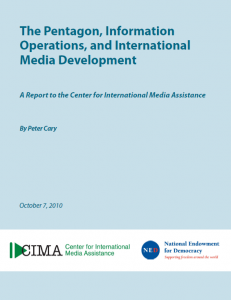
2010 Reference: The Pentagon, Information Operations, and Media Development

02 Diplomacy, 10 Security, Cultural Intelligence, InfoOps (IO), IO Multinational, IO Secrets, Media, Media Reports, Military, Peace Intelligence, White Papers
Report Online

CIMA is pleased to release a new report, The Pentagon, Information Operations, and Media Development, by Peter Cary, a veteran journalist with extensive experience reporting about the U.S. military. As part of its post-9/11 strategy, the Department of Defense has launched a multi-front information war, both to support its troops on the ground and to counter the propaganda of radical Muslim extremists. The DoD’s global public relations war, however, has fostered criticism that the department has over-reached and tarred the efforts of non-DoD Americans doing media development work abroad.

While the DoD cannot be criticized for trying to protect the lives of its soldiers, it has spent vast amounts of money on media operations–which can tend to be conducted in secrecy and whose effectiveness often cannot be measured. This report examines the impact of DoD information operations on international media development efforts and offers recommendations – including that the DoD leave media activities that could be considered public diplomacy to the State Department.

Tip of the Hat to Niels Groeneveld at LinkedIn.

America’s Next War: Southwest Border–Both Sides

03 Economy, 07 Other Atrocities, 08 Immigration, 08 Wild Cards, 09 Justice, 10 Security, 10 Transnational Crime, 11 Society, Government, Law Enforcement, Peace Intelligence

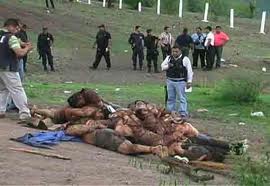
Phi Beta Iota: Most of the weapons being used by the cartels do NOT come from US gun shops.  They come from the Latin American militaries who have received large shipments of “older” weapons and ammunition from the US, and then turned around and sold them to the cartels.  Just as the US is indirectly funding the Taliban in Afghanistan, it is indirectly enabling the cartels with weapons.  Furthermore, to imagine that with the money they have the cartels cannot “order in” anything they wish from the Chinese, Israeli, or Russian arsenals, is naive in the extreme.  As many or more are dying violent deaths every day in this region as in Iraq or Afghanistan.  In our view, the current era of politicians (1981-date) is going to be held accountable for four major strategic blunders, all of them deliberate:

1.  Elective invasions and occupations of Afghanistan and Iraq on top of irresponsible military cuts and acquisition pathologies

2.  Willful acceptance from Bush Senior onwards of the willful destruction of the US economy for the benefit of a few led by Goldman Sachs, Citi-Bank, and Morgan

3.  Ignoring the depth and extent of the Southwest Border instability and threat to local communities

4.  Ignoring the imminent clean water crisis across the entire region as well as across America

On The Southwest Border (Photo Essay) (Latin America News Dispatch)

Posted by Molly OToole on Sep 15th, 2010

These photographs were taken on an 852-mile, 72-hour trip across the Southwest border, from San Diego, California to Arizona and back. Many citizens from the United States and Mexico have never seen the line that divides and defines their countries, marked by walls, barbed wire fences, U.S. Border Patrol checks and, increasingly, controversy.

2010 National Drug Threat Assessment: Southwest Border Smuggling and Violence

GAO: Border fence lagging, over budget, Home Security mismanaged project, report says (Washington Times, 24 October 2010)

Napolitano visits San Diego, says border is more secure from cartels (Los Angeles Times,October 18, 2010)

Time for U.S. to get serious about cartel threat (MySanAntonio, 16 October 2010)

Cartel Threat Grows, Illegal Numbers Drop (Homeland Security Today, 6 October 2010)

Pirate Lake: Mexican Bandits Terrorizing American Boaters on the Border (FOX.News, 4 October 2010)

Governor Perry Releases Statement on Border Violence (KRGV.com Texas, 2 October 2010)

SECURE BORDER INITIATIVE DHS Needs to Address Testing and Performance Limitations That Place Key Technology Program at Risk (GAO-10-158 January 2010)

Secure Border Initiative: SBInet Expenditure Plan Needs to Better Support Oversight and Accountability (GAO-07-309 February 15, 2007)

See Also:

Continue reading “America's Next War: Southwest Border–Both Sides”

Journal: Military Pay and Benefits–Three Solutions

03 Economy, 10 Security, 11 Society, Civil Society, Collective Intelligence, Commercial Intelligence, Corruption, Military, Officers Call, Peace Intelligence

Marcus Aurelius Recommends

As I See It — Fighting the Budget Shrug

2010/10/15

By Col. Steve Strobridge, USAF-Ret.

A recent article in Christian Science Monitor on military health care costs identified, in microcosm, the battle we face in the coming years in defending the military community’s sunk investment in its future.

Full Story Online

After citing all DoD’s arguments that it’s being “eaten alive” by “unsustainable” military health care cost increases, the reporter had the courtesy of quoting me on the other side of the argument:

“’There’s a fundamental difference between social insurance programs open to every American and military benefits earned by decades of service and sacrifice,’ said Steve Strobridge, director of Governmental Relations for MOAA.

“What Mr. Strobridge raises here is a moral issue: Should the military be treated differently than nonmilitary America when it comes to pay and benefits? The armed forces put their lives, limbs, and mental health on the line for the safety of the country, or they potentially do. On a practical level, you need strong benefits to recruit and maintain a strong, all-volunteer military.”

And then came this kicker:

“But here’s another moral angle: Sacrifice goes with the territory of being in the armed services, and the military budget needs serious cutting. Should sacrifice not also extend to the defense of the nation’s financial health if it’s in critical danger?”

And there’s the problem. Sacrifices already endured are assigned no value. It’s the budget shrug: “They volunteered, didn’t they?”

Every 15 years or so, that indifference leads to cuts that eventually wreck retention — and then national leaders have to pull out all the stops and spend even more to solve the military manpower crisis they refused to prevent.

The real issue is, “How much is it worth for the country to be able to defend itself?”

Read rest of story….

Phi Beta Iota: With all due respect to MOAA, the real issue is NOT “what price defense” but rather “how best to defend.”  There are three simple solutions to the military and and benefits problem that do NOT require reductions:

1.  Restore the universal draft including immigrants and including a mid-career “sabatical” between military and private sector.  This bonds the nation–one boot camp, three choices: Armed Forces, Peace Corps, Homeland Service.

2.  Establish Constitutional honest government tht does not lead the Republic into elective wars for ideological and private reasons on the basis of (most recently) 935 documented lies.  The same honest government can be expected to end the acquisition of things we do not need (e.g. missile defense in Poland, J-22, new nuclear submarine) at costs we cannot afford.

3.  End the fiction that future Medicare costs re unfunded.  They are only unfunded because a corrupt Congress in cahoots with a corrupt Administration (both parties) has forbidden price negotiation.  The minute we restore honest government current and future Medicare costs come down to 1% (ONE percent) of what we pay now.

Thomas Jefferson:  A Nation's best defense is an educated citizenry.

Russell Ackoff:  Stop trying to do the wrong things righter; do the right things.

Robert Steele:  The truth at any cost reduces all other costs.

2010 Julian Harston “Intelligence Assessment and Risk Analysis in Peacekeeping and Peace Support Operations – A Necessity”

Advanced Cyber/IO, Ethics, Non-Governmental, Peace Intelligence, United Nations & NGOs

Intelligence Assessment and Risk Analysis in Peacekeeping and Peace Support Operations – A necessity.

Julian Harston, United Nations, Assistant Secretary General (rtd)

October 2010

Document:  2010 JMAC Speech Julian Harston

‘We are fully aware of your long-standing limitations in gathering information. The limitations are inherent in the very nature of the United Nations and therefore of any operation conducted by it.’

UN Secretary-General U Thant to the Commander of the UN Operation in the Congo (UNOC), Lt-Gen. Kebbede Guebre, in a coded cable on 24 September 1962.

“Through error, misjudgment and an inability to recognize the scope of the evil confronting us, we failed to do our part to save the people of Srebrenica from mass murder.”

Kofi Annan

Continue reading “2010 Julian Harston “Intelligence Assessment and Risk Analysis in Peacekeeping and Peace Support Operations – A Necessity””

noble gold