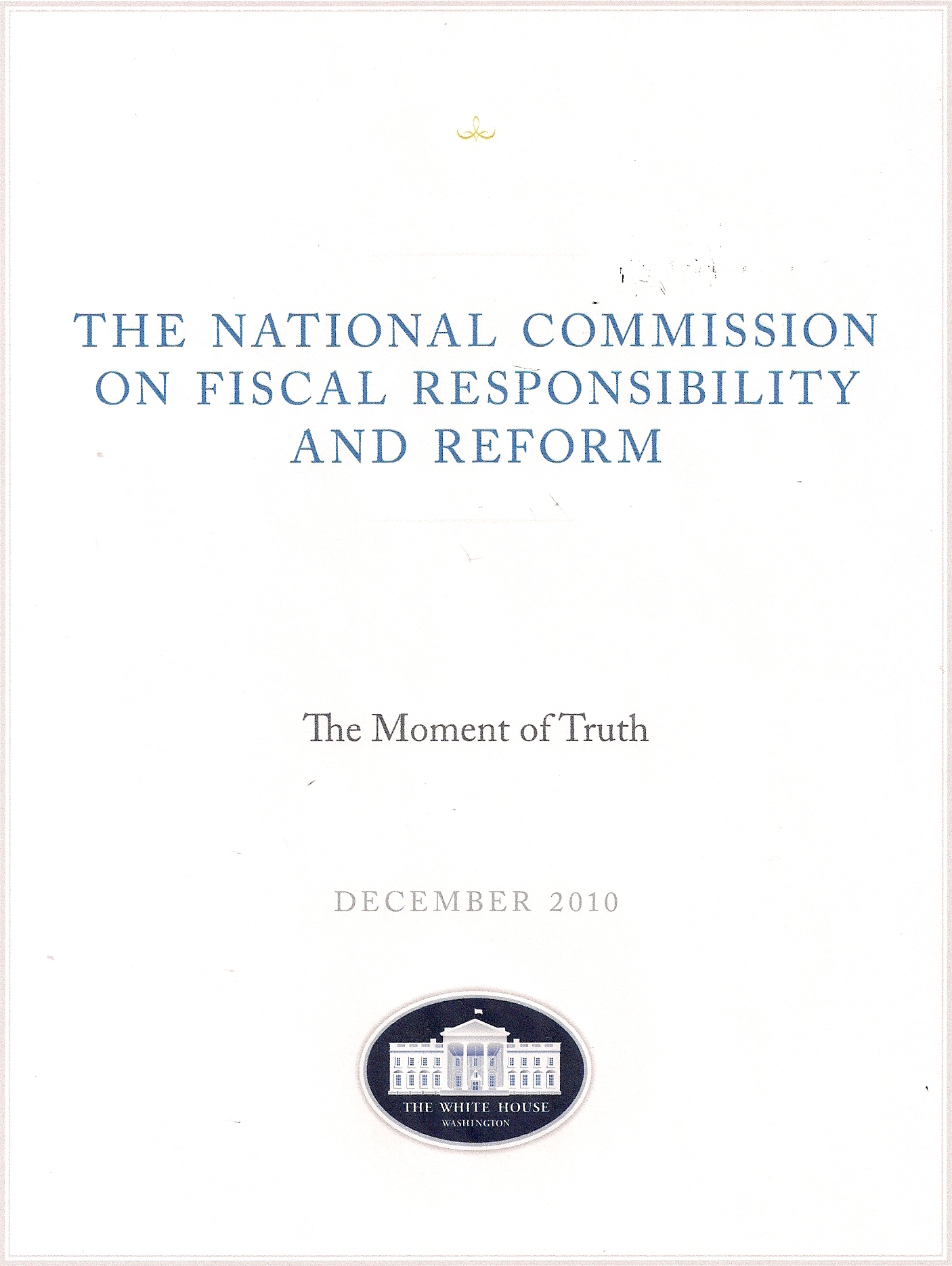
Phi Beta Iota: This report, while responsible (unlike the current food fight a year later), does not go far enough. It allows the borrowing of one trillion a year to continue, while observing that interest on the debt could reach one trillion a year by 2020. The principle recommendations, all sound but insufficient, are listed in the Overview section.
Obama’s surge and de-surge has, therefore, created a reinforcing dynamic that is playing into the hands of the insurgents by seducing the United States into increasing its reliance on a pointless, reactive, “whack-a-mole” strategy. Like a judo specialist, the insurgents will use the expenditure of American energies to exhaust American forces and paralyze American political willpower by inducing our military to over and under react to an unfolding welter widely dispersed insurgent attacks
Phi Beta Iota: At home, the teen riots have started in Philadelphia. More riots are certain to follow, and more “random” shootings of anyone representing the US Government are likely west of the Mississippi. This is almost the perfect storm–all that is missing is a water failure in New York City followed by a firestorm, and massive epidemic across California.
As anticipated, we're on the brink of a global economic depression (again).
There's a strong possibility that a long running global depression will lead to a reshuffling of the global economic and political landscape. IF that happens, many of the fiat currencies we currently use will simply evaporate.
Given this backdrop, here's today's big question:
If the dollar and euro implode…
…will the next global currency be gold or networked virtual currencies (like bitcoin)?
Until the new currency platform emerges, the safest hedge for the future is building, buying, or trading for anything that can produce food, energy, water, and products locally.
Phi Beta Iota: George Soros has dumped gold and is largely off the stock market. John Robb is one of the best observers of chaos versus resilience–his advice above coincides with William Greider's finding in Come Home America, to wit, financial offerings are fraud, asset investments (at the local level) are real. What all of this leads up to is that we should all stop investing in old systems, and instead do the right thing: invest in bottom-up localized resilience that yields sustainable benefits for all–real assets for real people.
The story of what might be called the ghost of chicken pox future starts with Najlaa International Catering Services (NICS), a KBR contractor, headquartered in Kuwait. NICS was solicited by KBR in the spring of 2008 to provide a Request for Proposal (RFP) for approximately 32 Dining Facilities (DFAC) at various military camps in Iraq under the Army's LOGCAP (Logistics Civil Augmentation Program) III program. NICS subsequently won the contract.
Around the end of the first week of November 2008 it was discovered that NICS's temporary tent city housing camp at Victory Base Camp had a confirmed chicken pox case and 37 employees were supposed to be quarantined. NICS disputed with GlobalMed, its KBR-approved medical service provider, that it was a chicken pox case. NICS began to release the employees from the quarantine tent and put them back to work at the DFAC's.
Phi Beta Iota: This little-noticed story is actually–in our view–a major investigative expose. At multiple levels, from irresponsible acquisition to potentially catastrophic infections of entire divisions by “friendly contractors,” this is a story that merits much more attention. It is also a story that reinforces our view that contractors have no business being employed or engaged in a combat zone.
In the past six months, hedge fund manager George Soros has been an outspoken critic of the economicrecovery.And as the U.S. digests the S&P downgrade, it's helpful to remember that as Barclays analysts Ajay Rajadhyaksha and Anshul Pradhan put it, The S&P's action is not a surprise. So to gain a market expert's view, we've gone through many of Soros' recent interviews and selected his main points.
Soros describes the key arguments the market is dealing with right now and makes predictions on what will happen next.
His quotes are dated in chronological order.
Phi Beta Iota: The original article has photos and more context for each quote. Eleven quotes only are below the line.
The fleet of 158 F-22 planes — costing $412 million each — has never entered combat and has been grounded since May 3 because of a government safety investigation. The probe follows more than a dozen incidents in which oxygen was cut off to pilots, a problem suspected of contributing to at least one fatal accident.
Phi Beta Iota: The Los Angeles Times was among several mainstream newspapers that refused $100,000 full page ads against the Iraq War. Like CNN and Fareed Zakaria, they do not stray from the approved party line. This is a very clear sign (to us, at least) that Wall Street is throwing DoD under the bus. Leon Panetta probably has no idea what is about to hit him–hyping Al Qaeda will not match a deliberate Wall Street shut down of all support for the Military-Industrial-Congressional-Comples (MICC). A Civil War is in progress in the USA, on multiple fronts.
My good friend Pierre Sprey took issue with my characterization of Steven Walt's critique of US grand strategy as being excellent subject to two omissions. Attached herewith are Pierre's comments — they are spot on, and I stand corrected on my characterization of “excellent” … or perhaps more accurately … I stand clearly and fairly skewered. 😉
Chuck Spinney
Cap Ferrat, France
Comments by Pierre Sprey:
Chuck,
Although I appreciate that Mr. Walt's heart is in the right place–particularly regarding his admirably staunch opposition to the malign influence of the Israelis, the neocons and “W”–his essay's concept of US grand strategy for the last two decades is just as shallow as the crap from the NYT, the WSJ, the Post and the Council on Foreign Relations. He commits the two fundamental errors common to nearly all foreign policy pundits, errors that inevitably reduce their beard-stroking discussions of “grand strategy” to silliness:
1. He assumes that the US has a foreign policy or a grand strategy when in fact it has none. The US government's actions, like every other country's, are dominated by its domestic politics. And those politics dominate every move made with regard to other countries.
2. He ignores the three most powerful–and most permanent–domestic influences on America's actions abroad: Big Oil, Wall Street and the MICC. Anybody who ignores these three in recounting U.S. actions abroad is either a) hopelessly out of touch, or b) is serving the interests of the defense, financial or oil establishments, or all three.
Aside from these two crippling errors in his reasoning, Mr. Walt's fulsome praise for the success of the USG's “offshore balancing”–that is, the Big Oil (and MICC) inspired policy of setting Iran and Iraq at each other's throats since the 1940s–shows either profound ignorance or profound Kissingerian cynicism.
One last piece of silliness in the Walt essay, quite common to journalists and historians seeking a “hook” for their American Empire story, is the idea of the August 2, 1990 “turning point”, a date that marks the beginning of the decline in our allegedly successful empire. Such hooks only mask the inescapable spread of rot within empires, usually starting at birth.
With Mr. Walt's help, I am coming to believe all public discussions of grand strategy should be greeted with howls of derisive laughter.