Chuck Spinney: Israel Past Insanity & Into Suicide

04 Inter-State Conflict, 07 Other Atrocities, 08 Wild Cards, 10 Security, 11 Society, Corruption, Cultural Intelligence, Government, IO Deeds of War
Chuck Spinney

Netanyahu may be tough enough to cow President Obama, but to date, he has been afraid to reign in his fanatical Foreign Minister Avigdor Lieberman.  His plan to” weaken” Turkey described below in the Israeli outlet YnetNews suggests that time is running out.

One thing is clear from Lieberman's outrageous proposals to sow dissension in Turkey by supporting anti-Turkish claims of Armenians and Kurds: it will blow back to unify and harden Turkish attitudes.  Israel's opportunistic cynicism and lack of a moral center revealed by these proposals boggles the mind — this is particularly true of its flip flop on the recognizing the Armenian holocaust after decades of opposing such recognition on the grounds that it diminished the moral stature of Jewish holocaust.

But these proposals are more than outrageous; they set a new standard for self-referencing stupidity: The Turkish army, which has been one of Israel's best friends in Turkey, has been in a power struggle with PM Erdogan.  The army is fundamentally, however, a proud nationalist institution.  The army will have no choice but to side with Erdogan in this conflict with Israel.  This will increase Erdogan's and the ruling AKP party's political power and give him much more domestic support to tough it out with Israel.  And Erdogan is a little like Lieberman, in that he is a self-made tough guy who grew up in the back streets of Istanbul, but he is much smarter and is a true reformer to boot.

Moreover, setting aside personalities of individuals, Turkey, unlike Israel, is not a country burdened down with emotional baggage or a sense that the world owes it. Anyone with a modicum of understanding of Turkish culture knows that it is a proud, self confident culture, with its own sense of history.  It is not dependent on handouts from others and is dynamically expanding to the status of being regional power.  Finally, a strategy based on the idea that one should publicly back a Turkey into a corner and humiliate her national honor is without a doubt the stupidest way to deal with this proud country.

One can only conclude that a failure to dump Lieberman is a signal that Israel is losing its collective mind and a kind of self-righteous paranoia is displacing common sense in a nuclear armed country.  One has to wonder what extent Obama's pusillanimity in dealing with Netanyahu has contributed to this dangerous evolution.

Israel to ‘punish’ Turkey

Jerusalem fights back: Foreign Minister Lieberman formulates series of tough moves in response to Turkish steps; Israel to cooperate with Armenian lobby in US, may offer military aid to Kurdish rebels

Shimon Shiffer, Ynet News, 9 Sept 2011

Read article.

See Also:

Israeli pyromaniacs are setting the Mideast on fire

Autumn 2011 is teeming with disasters and our fate has been entrusted to a handful of cynical politicians, headed by Benjamin Netanyahu

By Gideon Lev, Ha’aretz, 8 Sept 2011

Read article.

Owl: Who Runs the World? New Network Analysis…

03 Economy, 07 Other Atrocities, 09 Justice, 11 Society, Civil Society, Commerce, Commercial Intelligence, Corruption, Earth Intelligence, Government, IO Deeds of War, Military, Money, Banks & Concentrated Wealth, Power Behind-the-Scenes/Special Interests
Who? Who?

Who Runs the World ? – Network Analysis Reveals ‘Super Entity’ of Global Corporate

Richard Ricciardi

Planet Save, August 28, 2011

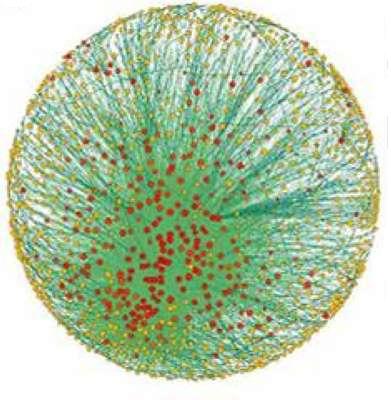
In the first such analysis ever conducted, Swiss economic researchers have conducted a global network analysis of the most powerful transnational corporations (TNCs). Their results have revealed a core of 787 firms with control of 80% of this network, and a “super entity” comprised of 147 corporations that have a controlling interest in 40% of the network’s TNCs.

Read more…

Click on Image to Enlarge

Phi Beta Iota:  It is not the first time this has been done, original work was done in the 1970's on inter-locking boards of directors, and complex forms of relationship analysis were pioneered by Samuel Milgram among others.  It is the first time it has been done in digital form with large amounts of data.  It is not, however, ”
the final answer.”  For that one must understand deep secrecy, over-lapping proxies, the role of clandestine and covert entities, the cross-over among religious organizations, criminal organizations, and government entitites nominally responsible for justice but more often than not actively engaged in crimes against the public interest.  Certainly worth a close read, but the banks are fronts, not the high table.

See Also:

+ Reference: Invisible Empire New World Order DVD + RECAP
+ The Secret Government: The Constitution in Crisis (part 1 of 9)
+ Invisible Government (part 1 of 4, John Pilger)
+ War on Democracy (1 of 10, John Pilger)
+ The American Ruling Class

Paul Fernhout: Global Groundswell Mad as Hell

Civil Society, Cultural Intelligence, Government
Paul Fernhout

Global Groundswell: Mad as Hell

Eric Best,

Truthout, 9 September 2011

EXTRACT:

These are just a few examples of grassroots reactions around the world to governments that appear out of touch with or indifferent to the lives of the people – and the people are not standing for it anymore. They are standing up. And in so doing, they are able to leverage the Internet to discover important truths, publicize their efforts, reveal the tyranny or venality of the opposition and draw those of like mind into efforts of resistance and change.

. . . . . .

It also suggests a world in which rapid collaboration can occur around an idea faster than at any time in history. And this will make for volatile politics. This should be contemplated by regimes that have lasted this long without attending to the fundamental needs of people – jobs, education, health, opportunity. Where the governments are failing to “do it all” – and it seems increasingly that all governments are – people are rising up with unprecedented power to do more – if not all – for themselves.

. . . . . .

It is not too much to imagine this will involve the United States, where many are now fed up with its intransigent if not incompetent government.

Read full article.

See Also:

Graphic: Preconditions of Revolution in the USA Today

Paradigms of Failure

Legitimate Grievances (US Internal)

Legitimate Grievances (Anti-US Global)

Reference: Stray Dogs and Virtual Armies – Radicalization and Recruitment to Jihadist Terrorism in the United States Since 9/11

03 Economy, 04 Education, 11 Society, Civil Society, Corruption, Cultural Intelligence

Since September 11, 2001, so-called “homegrown terrorists,” working alone or with others, have planned and in some cases implemented terrorist activities, contributed financial or other material support to others' terrorist activities, or become radicalized in the United States and then traveled to other countries to conduct terrorist activities directed against those countries or against the United States. This paper examines the cases of homegrown terrorism from 9/11 through 2010, highlights lessons learned from those cases that suggest actions for the future, and includes a chronology of numbers and case descriptions of terrorist events in the United States during that period. Most of the individuals involved are Muslim, but the numbers are small. A total of 176 Americans have been indicted, arrested, or otherwise identified as jihadist terrorists or supporters since 9/11. They were involved in 82 cases, a majority of which involve the actions of a single individual. Al Qaeda has increasingly used the Internet to build an army of followers. Many of the terrorists identified in this study began their journey online. However, al Qaeda has not yet managed to inspire its online followers to action. Few of the 32 locally hatched jihadist plots to carry out terrorist attacks in the United States since 9/11 got much beyond the discussion stage. Nevertheless, al Qaeda remains a threat. More terrorist attempts will occur. Traditional law enforcement, in which authorities attempt to identify and apprehend a perpetrator after a crime has been committed, is inadequate to deal with terrorists who are determined to cause many deaths and great destruction and who may not care whether they themselves survive. Public safety demands a preventive approach — intervention before an attack occurs. In addition to law enforcement, intelligence collection, and community policing, public reaction is an essential component of such preventive defense.

Source

Tip of the Hat to Berto Jongman for the pointer.

Continue reading “Reference: Stray Dogs and Virtual Armies – Radicalization and Recruitment to Jihadist Terrorism in the United States Since 9/11”

Luke Stanek: Gary Johnson, the Invisible Candidate

Cultural Intelligence

Gary JohnsonGary Johnson: The Invisible Man Running for President

Luke Stanek

TechnocratiSeptember 10, 2011 at 6:13 am

The 2012 race for the GOP nomination has been raging lately.  With the entrance of Rick Perry, many media outlets are becoming increasingly excited over the novelty of a new candidate.  What about the novelty of unique ideas?

Governor Gary Johnson has been running for President since April 21st.  He was in the first Republican debate on May 5th, which included notables like Representative Ron Paul, CEO of Godfather's Pizza Herman Cain, Former Senator Rick Santorum, and Governor Tim Pawlenty.  Since that debate, however, Gary Johnson has been left behind.

We saw what looked like a complete shutout of Ron Paul from media attention in August after the Ames straw poll, which was fairly blatant, since he was in a virtual dead heat with the victor, Representative Bachmann, who has since fallen behind him in multiple state polls.  The block on Gary Johnson is often seen as acceptable by media outlets based on his poll numbers.  While it is true he is polling only around 3%, that is the equivalent of Rick Santorum and Jon Huntsman, both of whom were invited to the Politico debate on September 7th.

The primary goal (in two uses of the word) for Johnson's campaign is to stick to New Hampshire.  If he makes an impact there, his campaign hopes that it will spread to Iowa, South Carolina, and continue to expand his name recognition and support nationally.  It worked for Reagan and Clinton (Bill, not Hill), but it failed for Rudy Giuliani in the last primary season.

Gary Johnson has a unique combination of stances.  According to his campaign website, he supports gay marriage, he believes the prohibition of marijuana is unnecessary, he promises to propose a balanced budget every year (which would reflect the fact that he had a surplus of over 1 billion dollars his final year as governor in New Mexico), he opposes the unnecessary and costly wars that the United States has involved itself in, and he supports the Fair Tax, which is a flat tax on consumption without loopholes.  These views seem to be very unique to the two-term Republican governor.

So the question is, why is Gary Johnson, a four-time competitor in the invitation-only Iron Man Challenge and a man who climbed Mt. Everest with a broken leg, not given any attention by the major media outlets?  Regardless of his stances, he sure makes an interesting story.

Also by Luke Stanek:

Gary Johnson: Outlier to the GOP, or the Future of the GOP?

Phi Beta Iota:  What we find interesting is how blatantly the Republican Party is manipulating the debates by excluding “non-establishment” mavericks; at the same time that the Democratic Party appears to be “frozen” in contemplating any candidate other than the incumbent–we'd certainly like to see Hillary Clinton run, now that it is obvious to one and all that “Hope We Can Believe In” was a total fraud.

Berto Jongman: The Emerging Global Mind

11 Society, Advanced Cyber/IO, Autonomous Internet, Civil Society, Collective Intelligence, Cultural Intelligence, Earth Intelligence, Gift Intelligence, IO Deeds of Peace, Methods & Process, Peace Intelligence, Strategy
Berto Jongman Recommends...

Featured Article

The Emerging Global Mind

Noetic Now, Issue Fourteen, September 2011

by Tiffany Shlain

Fifteen years ago I founded the Webby Awards. I was fascinated by how the Internet was connecting people all over the world in new and unexpected ways. I have also been struck by the many conversations about the problems of our day that view them as separate challenges—whether the environment, women’s rights, poverty, or social justice. It has become increasingly apparent to me that when you perceive everything as connected, it radically shapes your perspective.

The concept of interdependence isn’t new; it’s been around since the dawn of humanity. For two-hundred-thousand years, we’ve been connecting through networks both natural and technological. Interdependence has long been a tenet of Eastern philosophy and indigenous cosmologies. But the recent addition of the Internet has added a new layer, which connects us in a fresh way, giving the world a new type of central nervous system. Something happens in one place, and we can see it, feel it, and do something about it almost instantaneously.

Safety copy below the line (original URL is inconsistent)

Continue reading “Berto Jongman: The Emerging Global Mind”

noble gold