The US military began work on the Falcon back in 2003 in hopes of creating an aircraft that could be anywhere internationally within an hour. Of course, why the military would need to be anywhere, in the sky, that quickly, could be considered catastrophic for all of mankind, but a completed Falcon free of glitches and bugs won’t be ready any time soon. Meanwhile, the US military has dubbed that ability to be anywhere, anytime a “Conventional Prompt Global Strike,” or CPGS.
So far over $300 million has gone into the aircraft, which is expected to be ready for production in 2025.
Documents obtained by the Danger Room blog on Wired.com revealed important conflicts of interest regarding DARPA contractors and DARPA Chief Regina Dugan, who it turns out, is part owner and is owed money by a contractor.
Phi Beta Iota: This is a sadly classic example of funded idiocy. This program should be cut immediately, and the DARPA chief investigated and then if appropriate fired while also losing her clearances. The US Government generally, but the Pentagon and DHS most specifically, are out of control and pulling the USA down with them.
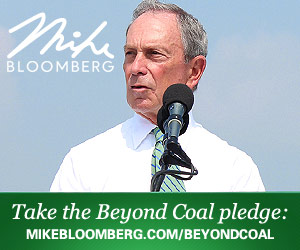
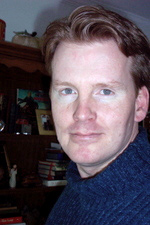
Phi Beta Iota: He certainly looks Presidential. Unfortunately, he's also at 2 strikes between the inauthentic manipulators that concocted NO LABELS and the hedge-fund slight-of-hand experts behind Americans Elect. We like Mike Bloomberg. If he can connect to reality and learn from the collective intelligence/open space communities, he could and should be President. Seven Promises to America–Who Will Do This?–pure common sense. Not from New York.
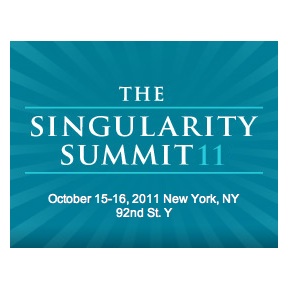
SINGULARITY SUMMIT 2011 IN NEW YORK CITY 15-16 OCTOBER 2011
The Singularity Summit 2011 will be a TED-style two-day event at the historic 92nd Street Y in New York City. The confirmed speakers include futurist Ray Kurzweil, neuroscientist Christof Koch, PayPal founder Peter Thiel, MIT cosmologist Max Tegmark, AI researcher Eliezer Yudkowsky, MIT polymath Alexander Wissner-Gross, DARPA challenge winner Riley Crane, Skype founder Jaan Tallinn, Jeopardy! champion Ken Jennings, economist Tyler Cowen, television personalities Jason Silva and Casey Pieretti, and robotics professors James McLurnkin and Robin Murphy.
To stay informed about the coming Summit, you can subscribe to the Singularity newsletter on their website.
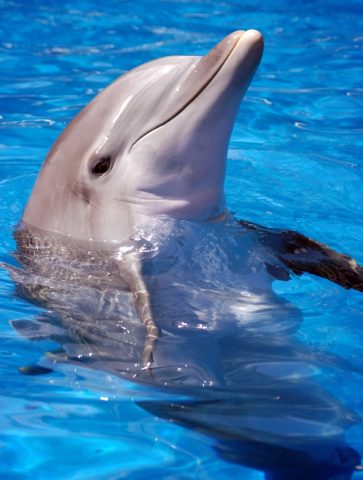
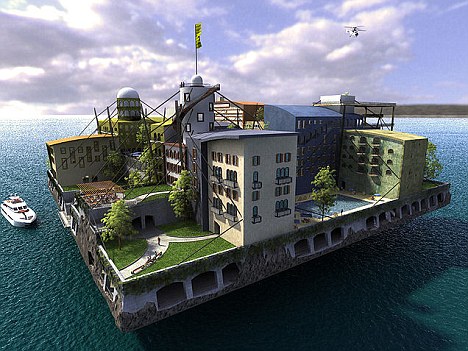
We dolphins are not too thrilled about this idea. Humans have not evolved very far from their Neanderthal roots, and the idea of human hoards invading and polluting the seas is scary to those of us for whom sustainability and resilience comes naturally. Requires further study.
PayPal-founder Peter Thiel was so inspired by Atlas Shrugged – Ayn Rand's novel about free-market capitalism – that he's trying to make its title a reality.
The Silicon Valley billionaire has funnelled $1.25 million to the Seasteading Institute, an organization that aspires to launch a floating colony into international waters, freeing them and like-minded thinkers to live by Libertarian ideals.
Click on Image to Enlarge
Mr Thiel recently told Details magazine that: ‘The United States Constitution had things you could do at the beginning that you couldn't do later. So the question is, can you go back to the beginning of things? How do you start over?'
The floating sovereign nations that Thiel imagines would be built on oil-rig-like platforms anchored in areas free of regulation, laws, and moral conventions.
The Seasteading Institute says it will ‘give people the freedom to choose the government they want instead of being stuck with the government they get.'
Phi Beta Iota: The idea of seasteading in some form of idealic libertarian island of paradise is fairly distant from reality. Accepting that the libertarians will be armed and alert, this concept fails to account for a) the outlaw sea; and b) the dead sea. There is no solution for any group of humanity that is sustainable absent its embracing all humanity.
I tapped the twittersphere the other day for the best books on the ‘future of money’ and the new/emerging economy & infrastructures. Here’s what you came up with. Attribution below each book. Other suggestions welcome! I’m getting ready for a deep dive into this content area this fall, and appreciate all the guidance you can provide!
That's a good question. Here's a partial answer that challenges conventional wisdom: most crowds that stampede, crushing people, do so when entering a venue. Why? One reason is that people are more likely to surge forward when they think they are about to be excluded from something. The other more important reason is that most venues aren't designed for rapid entry. Venue owners erect artificial barriers to entry for commercial reasons. In contrast, most venues are designed to enable fast exits and offer multiple ways to leave (per the fire code, etc.).
The lesson here is that people charged with controlling the crowd (for commercial or “security reasons”) are actually the reason most people die during crowd “stampedes.”
Amazon Page
Do People Panic/Riot/Rampage During Disasters?
The conventional wisdom is that people panic during disasters. Worse, it's assumed that many people immediately become feral looters when disasters hit. Widespread panic has become the government's worst nightmare. The boogey man that is trotted out to explain why governments need to lie (in order to keep people from panicking) or why military intervention/curfews are necessary.
However, as with stampeding crowds, the conventional wisdom on this is wrong. Rebecca shows in her book, A Paradise Built in Hell, that people don't typically panic when they find themselves at the ground zero of a disaster (after the immediate danger is over). Through the use of detailed research on a number of extreme disasters, she shows that in most cases people are very practical when confronting disaster. Better yet, they are often more courteous and much more likely to help each other when things fall apart than they are normally. They come together to survive.
In contrast to the people on the ground, she shows that the only people that actually do panic during disasters are the elites — from those with wealth to those running the government's response (I'm not talking about the first responders actually on the ground doing good work). They panic over the loss of control a disaster brings. This often results in extreme actions that only serve to make things worse: from martial law authorized to use deadly force against looters (often just people trying to survive the situation) to arbitrarily hearding people into locations that aren't able to support large groups of people.
What This Means
The lesson here is that during an extreme disaster, the people you may most need to fear are those in charge, particularly if their motives are focused on protecting elite interests put at risk by the disaster. Rebecca has a caution for governments that don't align their actions with those of the people: history shows that disasters can serve as the trigger for revolutions if handled with bad intent.
Phi Beta Iota: On the last remark, that is called a precipitant of revolution, as opposed to the preconditions that already exist, as we have been saying for some time, across the USA.
I got hold of a few truths, and could not help remembering the Phi Beta Iota quote:
Fedor Dostoevsky:A man who lies to himself, and believes his own lies, becomes unable to recognize truth, either in himself or in anyone else.
Here are some facts:
1) Saydabad is one of the worst districts in Wardak
2) Chinook loss should be attributed to American hubris.
3) July reporting shows US patrols increasingly timid.
4) Current rate for Afghan Army defectors is 30,000 rupees, around US$650, which appears to include their bringing over their weapon and other gear.
5) Crash killed 38, including 22 members of the elite SEAL Team 6 and their support element. Seven were Afghans so we are at 29, there was a crew of three. So, did we send in 22 SEALS and a crew of three, plus the Afghans to rescue six Rangers? The numbers on the Chinook do not add up. There is something seriously fishy about the government story.
6) Sure feels like Viet-Nam deja vu, where the public could not trust the government or the media to report accurately on anything having to do with our presence therer.