“I imagine a library atop a remote mountain that collects the essential information needed to re-learn practical knowledge essential to civilization. This depot, open to anyone who journeys there, is the cultural equivalent of the Svalbard seed bank, a vault on the Arctic Circle that holds frozen seeds of crop plants from around the world. The utilitarian documents in this vault would be the seeds of culture, able to sprout again if needed. It would be the Library of Utility, and it would serve as civilization’s backup.”
An excellent read from credible sources in the vein of Phi Beta Iota articulated reforms. Oh, and by the way, surprisingly this was written (in part, this is a two-author article) by a fellow naval intelligence professional (and more surprising is the fact it comes from a senior navy intelligence officer …. not something I would have expected, given how wed to cold-war ideals most of the senior leadership is…
Two Special Assistants to Chairman of the Joint Chiefs of Staff Adm. Mike Mullen say (unofficially) it’s time, strategically, to spend more on education and less on guns. We’ll hear them out.
An increase in severe weather incidents has been identified as one of the five major trends in global development aid.
The trends, which also include shifting geopolitical alliances, urban poverty, demand for natural resources and widening inequality, are contained in a new report by Irish aid organisation Trocaire.
The report, which was compiled using interviews with more than 100 global aid and development experts, will be published on Tuesday at the Leading Edge 2020 Conference in Dublin city centre.
Phi Beta Iota: Severe weather trends are an act of man, not of God. Global warming is an important but by no means the sole or even the most important environmental degradation component.
Clapper said during a hearing March 10, when asked which state has the intent to be the greatest U.S. adversary: “Probably China.” … “If the question is pick one nation state,” he said, adding that both Russia and China potentially pose a mortal threat to the United States.
Meanwhile……
The commander of U.S. forces in the Pacific said last week that he did not agree with the Director of National Intelligence James Clapper that China poses the most serious national security threat to the United States.
And finally,
Admiral Mike Mullen, chairman of the U.S. military's Joint Chiefs of Staff, accused Pakistan's intelligence agency of a having a longstanding relationship with Haqqani militants targeting U.S. forces in Afghanistan.
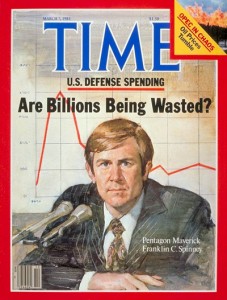
The US is fighting three wars (either losing them or stalemating at best), its economy teeters on the cusp of a double dip recession, the distribution of income is the most skewed of all the advanced countries, and this is what dominates politics — and to think, we were brought up to hold the decadence of the Roman circuses in contempt.
Phi Beta Iota: Brother Spinney's question is rhetorical. Politics died with the assassination of John F. Kennedy and Martin Luther King, and has been a theatrical performance ever since–over-priced, we might add. Hybrid networks that harmonize on the basis of shared information are increasingly routing around “imitation” governments.
Although there are important elements I disagree with — in some cases strenuously — US Army Colonel Douglas Macgregor (Ret.) has written an important piece on the fundamental changes and massive budget reductions that are needed to improve America's ability to survive into the future.
Macgregor gets the three essentials right, I believe:
1) the threat America faces is now massively reduced; its future character may very well not be what conventional wisdom expects, and Americans need to fundamentally change how we interact with the rest of the world,
2) before any changes are effected in the size, character and funding of our armed forces, a comprehensive audit must be successfully and immediately completed to understand how we spend our money, and funding should be withheld unless and until that is done, and
3) massive changes are needed in our armed forces and their leadership, organization, staffing, weapons, and more.
Phi Beta Iota: The US Marine Corps understood all this in 1989, and sought to change the defense paradigm from worst case to most likely in 1992; then Secretary of Defense Dick Cheney and his subordinates were not at all interested. Right-sizing defense–and the whole of government–is not that difficult, provided that one has absolute integrity rooted in real-world truthful intelligence. That cannot be said of the US Government today.