Reference: Policy Agendas Project Database

Budgets & Funding, Civil Society, Collective Intelligence, Cultural Intelligence, Earth Intelligence, Government, Methods & Process, Policies, Policy

“Online Database Tracks Congressional, Presidential and Public Priorities”

November 22, 2010 23:10

From a University of Texas at Austin Announcement:

As a new Congress prepares to take office, a powerful online tool from University of Texas at Austin political scientists can help answer questions about lawmakers' shifting focus over time, differences between Republican and Democratic priorities and whether wave elections correlate with policy changes in Washington.

The Policy Agendas Project database allows journalists, scholars and interest groups to easily track and compare the issues that presidents and members of Congress have taken up since 1947 and to assess how those actions reflected the mood of the country.

The interface lets users sift through dozens of issues and sub-issues — health care, the environment, taxes — to look at the topics leaders dealt with in congressional hearings, new laws, executive orders and State of the Union addresses, as well as public opinion about problems facing the nation.

[Clip]

The data generated by the project are free and publicly available. They come with software that allows them to be used in classrooms. Jones and his colleagues released earlier versions of the Policy Agendas Project while he was a professor at the University of Washington.

Tip of the Hat to Gary Price at LinkedIn.

Phi Beta Iota: This has some promise, especially if they design it to be scalable across countries and down to the state and local level.  However, since nothing is policy until it is in the budget, the real truth tellers will be if they can link this to actual budgetary authorizations, allocations, and obligations; factor in “true costs” of any given policy element; and open it up to fact-based citizen dialog and deliberation.

Journal: Wikileaks Exposes How NYT and Washington Post Shill for US Government on Iran Missile “Threat”

04 Inter-State Conflict, 05 Iran, 06 Russia, 07 Other Atrocities, 10 Security, Corruption, Government, Journalism/Free-Press/Censorship, Media, Peace Intelligence
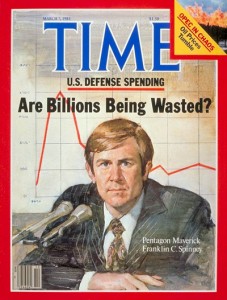
Chuck Spinney Recommends....

Iranians (Persians) have viewed Russia (Soviet Union) with distrust and as a menace or outright threat for hundreds of years, at least since the Russian Tsars cemented their expansion into Turkestan (or the Turkic countries in what is now called Central Asia).  The fact that Iran sits on top of one of the world's largest reservoirs of oil and gas adds to their fears. Russia is also much closer to Iran than the United States.  So from a Russian perspective, the emergence of an Iranian nuclear delivery capability would be a far more dangerous ramifications for Russia than for the US, at least in raw geopolitical terms.

With this in mind, the attached report by Gareth Porter begs the question: Why are the Russians less concerned about the so-called Iranian ballistic missile/nuclear threat than the United States?  Why would the Washington Post and New York Times bias their reporting in a way that downplays the Russia's more moderate view?

To ask this question is to answer it. (hint: Simply ask what other country is most obsessed by Iran?)  Chuck

December 1, 2010

Documents Show NYT and Washington Post Shilling for US Government on Iran Missile “Threat”

Wikileaks Exposes Complicity of the Press

By GARETH PORTER

Counterpunch

A diplomatic cable from last February released by Wikileaks provides a detailed account of how Russian specialists on the Iranian ballistic missile program refuted the U.S. suggestion that Iran has missiles that could target European capitals or intends to develop such a capability.

In fact, the Russians challenged the very existence of the mystery missile the U.S. claims Iran acquired from North Korea.

But readers of the two leading U.S. newspapers never learned those key facts about the document.

The New York Times and Washington Post reported only that the United States believed Iran had acquired such missiles – supposedly called the BM-25 – from North Korea. Neither newspaper reported the detailed Russian refutation of the U.S. view on the issue or the lack of hard evidence for the BM-25 from the U.S. side.

Read the rest of this article….

NIGHTWATCH EXTRACT: STRATFOR Does Not Understand Intelligence

Cultural Intelligence, Government, Methods & Process, Officers Call, Power Behind-the-Scenes/Special Interests

NIGHTWATCH For the record. STRATFOR published an essay on intelligence that posited that the tension in the intelligence world is between collectors and others and analysts. That mischaracterizes of the source of the tension and shows very limited insight.

At the national level, among national agencies, there is an overwhelming volume of information sharing on thousands of topics, but not necessarily on the right topics. The sources are well protected. An experienced professional can scan more than 2,000 reports per hour from 16 different agencies, if he has tweaked his message profile.

The tension is not between collectors and analysts, but between Security and the information flood. How do an agency's security people protect more than 50,000 electronic messages per hour in computer profiles for – or from — disgruntled employees with clearances, every hour of every day?

State Department's effort to be a team player after 9/11 by making most SECRET-classified State cables accessible to anyone with a SECRET clearance now appears to have been excessive. It enabled the Wikileaks event this week.

In an earlier time, no PFC in the Army would ever have had such access to diplomatic traffic. Prior to 1986 the government had no personal computer work stations. Then, a PFC got to read the paper reports that senior personnel gave him to read and evaluate. He was accountable for them, usually had to sign a custodian's receipt and had a deadline for his evaluation. That system was inflexible to the point of near uselessness, but it was secure.

The US intelligence confederation of agencies still has not found a formula for balancing security and access that is any better than “need to know.” 9/11 showed that “need to know” is too restrictive for efficient counter terror cooperation. The Wikileaks event showed that the “need to share” initiative is too broad to ensure security of critical information and systems.

This is a domain still waiting for a new good idea.

NIGHTWATCH KGS Home

Phi Beta Iota: STRATFOR does not understand the intelligence discipline, but this is not a surprise since most senior managers of US secret intelligence do not understand it either.  Our earnest NIGHTWATCH colleague has it half-right: the security (and legal) mind-sets are both death rattles for US intelligence.  He is incorrect on the meaning of WikiLeaks–what WikiLeaks actually represents is the visible collapse of government relevancy and the end of government (as well as corporate) legitimacy as a means of organizing global to local security and sustainability.  The government is–as one journalists called George Bush I–an “empty suit.”  It lacks citizen-centered structure, purpose, and maturity.  With respect to intelligence, there has been no lack of good ideas, only a total resistance to ideas that threaten the status quo, which is totally devoted to keeping the Military-Industrial-Congressional Complex (MICC) going, at taxpayer expense.  Conflicts include those between inputs (empire building) and outputs (no accountability for relevance and timeliness); between technical collection (very high profit margins) and processing (too hard, low profit, analysts don't have money to spend and also lack substantive knowledge of what to demand); between technical disciplines (very high profit margins, no accountability) and human/open disciplines (very low profit margin, hard to do, actually requires professional skill); and between “secrets for the President” (no accountability despite a 4% accomplishment record) and decision-support for everyone else (which would actually make intelligence timely, relevant, actionable, and a profit center for the public).  US Intelligence could double or triple its utility overnight with three simple steps:

1.  Open Source Agency (OSA) outside the wire, civil affairs representing the military

2.  Multinational Multiagency Multidiscipline, Multidomain Information-Sharing and Sense-Making (M4IS2) with OSA funding for regional intelligence centers funded by US but manned by indigenous nations and controlled by indigenous nations (all eight tribes of intelligence)

3.  Whole of Government redirection of resources from dysfunctional national security state to a new hybrid model that melds the eight tribes with a slightly restructured government (three Vice Presidents for Commonwealth, Education-Intelligence-Research, and Global Engagement) that scrubs fraud, waste, and abuse while waging peace and empowering the five billion poor starting here in the USA.

The demise of the US Government began immediately after World War II, as President and General Ike Eisenhower warned it would, with the MICC taking control of the government budget while the banking world began experimenting with “exploding the customer” and getting away with it.  Each decade has seen a severe upward climb of both of these pathologies, coincident with–after Viet-Nam–with a decline in the efficacy of investigative journalism and citizen activism.  The good news is that the decline of the later was what Bill Moyer in Doing Democracy calls “stage five” or “the darkness.”  2012 is a convergence and emergence year.  No one–least of all Phi Beta Iota–knows what it will bring, with one observation: the game will change.

If there is anyone  out there able to focus Presidential attention on the fundamentals, here are the four references that matter:

2010: Human Intelligence (HUMINT) Trilogy Updated

2010 M4IS2 Briefing for South America

2009 Perhaps We Should Have Shouted: A Twenty-Year Restrospective

2000 ON INTELLIGENCE: Spies and Secrecy in an Open World

Citizen Command Center Humanitarian Relief Database for Action

02 Infectious Disease, 03 Environmental Degradation, Civil Society, Earth Intelligence, Geospatial, Gift Intelligence, International Aid, Non-Governmental, Peace Intelligence
quickstart link

http://www.citizencommandcenter.org/quick/start
The purpose of this site is to provide a central location to find resource status information for disaster zones and to help regions prepare for disaster.

  • Disaster Response
  • Disaster Preparedness
  • On-going Human Services

We aim to enter command & control information for regions IN ADVANCE of a disaster, AND immediately following, so as to help relief groups hit the ground running, and to help survivors immediately locate services and supplies in the event of a disaster in their region. This command & control information might be as simple as entering the name and cell phone for groups that are prepared to be first responders in a region. Or if a region's disaster community chooses, it can mean entering a list of disaster response units and/or facilities that are on “standby” for disaster response activity. There are many disaster response “command and control” systems in use by VOADs and EMA organizations. We hope to compliment what these established systems offer and we hope to offer unaffiliated groups a method for tracking their own needs and resources.

Reference: No Labels “Non-Party” = “Four More Years” for Wall Street

07 Other Atrocities, 11 Society, Analysis, Blog Wisdom, Civil Society, Corporations, Corruption, Cultural Intelligence, InfoOps (IO), Media Reports, Misinformation & Propaganda, Money, Banks & Concentrated Wealth, Open Government, Policy, Politics of Science & Science of Politics, Power Behind-the-Scenes/Special Interests, Reform, Strategy

No Labels Best Links

Wikipedia Overview

No Labels Home Page

See Also:

The founding fathers had no labels (San Diego Examiner)

WARNING NOTICE:  http://www.taylormarsh.com has a major virus.  Do NOT go to their story on the Houston meeting (apart from its being hype, now it's just plain dangerous).

Phi Beta Iota: We believe the following:

1.  Michael Bloomberg wants to be President.

2.  Wall Street wants Michael Bloomberg to be President not because Barack Obama has failed them, but because he has so visibly pandered to them.  The elite mob includes Burson-Marsteller, the Clintons and Joe Lieberman as well as Peter Peterson and David Walker (former Comptroller General who declared US insolvent in 2007 without being witting of financial crimes legalized by the Clintons and sanctified by Bush II and then Obama).

3.  Two groups have been started, one on the West Coast, one on the East Coast, both focused on convergence in the middle, with Michael Bloomberg as the “natural” anti-thesis to the Republican and Democratic alternatives.  Both are eligible for and will channel massive funding from corporations exercising their ill-gotten “personality” rights.

Continue reading “Reference: No Labels “Non-Party” = “Four More Years” for Wall Street”

Reflections on Convergence in 2012, Emergence Unknowable

Cultural Intelligence

Executive Summary: Extremes are in active conflict today within the USA, with Transpartisan Upwising being one extreme and the No Labels “Non-Party” being another extreme.  They join the dysfunctional extremists of the two-party tyranny/bi-opoly.  Not yet emergent is a co-creative function that brings together public money, public knowledge, and a public process to create a new form of hybrid self-governance that strips the power of the purse and the power to declare war from visibly unfit politicians and their banking masters, and restores all sovereign powers to We the People.  2012 is a year of convergence.  What will emerge is not yet known.  Below are a few thoughts on this.

Continue reading “Reflections on Convergence in 2012, Emergence Unknowable”

Journal: What is the Nature of the Shia-Sunni/Persian-Arab Confrontation?

08 Wild Cards, Civil Society, Cultural Intelligence, IO Sense-Making
Chuck Spinney Recommends....

Much ado is being made of the “revelation” in the Wikileaks data dump that some Sunni Arab leaders were quietly in favor of an American and/or Israeli strike on Iran to terminate Iran's alleged nuclear weapons program with extreme prejudice.  Implicit in this war-mongering hysteria is an acceptance of an implacable Shia-Sunni conflict threatening the stability of the Islamic world and perhaps the belief on the part of the neocon Judeo-Christian great gamesters that this divide offers an opportunity to exploit the divisions in Islam. The attached article by Arshin Adib-Moghaddam is important in this regard, because he aims to debunk popular assertions about the nature of the Shia-Sunni conflict and/or the Arab-Persian conflict.  If Moghaddam is right, the game to remake the Islamic world in our image may be a little too complex for the neatly compartmented minds of the great-game wannabees in Versailles on the Potomac.

According to a bio in the Guardian, “Arshin Adib-Moghaddam is a lecturer in the comparative and international politics of western Asia at the prestigious School of Oriental and African Studies, University of London. He was born in the Taksim area of Istanbul to Iranian parents and raised in Hamburg/Germany. He studied at the University of Hamburg, American University and Cambridge. He is the author of The International Politics of the Persian Gulf: A Cultural Genealogy, Iran in World Politics: The question of the Islamic Republic and A metahistory of the Clash of Civilisations (forthcoming)”

This Sunni-Shia relations is an area I do not know much about, so I asked a friend of mine, a retired colonel, with extensive experience living and working in the Middle East, for his evaluation of Moghaddam's thesis.  My friend responded as follows:

Colonel's response:

Continue reading “Journal: What is the Nature of the Shia-Sunni/Persian-Arab Confrontation?”