Saudi Arabia’s public anger against the United States masks the kingdom’s growing concern about its diminishing influence in the Persian Gulf and the wider Arab world.
It has nothing to do with U.S. policy toward the Palestinians, Washington’s seeming oscillation toward Syria, or President Barack Obama’s support for democratic transitions in “Arab Spring” countries and his hesitancy to support Mohamed Morsi’s removal from Egypt’s presidency through a military coup.
The Saudis are lashing out because they fear a possible U.S.-Iranian rapprochement would elevate Iran’s rightful position as the key power in the Persian Gulf and correspondingly reduce Saudi Arabia to a secondary role. The Saudi Kingdom would resist playing a second fiddle to Iran.
The Trans-Pacific Partnership Agreement — an international trade agreement some years in the making between major world powers including the U.S., Canada and Japan — has seemed in some minor jeopardy over revelations that the NSA has secretly been spying on ally world leaders. Secretary of State John Kerry has been in damage control mode to keep the deal afloat and on schedule.
On Tuesday, WikiLeaks offered a peak into the trade agreement, publishing a leaked draft chapter. Predictably, the TPP promises to be a deal in the interest of major corporations above consumers. Having received an exclusive early view of the draft from WikiLeaks, the Sydney Morning Herald called it a “bitter medicine.”
Introduction | The Deterioration of Government John j. Hamre
PART 1: GETTING OUR HOUSE IN ORDER
Can We Rebuild a National Security Consensus? Kathleen h. Hicks
The Snowden Effect: Can We Undo the Damage to American Power? James a. Lewis
What Battlefield Lessons Have We Learned from 12 Years of War? Maren Leed
What Has Syria Taught Us about the Right Time to Use Force? Clark a. Murdock
How Can We Develop a Sustainable Resource Strategy for Defense? David j. Berteau
PART 2: THE CHANGING ORDER IN THE MIDDLE EAST
What Should the United States and its Allies Expect from the Middle East? Anthony h. Cordesman
What Should the Middle East Expect from the United States and its Allies? Jon b. Alterman
Is Russia Back as a Power in the Middle East? Andrew c. Kuchins
Can We Stop Violent Extremism from Going Mainstream in North Africa? Haim Malka
PART 3: SUSTAINING THE RE BALANCE
Should We Change Our Security Approach in Asia? A conversation with Michael j. Green , Victor Cha, and Christopher k. Johnson moderated by Zack Cooper
How Important Is TPP to Our Asia Policy? A conversation with Ernest z. Bower ,
Matthew Goodman , and Scott Miller moderated by Murray Hiebert
How Will the Shifting Energy Landscape in Asia Impact Geopolitics? Sarah o. Ladislaw
How Should We Address Nuclear Risks in Asia? Sharon Squassoni
PART 4: NONTRADITIONAL SECURITY APPROACHES
Are There Opportunities to Bolster Regional Security Cooperation? A conversation with Heather a. Conley, Jennifer G. Cooke , Carl Meacham , aram nerguizian, and Ralph a. Cossa moderated by Samuel Brannen
What Can Civilian Power Accomplish in Foreign Crises? A conversation with j. Stephen Morrison, Daniel f. Runde, and Johanna Nesseth tuttle moderated by Robert d. Lamb
Can We Adapt to the Changing Nature of Power in the 21st Century? Juan Zarate
Phi Beta Iota: CSIS means well, but it does not know what it does not know, and that makes its “analysis” inherently unreliable. By this point in time CSIS could — if it wanted to — have a holistic analytic model (ten threats, twelve policies, eight demographics), and also have embraced a cradle to grave true cost economic methodology. This is a mixed group of essays, some of which are outrageously out of touch with both ethics and reality.
I have done what seem endless stories about pedophilia and the Roman Catholic clergy, and another number about Islamic orthodoxies profound sexual dysfunctionality concerning women, and several on the same problem with Ultra-orthodox Judaism. Here is another story. I think one has to conclude that religious fundamentalism of whatever stripe is defined by its sexual pathologies particularly the suppression of women, and the sexual exploitation of children.
Journalists self-censoring is what you see in authoritarian states. I saw it in the Soviet Union, in Poland, Hungary, and East Germany. Now we are seeing it here.
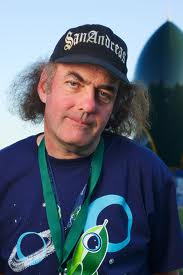
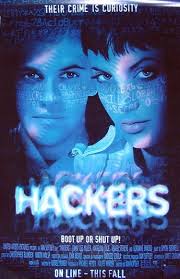
NOTE: The movie “Hackers” was based on HOPE co-founder and spiritual leader Emmanuel Goldstein (not his real name) and his various Pheaker (phone hacks) and Hacker (computer hacks) colleagues. There is no other event on the planet quite like this, at least in the English language. Robert Steele moves heaven and earth to be there (it takes place every two years). In passing, you can leave HOPE a certified lock picker, fully equipped. Hackers are like astronauts, full of the right stuff, pushing the edge of the envelope in whatever domain they choose (not just software).
More than two years since the worst nuclear disaster since Chernobyl, the Fukushima power plant meltdown is still a major, global environmental problem. And the staggering price tag for cleaning it up continues to rise.
The Japanese government just announced that it’s borrowing about $30 billion more to cover costs related to Fukushima, bringing the total amount the Japanese government has borrowed to clean up the mess to around $80 billion, more than three times the amount BP spent to clean up the massive oil spill in the Gulf of Mexico in 2010. That money will go into cleanup, along with compensation for the people who may never go back to their homes near the contaminated area, and the decommissioning of the nuclear reactors. But it’s not money that the government is on the hook for, Reuters reports:
Tokyo Electric Power, or Tepco, the owner of the Fukushima plant, remains responsible for covering the costs of compensation and paying to clean up the surrounding areas under a framework set by the previous government.
But the government has issued bonds to pay the related costs up front. The embattled utility remains on the hook for paying back the money spent to the government over a period of decades under current arrangements.
Fortunately, in the shadow of Fukushima, there is some good news. Just about 12 miles off the coast of the Fukushima prefecture, a symbolic floating wind turbine switched on for the first time on Monday. The turbine alone will send 2,000 kilowatts to Tohoku Electric Power Co. It’s a small step in the country’s push toward more renewable power, but the wind farm is expected to eventually have 143 turbines with a generating capacity of one gigawatt. But it’s just one of the ways Japan looking to make up for the lost energy production from its nuclear reactors, which accounted for about 30 percent Japan’s electricity capacity.
…. Read this obscene description of the “let them eat cake” policies of the Fed (and by extension, the President and Congress) that feed Wall Street at the expense of Main Street.
We went on a bond-buying spree that was supposed to help Main Street. Instead, it was a feast for Wall Street.
By ANDREW HUSZAR
I can only say: I'm sorry, America. As a former Federal Reserve official, I was responsible for executing the centerpiece program of the Fed's first plunge into the bond-buying experiment known as quantitative easing. The central bank continues to spin QE as a tool for helping Main Street. But I've come to recognize the program for what it really is: the greatest backdoor Wall Street bailout of all time.
Five years ago this month, on Black Friday, the Fed launched an unprecedented shopping spree. By that point in the financial crisis, Congress had already passed legislation, the Troubled Asset Relief Program, to halt the U.S. banking system's free fall. Beyond Wall Street, though, the economic pain was still soaring. In the last three months of 2008 alone, almost two million Americans would lose their jobs.
The Fed said it wanted to help—through a new program of massive bond purchases. There were secondary goals, but Chairman Ben Bernanke made clear that the Fed's central motivation was to “affect credit conditions for households and businesses”: to drive down the cost of credit so that more Americans hurting from the tanking economy could use it to weather the downturn. For this reason, he originally called the initiative “credit easing.”