Patrick MeierThe permanence of social media such as tweets presents an important challenge for data protection and privacy. This is particularly true when social media is used to communicate during crises. Indeed, social media users tend to volunteer personal identifying information during disasters that they otherwise would not share, such as phone numbers and home addresses. They typically share this sensitive information to offer help or seek assistance. What if we could limit the visibility of these messages after their initial use?
Click on Image to Enlarge
Enter TwitterSpirit and Efemr, which enable users to schedule their tweets for automatic deletion after a specified period of time using hashtags like #1m, #2h or #3d. According to Wired, using these services will (in some cases) also delete retweets. That said, tweets with #time hashtags can always be copied manually in any number of ways, so the self-destruction is not total. Nevertheless, their visibility can still be reduced by using TwitterSpirit and Efemr. Lastly, the use of these hashtags also sends a social signal that these tweets are intended to have limited temporal use.
Note: My fellow PopTech and Rockefeller Foundation Fellows and I have been thinking of related solutions, which we plan to blog about shortly. Hence my interest in Spirit & Efemr, which I stumbled upon by chance just now.
The United States, Afghan, Qatari, and Pakistani governments have all voiced their support for the opening of a Taliban office in Doha in order to promote peace negotiations. Some consider transforming the Taliban from an armed insurgency into a legitimate political group to be the critical first step in the Afghan peace process. However, to date, reconciliation efforts have stalled and focus more on rhetoric rather than substance.
There is no concrete evidence that Taliban leadership is either worn down or desperate to reach a peace agreement. Attempting to secure his legacy as a peacemaker, Afghan President Hamid Karzai wants to reach an agreement before the end of his term in April 2014. Because the Taliban have also cooperated somewhat with this principle of reconciliation, it is not immediately clear why the current approach has achieved nothing.
Viet-Nam Viet-Cong Redux
The answer is that the Doha peace process has been riddled with unrealistic expectations, and remains hopelessly inconsistent. Such reconciliation efforts without strategy and clear objectives reflect a hook without bait – while encouraging, these talks are doomed to fail without significant reform. Only with realistic expectations, a coherent strategy, national solidarity, and lots of patience, will reconciliation stand a chance of materializing.
Where We've Been Thus Far
The reconciliation offer requires three specific things from the Taliban: ending violence, breaking ties with al-Qaeda, and accepting the Afghan Constitution. The fourth, less advertised condition is the acceptance of a residual ISAF element in Afghanistan post-2014. At a recent summit in London, British, Afghan and Pakistani leaders set a six-month timeline to reach a peace settlement.
But substantive results are unlikely to emerge until after the 2014 Afghan Presidential elections. This is the single most important date in the reconciliation process and will set the tone for future debate. A six-month deadline to reach an agreement is not only unrealistic, but also damaging to the credibility of the process.
None of the works under review provides the full answers to these questions, although Alexander Cooley’s book, Great Games, Local Rules, comes closest. They all agree on the unprecedented rise of China’s influence in Central Asia. Marlène Laruelle and Sébastien Peyrouse, scholars at George Washington University in Washington, D.C., demonstrate in The Chinese Question in Central Asia that China is already the dominant economic power in the region.
Click on Image to Enlarge
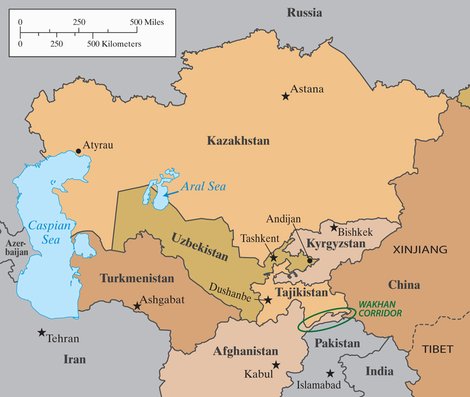
China has also taken care of one vital strategic interest since 1991: making sure that the Uighurs, China’s largest Muslim ethnic group who live in the western province of Xinjiang, do not seriously threaten to become independent and that the hundreds of thousands of Uighurs who live in Central Asia do not help them do so. During the 1950s large numbers of Uighurs fled the Maoist regime to seek shelter in Soviet Central Asia where they were relatively well treated.
After 1991 China put immense pressure on the three Central Asian states that border Xinjiang—Kazakhstan, Tajikistan, and Kyrgyzstan—to tightly restrict all Uighur political activity on their soil. China offered sweeteners such as resolving the border disputes that had plagued Chinese–Soviet relations in Central Asia for decades. Within a decade the borders between China and the Central Asian states were demarcated and settled, allowing for China’s rapid economic involvement in the region.
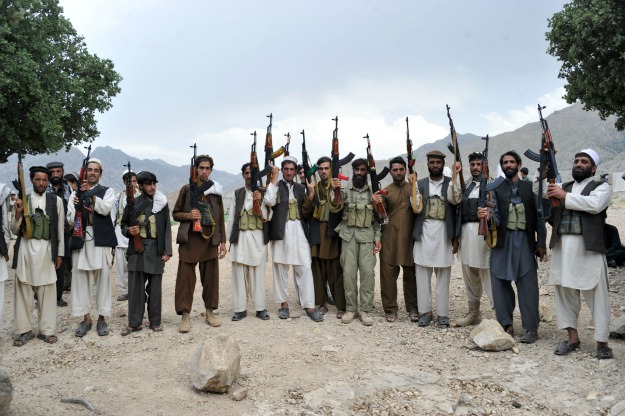
Still, Uighur nationalism and Islamic militancy have continued to mount in Xinjiang, as China has inundated the province with Han Chinese and severely repressed the Muslims. While the Uighur populations in Central Asia have been largely silenced, some Uighurs have been training and fighting with the Taliban in Pakistan and Afghanistan.
During the past decade China has invested heavily in Central Asia. Laruelle and Peyrouse write that
A new generation of cash-strapped ‘millennials' have very different expectations about jobs, credit and money. As Michelle Fleury reports, they are using the internet for a new ‘sharing economy'.
Confused about social media monitoring? A thread at Quora, “Which Are the Best Social Media Monitoring Tools?” suggests that like search, social media monitoring is pretty tricky. The overall consensus statement makes it clear there is no simple answer: “No overall best tool. Pick the best fit for your needs.” Hmm.
Several respondents share their thoughts. One had compared Radian6 and Sysomos, and found the latter much easier to use. Another liked Engagor for its low price point. Perhaps the most comprehensive (though admittedly promotional) answer comes from Web Liquid account executive Ben Semmar, who shares:
“[. . .] Over the past couple of months, I’ve been involved in the creation of a Social Media Monitoring Buyer’s Guide. We began with a list of over 40 vendors, and based on a variety of criteria, whittled it down to a list five ‘finalists’ that we then conducted hands-on trials with. We found that some tools perform better than other tools in certain areas (but, really, doesn’t everything?) and so we don’t proclaim one tool king of them all; suffice it to say, though, that the five tools we tested are, based on our experience with and objective evaluation of the market, the best out there. You can find the study here: http://www.webliquidgroup.com/social-media-monitoring-tool-buyers-guide.”
Note that the guide he mentions is free, but requires a name and email address to view. Semmar goes on to assert one important caveat: We have not reached the point where algorithms can make reliable judgments about which insights a business should focus on, and how to use them. Though quality monitoring software can be a useful tool, the human mind is still required to wield it. (For now.)
Ansar al-Sharia running training camps in Benghazi and Darnah
U.S. intelligence agencies earlier this month uncovered new evidence that al Qaeda-linked terrorists in Benghazi are training foreign jihadists to fight with Syria’s Islamist rebels, according to U.S. officials.
Ansar al-Sharia, the al Qaeda-affiliated militia that U.S. officials say orchestrated the Sept. 11 attacks on the U.S. diplomatic compound and a CIA facility in Benghazi, is running several training camps for jihadists in Benghazi and nearby Darnah, another port city further east, said officials who discussed some details of the camps on condition of anonymity.
The officials said the terror training camps have been in operation since at least May and are part of a network that funnels foreign fighters to Syrian rebel groups, including the Al-Nusra Front, the most organized of the Islamist rebel groups fighting the Bashar al-Assad regime in Damascus.
Civil Liberties – Lionel Dricot:Manning, Snowden, Assange, Miranda, The Guardian. With each passing day, we receive confirmation of a truth that many would prefer to ignore: we are at war. An undeclared, relatively quiet war, but nonetheless a war.
Unlike a conventional war, a civil war has no well defined front, nor belligerents clearly identifiable by the color of their uniform. Each camp is everywhere, in the same city, the same area, or the same family.
On one hand, there is the class in power. Rich, powerful, they are used to control, they are alien to questions. They simply make decisions and are firmly convinced to do so in the public interest. They have many supporters that are neither rich nor powerful. But they fear any change. Or have strong habits. Or personal interests. Or have the fear of losing some of their properties. Or they simply don’t have the intellectual ability to understand the ongoing revolution.
On the other hand, there is the digital generation. From all sexes, all ages, all cultures, all geographic locations. They talk to each other, exchange experiences. Discovering their differences, they seek common ground while calling into question the deep faith and values of their parents. I call them a “generation” but they are from all ages.
This population has developed values of its own and an uncommon analytical intelligence. They use all the tools available to quickly pinpoint contradictions, ask relevant questions, lift the veil of false appearances. Across thousands of miles, its members can feel empathy towards all humans.