Marcus Aurelius: US IC UNCLAS Syria CW Assessment

Corruption, Government, Ineptitude, IO Deeds of War, Peace Intelligence
Marcus Aurelius
Marcus Aurelius

Special attention to last four paras on page 2. Administration is forcing IC beyond its objective collection/reporting role into political advocacy.

Intelligence Community Unclassified Assessment
Chemical Weapons Attack by the Syrian Regime

The United States Government assesses with high confidence that the Syrian government carried out a chemical weapons attack in the Damascus suburbs on August 21, 2013, resulting in a large number of casualties, including the deaths of 1,429 people, among them 426 children. We further assess that the regime used a nerve agent in the attack.

This assessment is based on a wide variety of sources, including: human, signals and geospatial intelligence; multiple accounts describing chemical-filled rockets impacting opposition-controlled areas; accounts from international and Syrian medical personnel; thousands of social media reports; and information from a highly credible international organization reporting that three hospitals in the Damascus area received approximately 3,600 patients displaying symptoms consistent with nerve agent exposure.

Syrian regime officials prepared for the attack. We have intelligence leads us to assess that Syrian government chemical weapons personnel were operating in a Damascus suburb near an area that the regime uses to mix chemical weapons, including sarin. On August 21, a Syrian regime element prepared for a chemical attack in the Damascus area, including through the utilization of gas masks.

Syrian forces conducted the attack. Satellite detections corroborate that attacks from a regime-controlled area struck neighborhoods where the chemical attacks reportedly occurred. This includes the detection of rocket launches from regime controlled territory early in the morning, approximately 90 minutes before the first report of a chemical attack appeared in social media.

Syrian regime officials discussed the attack. We intercepted communications involving a senior official intimately familiar with the offensive who confirmed that chemical weapons were used by the regime on 21 August and who was concerned with the U.N. inspectors obtaining evidence. On the afternoon of 21 August, we have intelligence that Syrian chemical weapons personnel were directed to cease operations. At the same time, the regime intensified the artillery barrage targeting many of the neighborhoods where chemical attacks occurred. In the 24 hour period after the attack, we detected indications of artillery and rocket fire at a rate approximately four times higher than the ten preceding days.

Victims displayed the symptoms of chemical weapons. One hundred videos relating to the attack show large numbers of victims exhibiting physical signs consistent with, but not unique to, nerve agent exposure—including unconsciousness, foaming from the nose and mouth, constricted pupils, rapid heartbeat, and difficulty breathing. Several videos show what appear to be numerous fatalities with no visible injuries, which is consistent with death from chemical weapons and inconsistent with death from small-arms, high-explosive munitions or blister agents.

This is not the first time that the Syrian regime has used chemical weapons. The Syrian regime possesses numerous chemical agents, including mustard, sarin, and VX and has thousands of munitions that can be used to deliver chemical warfare agents. We assess with high
2
confidence the Syrian regime has used chemical weapons on a small scale against the opposition multiple times in the last year. We assess that the regime’s frustration with its inability to secure large portions of Damascus may have contributed to its decision to use chemical weapons on August 21.

It is highly unlikely that the opposition could have executed or fabricated the attack. We have seen no indication that the opposition has carried out a large-scale, coordinated rocket and artillery attack like the one that occurred on August 21. Our intelligence sources in the Damascus area did not detect any indications in the days prior to the attack that opposition affiliates were planning to use chemical weapons. Moreover, we assess the Syrian opposition does not have the capability to fabricate all of the videos, physical symptoms verified by medical personnel and NGOs, and other information associated with this chemical attack.

The use of chemical weapons in Syria threatens U.S. national security interests. Threatening to unravel the long-established international norm against the use of chemical weapons, for which there must be accountability and consequences; risking further violence and instability that threatens the region including close allies and partners like Israel, Turkey and Jordan; and increasing the risk that these weapons will be obtained by terrorist groups who might use them against the United States.

The international community is condemning this attack and calling for action. The Arab League declared that they have decided “to hold the Syrian regime fully responsible for this crime.” The Organization for Islamic Cooperation has said that the regime must be held “legally and morally accountable for this heinous crime.” NATO’s North Atlantic Council declared that “any use of such weapons is unacceptable and cannot go unanswered. Those responsible must be held accountable”.

The purpose of any response would be limited. The President has not yet made a final decision on how to respond. That said, any response would be focused on the regime’s use of chemical weapons. We need to send a clear message to Assad, his allies, and the world that the use of chemical weapons will not be tolerated. This is important to achieving the goal of stopping chemical weapons use in Syria, saving lives and deterring the use of chemical weapons by others in the future.

This is not Iraq 2003. The response that the President is considering is limited, tailored, and focused on the issue of chemical weapons. The President has made clear that he is not considering an open-ended military intervention aimed at regime change, nor is he considering U.S. boots on the ground. This is not Iraq or Afghanistan (ground forces) or Libya (a sustained air campaign).


Eagle: NRA joins spy lawsuit, says NSA creating gun registry

07 Other Atrocities, Corruption, Government, Law Enforcement
300 Million Talons...
300 Million Talons…

NRA joins spy lawsuit, says NSA creating gun registry

Group joins lawsuit seeking end to spy agency's collection of Americans' phone records.

Michael Winter

USA TODAY, 4 September 2013

The National Rifle Association has joined a lawsuit against the federal government's sweeping surveillance program, claiming the collection of phone records and other data violates First Amendment rights and amounts to an illegal gun registry.

In supporting the American Civil Liberties Union's lawsuit, the NRA on Wednesday filed a supporting brief arguing the National Security Agency's datamining “could allow identification of NRA members, supporters, potential members, and other persons with whom the NRA communicates, potentially chilling their willingness to communicate with the NRA.”

The NSA's phone database would let the government track whether gun owners called the NRA, gun stores, shooting ranges or others.

The brief also says the database “could allow the government to circumvent legal protections for Americans' privacy, such as laws that guard against the registration of guns or gun owners,” thereby creating an illegal “national gun registry.”

Continue reading “Eagle: NRA joins spy lawsuit, says NSA creating gun registry”

Ioannis Koskinas & Kamal Alam: Reconciliation foolosophy: Fishing without bait

02 Diplomacy, 03 Economy, 04 Inter-State Conflict, 05 Civil War, 07 Other Atrocities, 08 Proliferation, 08 Wild Cards, 09 Justice, 09 Terrorism, 10 Security, 10 Transnational Crime, 11 Society, Civil Society, Cultural Intelligence, Ethics, Government, IO Deeds of Peace, Military, Officers Call, Peace Intelligence
Cianni Koskinas
Cianni Koskinas

使用谷歌翻译在下一列的顶部。

गूगल अगले स्तंभ के शीर्ष पर अनुवाद का प्रयोग करें.

Google sonraki sütunun üstünde Çevir kullanın.

Используйте Google Translate на вершине соседней колонке.

گوگل اگلے کالم میں سب سے اوپر ترجمہ کا استعمال کریں.

Kamal Aman
Kamal Alam

Reconciliation foolosophy: Fishing without bait

By Ioannis Koskinas, Kamal Alam

Foreign Policy, 14 June 2013

The United States, Afghan, Qatari, and Pakistani governments have all voiced their support for the opening of a Taliban office in Doha in order to promote peace negotiations.  Some consider transforming the Taliban from an armed insurgency into a legitimate political group to be the critical first step in the Afghan peace process. However, to date, reconciliation efforts have stalled and focus more on rhetoric rather than substance.

There is no concrete evidence that Taliban leadership is either worn down or desperate to reach a peace agreement.  Attempting to secure his legacy as a peacemaker, Afghan President Hamid Karzai wants to reach an agreement before the end of his term in April 2014. Because the Taliban have also cooperated somewhat with this principle of reconciliation, it is not immediately clear why the current approach has achieved nothing.

Viet-Nam Viet-Cong Redux

The answer is that the Doha peace process has been riddled with unrealistic expectations, and remains hopelessly inconsistent.  Such reconciliation efforts without strategy and clear objectives reflect a hook without bait – while encouraging, these talks are doomed to fail without significant reform.  Only with realistic expectations, a coherent strategy, national solidarity, and lots of patience, will reconciliation stand a chance of materializing.

Where We've Been Thus Far

The reconciliation offer requires three specific things from the Taliban: ending violence, breaking ties with al-Qaeda, and accepting the Afghan Constitution. The fourth, less advertised condition is the acceptance of a residual ISAF element in Afghanistan post-2014. At a recent summit in London, British, Afghan and Pakistani leaders set a six-month timeline to reach a peace settlement.

But substantive results are unlikely to emerge until after the 2014 Afghan Presidential elections. This is the single most important date in the reconciliation process and will set the tone for future debate.  A six-month deadline to reach an agreement is not only unrealistic, but also damaging to the credibility of the process.

Continue reading “Ioannis Koskinas & Kamal Alam: Reconciliation foolosophy: Fishing without bait”

Gianni Koshinas: What Afghanistan Needs After 2014: A lighter, smarter, long-term commitment

01 Poverty, 04 Inter-State Conflict, 05 Civil War, 07 Other Atrocities, 08 Proliferation, 08 Wild Cards, 09 Terrorism, 10 Transnational Crime, Cultural Intelligence, Ethics, Government, IO Deeds of Peace, Military, Officers Call
Cianni Koskinas
Cianni Koskinas

使用谷歌翻译在下一列的顶部。

गूगल अगले स्तंभ के शीर्ष पर अनुवाद का प्रयोग करें.

Google sonraki sütunun üstünde Çevir kullanın.

Используйте Google Translate на вершине соседней колонке.

گوگل اگلے کالم میں سب سے اوپر ترجمہ کا استعمال کریں.

What Afghanistan Needs After 2014:  A lighter, smarter, long-term commitment

Gianni Koshinas

Foreign Policy, 12 February 2013

Maintaining a large military presence in Afghanistan is not in the strategic interests of either the U.S. or the Afghan government. It does not help the United States accomplish its long-term goal of countering terrorism from the Afghanistan-Pakistan region, nor its short-term goal of helping Afghanistan achieve stability and self-reliance in fighting insurgency. It is also economically unsustainable. However, retaining a smaller, lighter, residual presence in Afghanistan is critical to U.S. strategy and vital to core U.S. interests.

Additionally, U.S. strategy in Afghanistan must be based on a vision that goes out decades: Considering only short-term goals amounts to strategic myopia, unworthy of the sacrifices made by almost 2,200 U.S. service members in Afghanistan alone.

A Case for Lighter, Smarter, Long-term Residual Presence

With Osama Bin Laden dead and al-Qaeda's capabilities diminished in the Af-Pak region, the immediate threat of attacks on the U.S. from the region has greatly diminished.  But the ingredients that could help Al Qaeda regenerate in the next decade remain, and thus the mission endures.

In fact, the “surge” of U.S. troops in Afghanistan in 2009 had little to do with bin Laden; rather, it was an attempt to rescue the failing mission of stabilizing Afghanistan. Bin Laden was hunted and killed not by the surge, but by a small, specialized group, the likes of which I argue should remain in Afghanistan to monitor and guard against the long-term threat of terrorist cells.

More importantly, a comprehensive counter-terrorism strategy must include the training of the Afghan National Security Forces (ANSF) to counter domestic threats. But this will take significantly longer than estimates suggest.  As such, the U.S. must alter its stated strategy in Afghanistan to consider the training and equipping of the ANSF a key element of its plan to counter threats, and support Afghanistan in its domestic fight against terrorists that, left unchecked, could re-emerge. The numbers of trainers must be kept low and should not be outsourced to contractors.  Currently, the only elements specifically designed to counter insurgencies are the U.S. Special Operations Forces (SOF). Considering the nuanced task, the training force should be predominantly SOF.

Continue reading “Gianni Koshinas: What Afghanistan Needs After 2014: A lighter, smarter, long-term commitment”

Berto Jongman: Ahmed Kashid on Why, and What, You Should Know About Central Asia

03 Economy, 05 Energy, 12 Water, Civil Society, Commerce, Cultural Intelligence, Earth Intelligence, Ethics, Government, IO Deeds of Peace, Peace Intelligence
Berto Jongman
Berto Jongman

EXTRACT:

China and Central Asia

None of the works under review provides the full answers to these questions, although Alexander Cooley’s book, Great Games, Local Rules, comes closest. They all agree on the unprecedented rise of China’s influence in Central Asia. Marlène Laruelle and Sébastien Peyrouse, scholars at George Washington University in Washington, D.C., demonstrate in The Chinese Question in Central Asia that China is already the dominant economic power in the region.

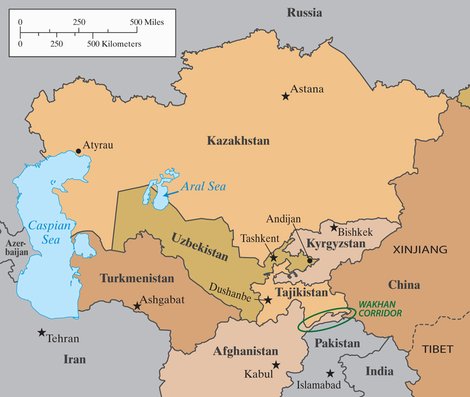
Click on Image to Enlarge

China has also taken care of one vital strategic interest since 1991: making sure that the Uighurs, China’s largest Muslim ethnic group who live in the western province of Xinjiang, do not seriously threaten to become independent and that the hundreds of thousands of Uighurs who live in Central Asia do not help them do so. During the 1950s large numbers of Uighurs fled the Maoist regime to seek shelter in Soviet Central Asia where they were relatively well treated.

After 1991 China put immense pressure on the three Central Asian states that border Xinjiang—Kazakhstan, Tajikistan, and Kyrgyzstan—to tightly restrict all Uighur political activity on their soil. China offered sweeteners such as resolving the border disputes that had plagued Chinese–Soviet relations in Central Asia for decades. Within a decade the borders between China and the Central Asian states were demarcated and settled, allowing for China’s rapid economic involvement in the region.

Still, Uighur nationalism and Islamic militancy have continued to mount in Xinjiang, as China has inundated the province with Han Chinese and severely repressed the Muslims. While the Uighur populations in Central Asia have been largely silenced, some Uighurs have been training and fighting with the Taliban in Pakistan and Afghanistan.

During the past decade China has invested heavily in Central Asia. Laruelle and Peyrouse write that

Continue reading “Berto Jongman: Ahmed Kashid on Why, and What, You Should Know About Central Asia”

Chuck Spinney: Thoughts on Obama’s March to Folly in Syria

03 Environmental Degradation, 04 Inter-State Conflict, 05 Civil War, 07 Other Atrocities, 08 Proliferation, 08 Wild Cards, 09 Terrorism, Corruption, Cultural Intelligence, Government, Idiocy, IO Deeds of War, Media, Military, Peace Intelligence
Chuck Spinney
Chuck Spinney

President Obama's Syria nightmare is becoming increasingly bizarre.  The man who claimed he could distinguish dumb from smart wars is marching headlong into the dumbest one yet, with allies jumping ship left and right.  Consider, please, the following:

(1) NBC just released a poll saying a majority of the American people are opposed to another war in Syria, and 80% are opposed to a war without Congressional authorization.

(2) But Congress is out of session.  Nevertheless Mr. Obama is under pressure to attack before Congress returns from its Labor Day vacation.  Moreover, despite the fact that at least 188 members of Congress have called for a debate and vote on the war question; thus far, Mr. Obama has not indicated he will call Congress into an emergency session.  Yet six years ago, Senator (candidate) Obama told interviewer Charlie Savage on December 20, 2007: “The President does not have power under the Constitution to unilaterally authorize a military attack in a situation that does not involve stopping an actual or imminent threat to the nation.”

(3) The nearest counterpart to our Congress, the British Parliament, just voted to pull the plug on Prime Minister David Cameron's warmongering — and in so doing, the unwritten British Constitution has made a mockery of the written, legalistic US Constitution.  Bottom line: the checks and balances in the UK are working to ensure our closest ally will not partake in our adventure, while those in the United States are being bypassed.

(4) The UN and the Security Council also pulled the plug on approving and supporting a US strike; ditto for the Arab League and Jordan, and our coup-leading friends in Egypt.

(5) The secretary general of NATO, Anders Rasmussen, said NATO will not be part of a strike on Syria.

So who is left in Obama's increasingly isolated coalition of the willing: France and Israel — two countries with a lot of sordid baggage loading down the Syria Question.  Some readers may never have heard of the Sykes-Picot Agreement, but your can bet most Syrians have.

A reasonable person might ask how an obviously intelligent Mr. Obama could land himself in such a mess?

Continue reading “Chuck Spinney: Thoughts on Obama's March to Folly in Syria”

noble gold