Fareed Zakaria: “the U.S. defense establishment is the world’s largest socialist economy”
Phi Beta Iota: This talented individual has never left the “lane in the road” assigned to him. He thrives on “civility” and not questioning what passes for conventional wisdom among the elites. As much as all of us who have been saying this for decades are glad to hear him speak such common sense, what this really tells us is that Wall Street is now ready to sacrifice the Military-Industrial-Congressional Complex (MICC) and all their jobs, to save its own multi-million dollar bonuses. Banks and Big Oil are the winners, the public continues to lose precisely because no one is actually representing the public interest.
Debt “agreement” cuts $1.5 trillion over ten years, while leaving in place the existing budget that borrows 1 trillion a year for ten years.
The net debt INCREASE is 8.5 trillion.
The US Government at it is formed at present, and dominated by a two-party system that shuts out all common sense while embracing Big Oil, Wall Street, and the Military-Industrial-Congressional Complex (MICC), is incapable of governing Of, By, and For We the People.
S&P got it right. The truth at any cost lowers all other costs.
It is obvious that this man has no clue. We are developing fighters
(F-22/35) that have no threat that cannot be handled by the F-117 (which is the be all to end all) but we are dangerously close to imploding if more budget cuts come our way? Strengthen the force, reduce the technology (which doesn't work in most cases) and let's put DoD on the right path, defense of the Nation (and not police force of the world)……
Leon Panetta Hypes al Qaeda to Ward Off More Defense Cuts
Steve Clemons
The Atlantic, 6 August 2011
EXTRACT:
It seems that one week, al Qaeda is on the run and “near collapse” and the next, al Qaeda remains the reason why the US needs to continue to spend hundreds of billions of dollars on a Pentagon designed to fight the wrong wars. This is irresponsible hyping of a threat to justify massive defense spending during a period of real fiscal stress.
Phi Beta Iota: Daniel Ellsberg had it exactly right when he lectured Henry Kissinger in the 1970's on Viet-Nam:
The danger is, you’ll become like a moron. You’ll become incapable of learning from most people in the world, no matter how much experience they have in their particular areas that may be much greater than yours” [because of your blind faith in the value of your narrow and often incorrect secret information].
Panetta would be well-served by attending to what Bob Seelert, Chairman of Saatchi & Saatchi Worldwide (New York) has to say:
When things are not going well, until you get the truth out on the table, no matter how ugly, you are not in a position to deal with it.
Paul Jones arrived in a Chevy pickup, dust clouds billowing as he crossed the desert. He had set out soon after first light from his base in southern Afghanistan, an encampment that, thanks to his employer’s logistics savvy, had an ample supply of Pabst Blue Ribbon. Almost everything there had been sent by sea from California or Oregon, and then trucked up from Pakistan.
The 63-year-old, khaki-clad engineer came that February morning to observe a massive development project aimed at transforming the valley along the Helmand River into a modern society.
Irrigation canals would feed farms that would produce so much food that the country would export the surplus for profit. New schools, modern hospitals and recreation centers would rise from the sand. So, too, would factories, fed by electricity from a generator at a dam upriver. Jones had seen a similar transformation near his home on the outskirts of Sacramento, and he was certain it would materialize here, too. In the desert expanse, he saw “the beginning of a new civilization — a new way of life abounding in the riches of worthy endeavor.”
New York Mayor Michael Bloomberg announced a $127.5 million plan Thursday to help young black and Hispanic men. The effort includes money from financier George Soros and his philanthropy.
Koko signs: Smart men both, but neither of them has a holistic understanding of system design. In the jungle, connectivity matters. King of the Reflexive Practice Jungle, Dr. Russell Ackoff, would say this is a magnificent example of doing the wrong thing righter. Paying to connect these young men to a broken system makes no sense–funding them to build a new system to displace the broken one–now that is reflexivity. Good intentions, bad design. We have just two questions.
1. Has anyone asked the young men what they want?
2. In the context of a city failing the resilience test and likely to experience near-catastrophic unemployment in the middle class over the next ten years, is there a strategy for resilience?
The U.S. had its AAA credit rating downgraded for the first time by Standard & Poor’s on concern spending cuts agreed on by lawmakers to raise the nation’s borrowing limit won’t be enough to reduce record deficits.
Koko do math: Cut 1.5 trillion over 10 years; continue to borrow $1 trillion a year, net debt INCREASE $8.5 trillion over ten years. Congress and the White House have known the Republic is insolvent since then Comptroller General David Walker briefed them to that effect in 2007.
Use The Power of Collaborative, Serious Games to Engage Citizens and
Resolve Our Budget Crises
It’s no secret. We’re broke. Local governments, state governments, the U.S. Federal Government and many international governments are all facing budget shortfalls, spending cuts and reduced services. All of us — ordinary citizens, elected officials, civic and community leaders — know that we must make dramatic changes and tough choices to solve this crisis. But how do we engage our communities in identifying and prioritizing the best possible solutions? How do we create more engaged and informed citizens?
Our Answer? Fix Broke(n) Governments through Serious Games
On January 29, 2011, The Innovation Games® Company designed and produced an in-person serious game to help more than 100 citizens, community leaders and city officials in San Jose, CA collaboratively prioritize possible cuts to the city budget.
Instead of polling residents individually, our specially designed Innovation Game®, the San Jose Budget Games, created an opportunity for ordinary citizens to negotiate with one another, listen to their neighbors and create budgets that reflected not only their own but others viewpoints. Civic leaders left the San Jose Budget Games with both a clear and actionable list of the proposals citizens could compromise on and also a record of why they had found common ground—and the game results have impacted the actual city budget.
Our experience with the city of San Jose has convinced us that games are a powerful tool for civic engagement: Thus we’re seeking funds to extend our existing in-person version of Budget Games into an online version. Instead of engaging hundreds of citizens, we want to powerfully connect tens of thousands or even millions of motivated citizens with their elected officials—and we need your help to get this done.

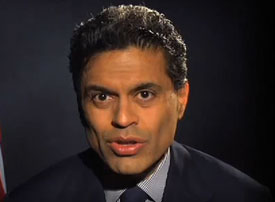 Why defense spending should be cut