While press attention on developments in Russia focused on the disputed parliamentary elections and the following protests, which seemed to revive political activism in Moscow and other urban centers, there have been some military developments that deserve some attention. One such theme is an old topic, sixth generation warfare and its impact upon the nuclear threshold – do advanced conventional systems, which approach nuclear effects, blur the line on nuclear deterrence? The Russian press has had several recent articles that suggest this issue is becoming more acute.
In the aftermath of Desert Storm in 1991, the late Major-General Vladimir Slipchenko coined the phrase “sixth generation warfare” to refer to the “informatization” of conventional warfare and the development of precision strike systems which could make the massing of forces in the conventional sense an invitation to disaster and demand the development of the means to mass effects through depth to fight systems versus systems warfare. Slipchenko looked back at Ogarkov’s “revolution in military affairs” with “weapons based on new physical principles” and saw “Desert Storm” as a first indication of the appearance of such capabilities. He did not believe that sixth generation warfare had yet manifested its full implications (Vladimir Slipchenko, Voina budushchego. Moscow: Moskovskii Obshchestvennyi Nauchnyi Fond, 1999).
Click on Image to Enlarge
However, Slipchenko did believe that sixth generation warfare would replace fifth generation warfare, which he identified as thermonuclear war, and had evolved into a strategic stalemate, making nuclear first use an inevitable road to destruction (from the end of the Soviet Union until his death in 2005, he had analyzed combat experience abroad to further refine his conception until he began to speak of the emergence of “no-contact warfare” as the optimal form for sixth generation warfare; Vladimir Slipchenko, Beskontaktnye voiny. Moscow: Izdatel’skii dom: Gran-Press,” 2001). In his final volume, Slipchenko redefined sixth generation warfare as involving the capacity to conduct distant, no-contact operations and suggested that such conflict would demand major military reforms. Slipchenko made a compelling case for the enhanced role of C4ISR in conducting such operations (Vladimir Slipchenko,Voina novogo pokoleniia: Distantsionnye i beskontaktaktnye, Moscow: OLMA-Press, 2004).
Economic imbalances and social inequality risk reversing the gains of globalization, warns the World Economic Forum in its report Global Risks 2012. These are the findings of a survey of 469 experts and industry leaders who worry that the world’s institutions are ill-equipped to cope with today’s interconnected, rapidly evolving risks. The findings of the survey fed into an analysis of three major risk cases: Seeds of Dystopia; Unsafe Safeguards and the Dark Side of Connectivity. Report also analyses the top 10 risks in five categories – economic, environmental, geopolitical, societal and technological.
Phi Beta Iota: The report fails to address the absence of both intelligence and integrity among all “institutions” be they public or private. This is the entire point of the global Occupy movement. This is also the entire point of this website, which predates Occupy by some time.
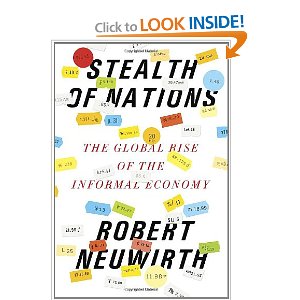
Not many people think of shantytowns, illegal street vendors, and unlicensed roadside hawkers as major economic players. But according to journalist Robert Neuwirth, that’s exactly what they’ve become. In his new book, Stealth of Nations: The Global Rise of the Informal Economy, Neuwirth points out that small, illegal, off-the-books businesses collectively account for trillions of dollars in commerce and employ fully half the world’s workers.
Amazon Page
Further, he says, these enterprises are critical sources of entrepreneurialism, innovation, and self-reliance. And the globe’s gray and black markets have grown during the international recession, adding jobs, increasing sales, and improving the lives of hundreds of millions. It’s time, Neuwirth says, for the developed world to wake up to what those who are working in the shadows of globalization have to offer. We asked him how these tiny enterprises got to be such big business.
Wired: You refer to the untaxed, unlicensed, and unregulated economies of the world as System D. What does that mean?
Robert Neuwirth:There’s a French word for someone who’s self-reliant or ingenious: débrouillard. This got sort of mutated in the postcolonial areas of Africa and the Caribbean to refer to the street economy, which is called l’économie de la débrouillardise—the self-reliance economy, or the DIY economy, if you will. I decided to use this term myself—shortening it to System D—because it’s a less pejorative way of referring to what has traditionally been called the informal economy or black market or even underground economy. I’m basically using the term to refer to all the economic activity that flies under the radar of government. So, unregistered, unregulated, untaxed, but not outright criminal—I don’t include gun-running, drugs, human trafficking, or things like that.
Click on Image to Enlarge
Wired: Certainly the people who make their living from illegal street stalls don’t see themselves as criminals.
Neuwirth: Not at all. They see themselves as supporting their family, hiring people, and putting their relatives through school—all without any help from the government or aid networks.
Wired: The sheer scale of System D is mind-blowing.
Neuwirth: Yeah. If you think of System D as having a collective GDP, it would be on the order of $10 trillion a year. That’s a very rough calculation, which is almost certainly on the low side. If System D were a country, it would have the second-largest economy on earth, after the United States.
Phi Beta Iota: System D is completely separate from straight forward black crime (organized crime) or white crime (Goldman Sachs et al). What this really means is that governments have lost all legitimacy and two thirds of the global economy now considers governments to be at best a meddling (and costly) nuisance and at worst the enemy to be defeated by any means necessary. Governments brought this on themselves.
15 Things More Important Than Newt's Sex Life on the Moon
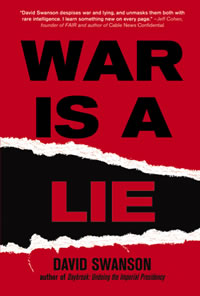
1. A war on Iran could kill us all. President Obama said in the State of the Union: “America is determined to prevent Iran from getting a nuclear weapon, and I will take no options off the table to achieve that goal. But a peaceful resolution of this issue is s till possible . . . if Iran changes course.” So, unless Iran, which the Secretary of Defense says is not developing a nuclear weapon, ceases developing a nuclear weapon, we're going to war. Sound familiar? Ever seen this movie before? Actually, we've seen it in every single war ever fought by any nation. The best defense against the lies of the Department of Defense is good preparation. Read this book: http://WarIsALie.org
2. Occupation of DC under threat. The Park Service plans to try to remove all tents from both DC occupations (Freedom Plaza and McPherson Square) at noon on Monday, January 30th. Be there. Be nonviolent. Be determined. Be relentless.
Rise like Lions after slumber: In unvanquishable number,
Shake your chains to earth like dew: Which in sleep had fallen on you Ye are many — they are few
3. California could solve healthcare. California has until Tuesday and is two senators away from enacting single-payer healthcare. This is far more significant that anything that has been done at the national level for healthcare. This solves the problem in one state and creates a model for the other 49. You can help: http://warisacrime.org/node/60764
Click on Image to Enlarge
4. Corporate personhood is on the defensive. The Montana Supreme Court has refused to comply with Citizens United. Citie s and states are taking action. Stronger bills are being introduced in Congress all the time. The latest is HJRes 100. Rallies were just held in over 100 towns and cities. Join this movement: http://act.rootsaction.org/p/dia/action/public/?action_KEY=5236
5. They're raising military spending and calling it “cuts.” The supposed cuts in all the headlines are cuts to dream budgets, leaving actual increases. Small but real cuts would result from following the law after the Super Committee's failure (remember them?). But bills in both houses would block all actual cuts to the military, and President Obama agrees with that agenda. This will mean severe cuts to education, transportation, and — as Obama indicated in his State of the Union speech — to Medicare, Medicaid, and Social Security. http://warisacrime.org/node/60747
Click on Image to Enlarge
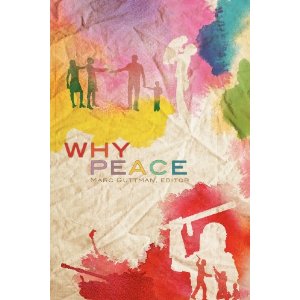
6. New classic book on peace just out. An amazing new book that you will treasure has just been published. It is first-person stories of war and peace and activism from all over the world, from victims, refugees, journalists, lawyers, and participants in numerous wars. Every story is personal and moving. There is not a drop of corporate media disinterestedness in the book. You may know some of the authors and now you'll know them better. It's 600 pages but you'll be sorry when you reach the end. http://www.amazon.com/Why-Peace-Marc-Guttman/dp/0984980202
7. Guess who says the anthrax attacks were pinned on the wrong guy (again)? The Department of Justice. Anybody else, and Obama would have charged them with “espionage”. http://warisacrime.org/node/60765
8. We're re-occupying the Philippines, by jingo! On the plus side, we have not yet been told that this will benefit “our little brown brothers” (whether they like it or not). http://warisacrime.org/node/60746
9. Prevent Fukushima in Vermont. A Fukushima-style nuclear power plant in Vermont legally must shut down, but in reality is up and running. We can close it. http://warisacrime.org/node/60745
11. Torture lawyer John Yoo badly loses debate. Professor Yoo agreed to debate a sane person, with predictable but still satisfying result: http://warisacrime.org/node/60738
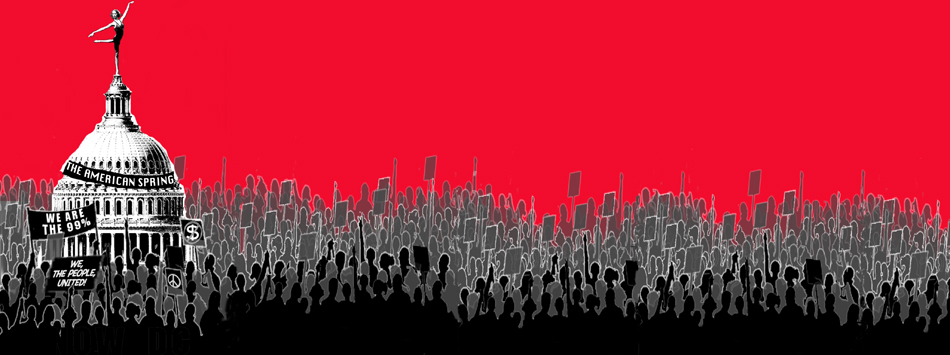
14. Occupy Spring! The National Occupation of Washington DC starts on March 30, 2012. http://nowdc.org
Click on Image to Enlarge
15. No Immunity for Mortgage Fraudsters! The Obama Administration has been working on a mortgage fraud settlement that itself amounts to fraud, but attorneys general in several states are pushing back. Obama's speeches stress fairness and equality, but a settlement granting immunity to big banks is not fair. Robosigning and other fraudulent practices are ongoing. The White House is offering the banks a plea bargain in the middle of a crime spree. Attorneys general in Delaware, New York, Massachusetts, California, and other states are pushing in the right direction. Tell leading state attorneys general not to settle for less than an adequate settlement. http://act.rootsaction.org/p/dia/action/public/?action_KEY=5322
While the US is distracted at home by warmongering politicians competing for the Republican nomination and Israeli-neocon warmongering for launching a new war against Iran, a crisis may be metastasizing in cancer that is Afghanistan.
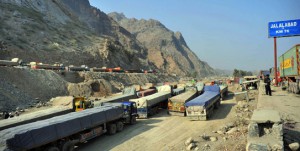
Below is a report in the Pakistani newspaper Dawn that describes the logistics bottleneck in the port of Karachi caused by Pakistan's closure of the Nato's crucial southern supply route.
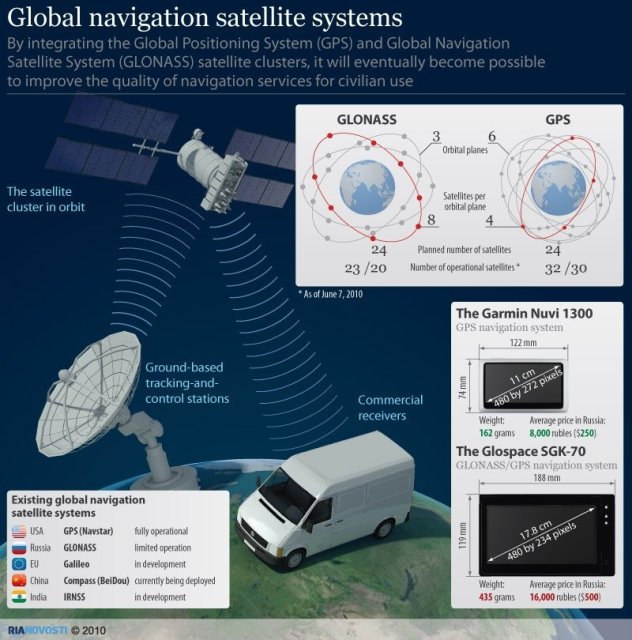
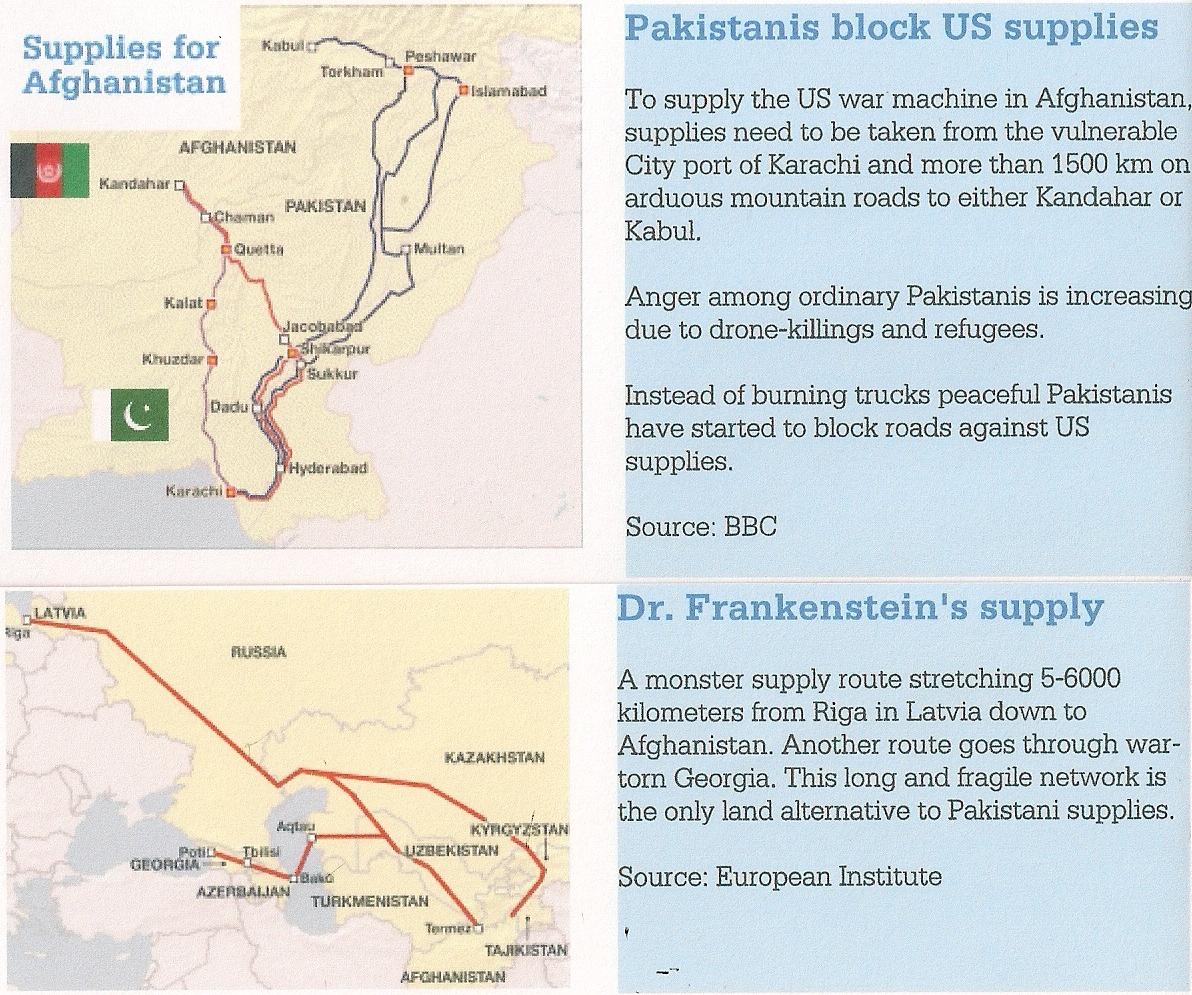
There are three logistics routes to sending supplies into Afghanistan: one by air and two by land. Air is too expensive and of limited carrying capacity. The least costly route is the long vulnerable highway net thru Pakistan — this is the southern route (top map) that has been shut down as described below. The northern route (lower map) is much longer going from either the Baltic or the Black Seas and is dependent on the good will of Russia, Kazakhstan, and Uzbekistan. According to the AP, The northern route at $104 million per month in total cost is at least six times as expensive as the southern route.
The AP report contained no information on the cost per ton, but that factor is likely to be much higher that six-to-one, because prior to the closure (as of last June), about 50% of Nato's total supply requirement was was flowing through the southern route, with the other 50% being divided between the norther route and the air route.]
Thousands of Nato trucks in Pakistan backlog
Dawn [Pk], 26 Jan 2012
KARACHI: Two months into Pakistan’s blockade on Nato supplies crossing into Afghanistan, thousands of trucks are crowding the port in Karachi where drivers, fed up with waiting, are starting to desert.
Canadian researchers find a simple cure for cancer, but major pharmaceutical companies are not interested.
Researchers at the University of Alberta, in Edmonton, Canada have cured cancer last week, yet there is a little ripple in the news or in TV. It is a simple technique using very basic drug. The method employs dichloroacetate, which is currently used to treat metabolic disorders. So, there is no concern of side effects or about their long term effects.
This drug doesn’t require a patent, so anyone can employ it widely and cheaply compared to the costly cancer drugs produced by major pharmaceutical companies.
Does Google have a responsibility to help stop the spread of 9/11 denialism, anti-vaccine activism, and other fringe beliefs?
By Evgeny Morozov|Posted Monday, Jan. 23, 2012, at 7:43 AM ET
In its early days, the Web was often imagined as a global clearinghouse—a new type of library, with the sum total of human knowledge always at our fingertips. That much has happened—but with a twist: In addition to borrowing existing items from its vast collections, we, the patrons, could also deposit our own books, pamphlets and other scribbles—with no or little quality control.
Such democratization of information-gathering—when accompanied by smart institutional and technological arrangements—has been tremendously useful, giving us Wikipedia and Twitter. But it has also spawned thousands of sites that undermine scientific consensus, overturn well-established facts, and promote conspiracy theories. Meanwhile, the move toward social search may further insulate regular visitors to such sites; discovering even more links found by their equally paranoid friends will hardly enlighten them. Is it time for some kind of a quality control system?
Robert Steele: I am disengaged from Phi Beta Iota most of the time, but this piece was brought to my attention with the observation that it combines a claim to legitimacy involving Stanford University and Foreign Policy (no longer a serious rag, now a sub-set of secrecy & rendition apologist The Washington Post), and that it appears to be an early shot in a new national security propaganda theme aimed as neutralizing the use of the Internet for self-education. When Obama said in the State of the Union that it is known kids do better when they are forced to stay in school until graduation, I was sharply critical–the reality is that the best and the brightest leave school as soon as they can pass the GED, realizing that rote learning of old knowledge from poorly-paid burn-outs is not the way to “jack in.” What we have here is a very troubling indicator that the New America Foundation (wittingly) and Slate (perhaps unwittingly) are now part of the domestic propaganda arm of the military-industrial complex. The idiocy and illegitimacy of this piece should not have to be pointed out, but since Slate, which I thought had educated leadership, evidently saw nothing wrong with this piece, I will just point them to several books that will explain to them why collective intelligence, open source everything, and the three values of clarity, diversity, and integrity, are all essential to resilience and sustainability. Transparency, truth, and trust are the heart of the matter. This article is a disgrace to Slate and to Stanford, and confirms my growing disdain for the New America Foundation and Foreign Policy.
and then of course there are all the other books that in the aggregate would suggest to any intelligent reader that Slate has just published the biggest piece of crap in the recent history of digital journalism.
Phi Beta Iota: The puported article is totally inept, using students and a very narrow range of information provided to the students to attempt to replicate a much more nuanced and comprehensive range of networks with access to vaster information resources. The article also does not provide for new sources coming into the public domain, with the inevitable result that the truth ultimately comes out, for example, on the JFK and MLK assassinations, the USS Liberty, and increasingly, 9/11 as a mix of let it happen, make it happen, and cover it up.
Lead Author Responds:
Thanks for your interest in the SPPS article. In response to your queries in the linked blog post, we didn't seek to inform people about particular theories in any great detail, to provide a model of the broader communities which advocates conspiracy as an explanation for world events, or to model opinion change as new information is presented. While those are interesting topics and we certainly hope to examine them in some detail in the future, they are beyond the scope of this rather small study, in which we attempted to extend previous work on correlations in beliefs between different conspiracy theories and examine the source of that correlation through multiple regression analysis of some novel data. As such we pass no judgement on the truth or falsity of any of the theories discussed; while the media may attempt to spin the study as “those crazy conspiracy theorists!”, be assured that this wasn't our intention, and in the paper itself we make the point that apparent contradictory belief is probably present in many different contexts, populations, and ideologies, rather than unique to people who hold particular opinions about geopolitics.
Yours,
Michael Wood
Ph.D. Candidate & Associate Lecturer, School of Psychology
Keynes College, University of Kent