Tom Atlee: Making Wise Decisions on Public Issues

About the Idea, Advanced Cyber/IO, Blog Wisdom, Civil Society, Collective Intelligence, Collective Intelligence, Counter-Oppression/Counter-Dictatorship Practices, Cultural Intelligence, Ethics, Government, InfoOps (IO), Methods & Process, Officers Call, Open Government, Policies, Policy, Reform, Standards, Strategy, Threats
Tom Atlee

Dear friends,

I have worked for several months to develop the ideas in this article and to articulate them in an accessible way.  They are fundamental understandings underlying the co-intelligence vision of a wiser democracy.

If the ideas intrigue you, you can find a longer version with more detailed guidelines and references online.  I wrote the abstract below to make it easier for you to see the whole pattern at once.  I hope you find both versions interesting and useful.

Coheartedly,
Tom

============

GUIDELINES FOR MAKING WISER DECISIONS ON PUBLIC ISSUES

by Tom Atlee

As a civilization we have tremendous collective power, but we don't always use it wisely.  We can make good decisions, but we face messy, entangled, rapidly growing problems with complex, debatable causes.  Efforts to solve one problem often generate new ones.  We need more than problem-solving smarts here.  We need wisdom.

A good definition for wisdom here is

the capacity to take into account
what needs to be taken into account
to produce long term, inclusive benefits.

To the extent we fail to take something important into account, it will come back to haunt us.  But often we only realize we overlooked something long after our decision has been implemented.  Certain practices – because they lead us to include more of what's important – can help us meet this challenge.  Here are eight complementary ways to do this.  The more of them we do, and the better we do them, the wiser our collective decisions will be.
Continue reading “Tom Atlee: Making Wise Decisions on Public Issues”


Reference: Open Source Agency (OSA) III

About the Idea, Advanced Cyber/IO, Ethics
Who, Me?

References to an Open Source Agency (OSA)

General Comment:  as presented to non-governmental groups including Amazon, Gnomedex Bloggers, Hackers on Planet Earth, etcetera, the Open Source Agency (OSA) would be the proponent for everything open beginning with the four central opens necessary for Open Government: Open Source Software, Open Spectrum, Open Data Access, and Open Source Intelligence.  Within the Department of State, an Office for Information-Sharing Treaties and Agreements would be central to the endeavor, and could reasonably also do outreach to all eight tribes across the USA (academic, civil society, commerce, government at all levels, law enforcement, media, military, and non-governments/non-profit).

2002 TIME Magazine The New Craft of Intelligence

12 July 2004 National Intelligence Reform Recommendations (Kevin Scheid, National Commission on the Terrorist Attacks Upon the United States)

28 Jul 2004  The magical idea of an OSA – Open Source Agency

28 Jul 2004  An Open Source Intelligence Agency?  Military.com

Continue reading “Reference: Open Source Agency (OSA) III”

Tom Atlee: Citizens Panel Cuts 2.2 Trillion in One Hour

Advanced Cyber/IO, Analysis, Budgets & Funding, Civil Society, Collective Intelligence, Commerce, Cultural Intelligence, Ethics, Government, IO Deeds of Peace, Methods & Process, Military, Policies
Tom Atlee

Dear friends,

The 160-person British Columbian Citizens Assembly on Electoral Reform took every other weekend for a year to research and reach consensus on the best method for their province's election process.

The fourteen citizens in a Danish Consensus Conference take several weekends over several months to learn about their assigned technical issue and come up with shared recommendations for Parliament and the public.

A 24-person Citizen Initiative Review of the kind now institutionalized in Oregon takes a week to figure out how to best advise voters on a given ballot initiative.

Similar Citizens Juries on all kinds of subjects also take about a week.

The dozen citizens selected for MACLEAN'S magazine's 1991 “People's Verdict” deliberations took just three days to come up with a lengthy vision for Canada's future direction.

A Wisdom Council often takes just two days to come up with a consensus statement sharing their concerns and dreams for their community.

Hundreds or thousands of people in a 21st Century Town Meeting take one day to make decisions on the issue that they have been assigned.

And now ABC News gave five citizens of diverse political beliefs one hour to solve the deficit crisis that Washington can't seem to resolve in months.  This small group's success is the special feature of this e-mailing, so check out ABC's very short video (2:43) about it

Continue reading “Tom Atlee: Citizens Panel Cuts 2.2 Trillion in One Hour”

Koko: Russia’s President Wants Educational Games

06 Russia, Academia, Advanced Cyber/IO, Articles & Chapters, Civil Society, Cultural Intelligence, Government, Policies
Koko

Russia's President is on to something, with the observation that the best history games would not focus on what was, but on what might have been had true cost information been embedded at each point in time.

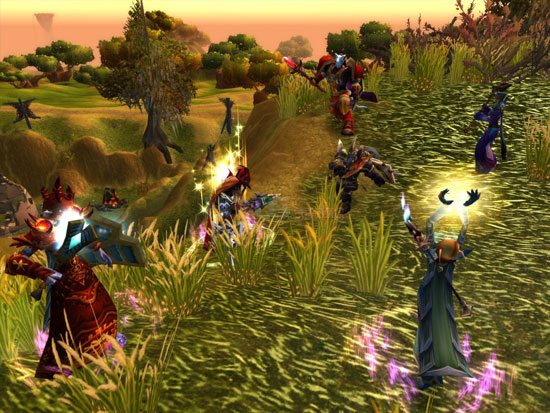
Russia's prez wants educational World of Warcraft history game

DVICE.com, 29 July 2011

While the Chinese love World of Warcraft so much they're using them as punishment in labor camps, Russia's President Dmitry Medvedev wants to make a similar game to teach people about Russian history.

Somebody give this guy a chest-bump and a double high-five. Unlike most Presidents, Medvedev is a young guy. He's in tune with pop culture and “what's in” and “cool” and aims to aggressively use new mediums such as MMORPGs as an educational tool.

Click on Image to Enlarge

Speaking at a gathering of Russia's cultural and science councils, Medvedev said:

“I've checked what our youth are playing with, and most games are pseudo-historical and fantasy-based.”“Take ‘World of Warcraft.' … It's not all about destruction. It has a subtext about developing human civilization.”

“We could try to make something similar if it's so popular — not globally, perhaps, but at the domestic level.”

Medvedev's idea comes as Russia prepares to celebrate its 1,150th anniversary of statehood next year.

Using video games to drill historical facts into heads? If we had a WoW knock-off when we were still in high school, maybe we'd have been less apt to cutting class to hang underneath the football field bleachers where the “evil” lurked.

Tom Atlee: Abundant Democracy Resources

Advanced Cyber/IO, Blog Wisdom, Civil Society, Collective Intelligence, Counter-Oppression/Counter-Dictatorship Practices, Cultural Intelligence, Ethics, Government, Open Government, Peace Intelligence, Policies, Reform
Tom Atlee

Dear friends,

In 2001 the Co-Intelligence Institute released a breakthrough compilation of more than 100 democratic innovations.  At that time there was no other comparable resource on the web.

This year we decided — and began — to update this list, to fix its broken links, to add new innovations and resources, and to make it into a wiki to allow other people to add democratic innovations they knew about.  You can see our initial progress online.

While preparing a grant proposal to expand the project, we researched the web for other lists of democratic and participatory practices and resources.  We were surprised to find quite a few.

We decided that to add the most value in the context of this great wealth of resources, our project should

Continue reading “Tom Atlee: Abundant Democracy Resources”

Venessa Miemis: Beyond Systems Thinking

Advanced Cyber/IO, Articles & Chapters, Briefings (Core), Communities of Practice, Cultural Intelligence, Earth Intelligence, Ethics, Policies
Venessa Miemis

Excellent piece from Rethinking Complexity: Studying Systems for a Humane and Sustainable World.

From Systems Thinking to Systems Being

CONCLUSION

Systems being involves embodying a new consciousness, an expanded sense of self, a recognition that we cannot survive alone, that a future that works for humanity needs also to work for other species and the planet. It involves empathy and love for the greater human family and for all our relationships – plants and animals, earth and sky, ancestors and descendents, and the many peoples and beings that inhabit our Earth. This is the wisdom of many indigenous cultures around the world, this is part of the heritage that we have forgotten and we are in the process of recovering.

Click on Image to Enlarge

Systems being and systems living brings it all together: linking head, heart and hands. The expression of systems being is an integration of our full human capacities. It involves rationality with reverence to the mystery of life, listening beyond words, sensing with our whole being, and expressing our authentic self in every moment of our life. The journey from systems thinking to systems being is a transformative learning process of expansion of consciousness—from awareness to embodiment.

Kathia Laszlo, Ph.D., directs Saybrook University's program in Leadership of Sustainable Systems

Paul Fernhout: Democratic Debate & Decision-Making

11 Society, Advanced Cyber/IO, Blog Wisdom, Civil Society, Cultural Intelligence, Ethics, Government, TED Videos
Paul Fernhout

Michael Sandal's book, as reviewed here at Phi Beta Iota (see Review: Public Philosophy–Essays on Morality in Politics) prompted my putting forward some related links and thoughts. I highly recommend Michael Sandal's TED presentation The Lost Art of Democratic Debate

“Democracy thrives on civil debate, Michael Sandel says — but we're shamefully out of practice. He leads a fun refresher, with TEDsters sparring over a recent Supreme Court case (PGA Tour, Inc. v. Martin) whose outcome reveals the critical ingredient in justice.”

Here is a related P2P Discussions on the Future of the Economy.

Continue reading “Paul Fernhout: Democratic Debate & Decision-Making”

noble gold