Okay. You got me. I can’t really tell you everything you need to know about big data. The one thing I discovered last week – as I joined more than 2,500 data junkies from around the world for the O’Reilly Strata conference in rainy Santa Clara California—is that nobody can, not Google, not Intel, not even IBM. All I can guarantee you is that you’ll be hearing a lot more about it.
What is big data? Roughly defined, it refers to massive data sets that can be used to predict or model future events. That can include everything from the online purchase history of millions of Americans (to predict what they’re about to buy) to where people in San Francisco are most likely to jog (according to GPS) to Facebook posts and Twitter trends and 100 year storm records.
Phi Beta Iota: Big data is most important for what it can tell you about true cost and whole system cause and effect, inclusive of political corruption and organizational fraud. These are past and present issues, not future issues. We design the future based on the integrity present today. This is why “open everything” matters.
With that in mind, here’s the three most important things you need to know about big data right now:
The Obama administration simulated a cyber attack on New York City's power supply in a Senate demonstration aimed at winning support for legislation to boost the nation's computer defenses. Senators from both parties gathered behind closed doors in the Capitol Wednesday for the classified briefing attended by Homeland Security Secretary Janet Napolitano, FBI Director Robert Mueller and other administration officials. The mock attack on the city during a summer heat wave was “very compelling,” said Sen. Susan Collins, R-Maine, who is co-sponsoring a cybersecurity bill supported by President Barack Obama. “It illustrated the problem and why legislation is desperately needed,” she said as she left the briefing. Bloomberg.
The US defense industry is in a full court press to get tens of billions in funding for cyberwarfare.
To get that funding, they need to dramatize the potential threat of cyberwarfare. Here's how. The central method of attack in cyberwarfare is systems disruption. Systems disruption is a way to break networks to achieve extremely high levels of damage (or, in financial terms, high ROIs). One of the best ways to demonstrate that type of attack is through a disruption of the power supply (usually with NYC as a target).
Two John Robb posts, comment, and see also — university grants at risk.
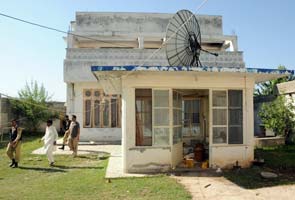
Rawalpindi (Pakistan): In his quest for the truth about his country's most notorious guest, Shaukat Qadir started where it all ended: the room where Osama bin Laden was killed.
Last August, Mr. Qadir, a retired Pakistani Army brigadier, retraced the steps of the American commandos who stormed through the corridors of Bin Laden's hide-out on May 2.
Climbing the stairs to the second floor, Mr. Qadir passed a body outline that marked the spot where Bin Laden's 22-year-old son, Khalid, was shot dead. Then he turned to a small room with a low ceiling, an empty wardrobe and a tight cluster of bullets holes in one wall, he said. Above that, on the ceiling, was a fading splash of blood that, his Pakistani intelligence escort told him, belonged to Bin Laden.
“As a former soldier, I was struck by how badly the house was defended,” Mr. Qadir said in an interview. “No proper security measures, nothing high-tech – in fact, nothing like you would expect.”
I am always amazed when people tell me IO doesn't work and then I see things such as this….I guess what they are really saying is incompetence doesn't work…..
A particularly savvy media campaign by a nonprofit group called Invisible Children has pushed a debate about Uganda and rebel leader Joseph Kony into a very bright spotlight.Without getting into the arguments about the political motivations of the nonprofit and the consequences of its campaign — check out coverage from The Washington Post’s Elizabeth Flock for more information on the situation and its history — it’s astonishing that the group’s members have been able to draw this much attention now to a conflict that’s been going on since the 1980s.
So how did they do it?
The group launched a campaign called “Kony 2012,” an effort to raise awareness about Kony and the small force the Obama administration sent to Uganda in October with the intent of killing or capturing him and combating his Lord’s Resistance Army (LRA).
To get the campaign off the ground quickly, the group had users send messages to 20 “culturemakers” and 12 “policymakers” with influential Twitter accounts urging them to support the effort. The list included names such as U.N. Secretary General Ban Ki-moon, Republican presidential candidate Mitt Romney and former President George W. Bush, as well as celebrities such as Angelina Jolie, George Clooney, Mark Zuckerberg and Lady Gaga.
The message that users could send to those people included a hashtag, #Kony2012, that gave the Twitter community something to galvanize around. It read: “Help us end #LRA violence. Visit kony2012.com to find out why and how. @rickwarren Join us for #KONY2012”
The group also made a well-produced short film that encouraged people to use social media to raise awareness about the movement, which spread quickly over Vimeo and YouTube, where it has garnered more than 57 million views.
The video boils down this complicated issue into a simple one, with a compelling narrative that tugs on the heartstrings and prompts outrage. And it gives users an easy way to take action: Share the video, share the story and don’t stop speaking up until they get the result they want.
The group was also able to tap into an already strong social media presence on Facebook and other sites to get the message out in a big, noticeable burst.
And it certainly has worked. The hashtags #stopkony and #kony2012 have been on the list of trending topics worldwide on Twitter ever since launched its campaign Tuesday. It’s been a fixture on Google’s list of trending topics, and even the debate over the group’s methods and message have kept its message afloat.
Phi Beta Iota: It helps to have a message that combines intelligence with integrity. US IO fails for multiple reasons: ideology, idiocy, incompetence, infinite money, no accountability, no strategy, not cultural awareness, poor leadership, etcetera, etcetera, etcetera.
Cyber criminals are not the only ones buying software flaws, say sources.
The Australian government is buying computer security weaknesses found by hackers before they are sold on the black market, as part of its defence strategy, claim those at the coal face of cyber security.
“The Australian government has developed these capabilities as part of ASIO, DSD [Defence Signals Directorate], CSOC [Cyber Security Operations Centre] and possibly others. But they are purely for research and defence,” says an Australian security consultant who wishes to remain anonymous.
He says while the government won't admit it, buying vulnerabilities is an obvious part of “gathering intelligence”.
. . . . . . .
“There is a trade in weaponised exploits being provided by hackers to the security vendors,” confirms another source, a hacker, who spoke to Fairfax's IT Proon the condition of anonymity.
Phi Beta Iota: Were Western governments responsible (China-Russia seems to be doing better), there would be an international Center of Computational Mathematics and Security, we would all be using open source software, and bugs would not exist past beta. It is clear that cyber-bugs, like the Cold War and the Global War on Terror, both fraudulent, are desired by governments as justification for spending on irresponsible government.
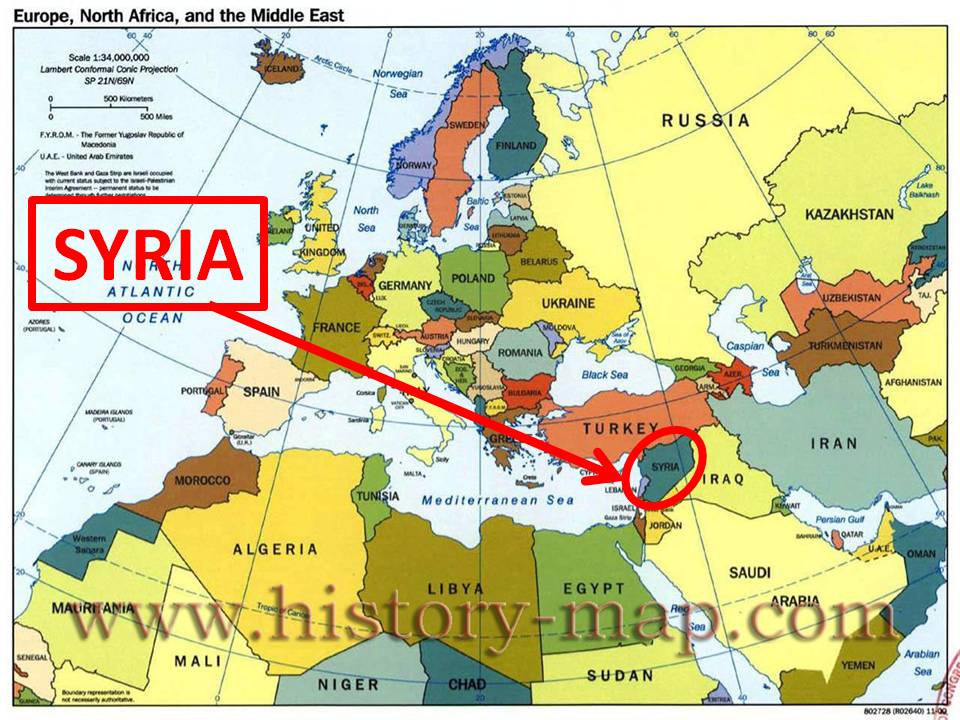
Syria: Deputy Oil Minister Abdo Hussameddin announced his resignation and departure from the Ba'ath Party to side with the opposition against President Al-Asad's regime. If confirmed, he would be the highest-ranking official to defect, and the third member of the administration to do so. A video of his declaration was posted on YouTube and repeated around the world.
Comment: Most news outlets reported this man as the highest-level official to defect, which means very little. A lengthy search showed the man was a Baath Party member for a long time, but failed to discover whether the defector was a Christian, Druze, Sunni, Alawite or member of another group. The implications of the defection hinge largely on details not available in the public domain.
Syria celebrated the 49th anniversary of the Syrian coup by Hafez al-Asad on 8 March 1963. Revolution Day is 8 March.
Correction: The place names cited by the Red Crescent official and reported in the 7 March edition of NightWatch are governates, not cities and towns. Syria has 14 governates – often translated as provinces – which administer 61 districts.
It is important to enter an instability problem at the right level, meaning at the level of political organization that provides diagnostic and prognostic results. The international press persists in describing unrest in terms of governates. Entering the instability problem at this level results in distorted narratives and exaggerated reports about the strength of the opposition and the weakness of the government.
Readers are justified in wondering why the government in Damascus has not collapsed. The reason is that the government is not now and has never been threatened by a governate-level insurrection. The fight is in local neighborhoods and most are on the political or geographic periphery of the governates, posing little threat to central authority.
Syria is about the size of North Dakota, according to the CIA World Factbook, with a few differences. Syria has 61 districts which more or less correspond to North Dakota's 53 counties. North Dakota's counties, however, are not organized into governates or provinces.
Syria supports more than 22.5 million people in the same space that North Dakota supports just under 700,000, but with a lot less water. North Dakota has no cities as populous as Syria's Homs which contains over a million people. North Dakota has no sea ports or borders with hostile enemy states.
NightWatch has sought to enter the Syrian instability problem at the district or sub-district level so as to guard against bias and get finer ground truth granularity about just what is happening in Syrian neighborhoods.
For example, a careful survey shows that today the Free Syrian Army and its supporting web sites posted situation reports indicating that this force engaged in six operations in five different governates on 7 March. Several were exchanges of gunfire in which no one was injured and one was erection of a roadblock, in a territory the size of North Dakota.
This data supports leaked information attributed to US intelligence persons that there isn't much of a Free Syrian Army. There is unrest in Syria, but there really isn't much of an insurgency. For the purposes of comparison, in Iraq in 2006, more than 300 firefights occurred daily. In Afghanistan last spring, there were around 50 firefights daily and hundreds of incidents involving makeshift explosives.
Syrian security forces were busy. Opposition sources reported dozens of activities in nine of the 14 governates. A closer look showed that the activities were concentrated in about a dozen of the 61 districts.
Nine governates sounds like a big insurrection. Unrest in 12 districts presents a far more manageable security problem than nine governates supposedly out of control, but in fact not. No governates are out of control and apparently neither are any of the 61 districts.
A still finer focus showed that most of the opposition activities were small, brief street demonstrations (which were not further defined), according to the opposition's own postings. There were no clashes except as noted above; no bombings and no terror attacks on 7 March.
Most of the government operations were local neighborhood sweeps that encountered no resistance. Other reported government actions included over flights of aircraft, some vague armor movements and shelling. The opposition sources that posted the reports were not careful to distinguish whether the operations were by law enforcement and police personnel, paramilitary militias or the Syrian armed forces. Most were attributed to “thugs,” which suggests the paramilitary militias.
Unfortunately the sources also were not specific about which sub-districts or neighborhoods were under stress from government operations. Each of the 61 Syrian districts has multiple sub-districts what are called, nawahi. It is not yet possible to track activity at the nawahi level, but it would show a more fine grained definition of the status of the instability problem in Syria.
Phi Beta Iota: CNN and BBC both appear to be taking direction from US covert operations / media influence staffs. Both appear unintelligent and dishonest. We hold NIGHTWATCH and its editor in the highest regard, consistently superior to the larger organizations that lack both intelligence and integrity. We note with interest that the Syrian Diaspora and the crisis mapping communities are relatively silent on this matter.
1. When you're setting a record for the longest modern war, cutting it short just increases the chances of somebody breaking your record some day.
2. When Newt Gingrich, Cal Thomas, and Lindsey Graham turn against a war, keeping it going will really confuse Republicans.
3. If we pull U.S. troops out after they have shot children from helicopters, kicked in doors at night, waved Nazi flags, urinated on corpses, and burned Korans it will look like we're sorry they did those things.
4. U.S. tax dollars have been funding our troops, and through payments for safe passage on roads have also been the top source of income for the Taliban. Unilaterally withdrawing that funding from both sides of a war at the same time would be unprecedented and could devastate the booming Afghan economy.
5. The government we've installed in Afghanistan is making progress on its torture program and drug running and now supports wife beating. But it has not yet mandated invasive ultrasounds. We cannot leave with a job half-finished, not on International Women's Day.
6. We have an enormous prison full of prisoners in Afghanistan, and closing it down would distract us from our essential concentration on pretending to close Guantanamo.
7. Unless we keep “winning” in Afghanistan it will be very hard to generate enthusiasm for our wars in Syria and Iran. And with suicide the top killer of our troops, we cannot allow our men and women to be killing themselves in vain.
8. If we ended the war that created the 2001 authorization to use military force, how would we justify our special forces operations in over 100 other countries, the elimination of habeas corpus, or the legalization of murdering U.S. citizens? Besides, if we stay a few more years we might find an al Qaeda member.
9. A few hundred billion dollars a year is a small price to pay for weapons bases, a gas pipeline, huge profits for generous campaign funders, and a perfect testing ground for weapons that will be absolutely essential in our next pointless war.