Jean Lievens: Revolutionize Corporate (All?) Learning — Beyond Formal to Informal, Mobile, Social Dichotomies
03 Economy, 04 Education, Advanced Cyber/IO, Methods & Process, Uncategorized
Revolutionize Corporate Learning: Beyond Formal, Informal, Mobile, Social Dichotomies
by Marcia Conner on May 10, 2013
A report for business decision makers interested in abolishing traditional corporate training functions, creating instead vibrant modern collaborative cultures. Why? The corporate learning field is in dire need of bravery, insight, creativity and boldness. It has been stuck in an antiquated rut for too long. Full classrooms and smile-sheet summaries only indicate employees can successfully sit through training, not that these strategies demonstrate value or engender growth in competitive organizations. With a nod toward early twentieth-century innovations, moving the art world toward natural forms, the corporate education function should aim to become learning nouveau. The people responsible for fostering education throughout organizations ought to consider becoming artists. Here's how. [Additional information at http://www.marciaconner.com/learning-nouveau/]
SchwartzReport: New Solution on Water Purification — and Three Corporate Evil Stories — Media, Patents, Monsanto
01 Agriculture, 03 Economy, 06 Family, 07 Health, 11 Society, 12 Water, Commerce, Corruption, Government
Although those of us in the developed nations take potable water for granted the fact is for several billion people it is a major matter of urgent stress. Here is a new technology that may help relieve this problem. Source: Proceedings of the National Academy of Sciences. Biopolymer-reinforced synthetic granular nanocomposites for affordable point-of-use water purification, PNAS, Published online before print May 6, 2013, doi: 10.1073/pnas.1220222110
Nano-scientists Develop New Kind of Portable Water Purification System
BOB YIRKA – Phys.org
I have written extensively about the bias of the media and, particularly, the use of false equivalencies. (For a discussion of this see my esssay: False Equivalencies and the Mediocrity of Nonlocal Consciousness Research Criticism: http://www.explorejournal.com/
How New York Times, NPR And Wall Street Journal Print Fossil Fuel Talking Points Without Full Disclosure
REBECCA LEBER – Climate Progress
Here in a very clear exegetic essay Nobel Laureate Joseph Stiglitz spells out the whole sordid story of the attempt by corporations to patent and own life forms.
Lives versus Profits
JOSEPH E. STIGLITZ, PHD, Nobel Laureate Economist – Project Syndicate
Here in one essay the true dimensions of the corruption of The U.S. Department of Agriculture by Monsanto is made clear.
Monsanto Has Taken Over the USDA
DAVID SWANSON – Nation of Change
Berto Jongman: Global Economic Crisis, Global Depression — Book and Extracts
01 Poverty, 03 Economy, 07 Other Atrocities, 09 Justice, 10 Transnational Crime, 11 Society, Civil Society, Commerce, Commercial Intelligence, Corruption, GovernmentSampling from Anthology:
Global Economic Crisis and the Coming/Current Depression
Book:
THE GLOBAL ECONOMIC CRISIS. The Great Depression of the XXI Century
SchwartzReport: Solar Traps Game Changer — and US Allows Seven Toxic Food Practices Banned in Europe
01 Agriculture, 03 Economy, 05 Energy, 07 Health, Civil Society, Commerce, Corruption, Ethics, Government
Here is another potential game changer in the transition to non-carbon energy. More and more breakthroughs are popping up. One can only wonder what it would have been like if we had put the trillions we have spent on war into eliminating carbon energy, and transitioning to energy technologies that were non-polluting.
Inventor Claims Solar Energy Discovery That Is Game-changer
GREG GORDON – Idaho Statesman
This is the difference between the U.S. and European food systems. It is not a pretty picture.
Seven Dangerous Food Practices Banned in Europe But Just Fine in America
TOM PHILPOTT – AlterNet (U.S.)/Mother Jones
Chuck Spinney: Understanding the Arab Transformation — Political & Economic Harmonization, Not Democratization, Is Core First Step
01 Poverty, 03 Economy, 08 Wild Cards, 09 Justice, 11 Society, Articles & Chapters, Civil Society, Cultural Intelligence, Ethics, IO Deeds of Peace, Peace Intelligence
Below is a very interesting summary of the political tensions among secularism and religion and modernism and tradition in Tunisia. I think the author, who I do not know but whose writings I have followed, is one of the most knowledgeable observers of the Arab Spring.
Chuck Spinney
Washington Report on Middle East Affairs
April 2013, Pages 41-42
By Esam Al-Amin
THE SPARK THAT ignited the Arab Spring over two years ago came from Sidi Bouzid in Tunisia. For 28 days people across the country revolted against the repression and corruption of the 23-year authoritarian regime of Zine El Abidine Ben Ali. Finally, on Jan. 14, 2011 Tunisians celebrated their victory and resilience over tyranny and oppression when Ben Ali fled the country. But if getting rid of the dictator was relatively short and easy, the dismantling of his regime and its corrosive effects on society has proven to be very challenging indeed.
Berto Jongman: Africa Being Plundered — Loses Twice as Much to Corruption as Receives from Donors
03 Economy, 08 Wild Cards, 11 Society, Commerce, Corruption, GovernmentKofi Annan: Africa plundered by secret mining deals
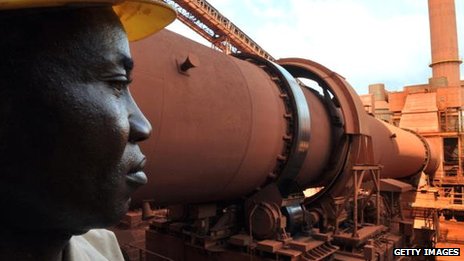
Tax avoidance, secret mining deals and financial transfers are depriving Africa of the benefits of its resources boom, ex-UN chief Kofi Annan has said.
BBC 10 May 2013
Firms that shift profits to lower tax jurisdictions cost Africa $38bn (£25bn) a year, says a report produced by a panel he heads.
“Africa loses twice as much money through these loopholes as it gets from donors,” Mr Annan told the BBC.
It was like taking food off the tables of the poor, he said.

The Africa Progress Report is released every May – produced by a panel of 10 prominent figures, including former Nigerian President Olusegun Obasanjo and Graca Machel, the wife of South African ex-President Nelson Mandela.
African countries needed to improve governance and the world's richest nations should help introduce global rules on transparency and taxation, Mr Annan said.
The report gave the Democratic Republic of Congo as an example, where between 2010 and 2012 five under-priced mining concessions were sold in “highly opaque and secretive deals”.
This figure was equivalent to double DR Congo's health and education budgets combined, the report said.