Fareed Zakaria: “the U.S. defense establishment is the world’s largest socialist economy”
Phi Beta Iota: This talented individual has never left the “lane in the road” assigned to him. He thrives on “civility” and not questioning what passes for conventional wisdom among the elites. As much as all of us who have been saying this for decades are glad to hear him speak such common sense, what this really tells us is that Wall Street is now ready to sacrifice the Military-Industrial-Congressional Complex (MICC) and all their jobs, to save its own multi-million dollar bonuses. Banks and Big Oil are the winners, the public continues to lose precisely because no one is actually representing the public interest.
Debt “agreement” cuts $1.5 trillion over ten years, while leaving in place the existing budget that borrows 1 trillion a year for ten years.
The net debt INCREASE is 8.5 trillion.
The US Government at it is formed at present, and dominated by a two-party system that shuts out all common sense while embracing Big Oil, Wall Street, and the Military-Industrial-Congressional Complex (MICC), is incapable of governing Of, By, and For We the People.
S&P got it right. The truth at any cost lowers all other costs.
Paul Jacob is president of Citizens in Charge, a non-profit, non-partisan group working to protect and expand voter initiative rights, and the Citizens in Charge Foundation, a charitable foundation conducting research on the initiative process, educating the public and litigating to defend the petition rights of Americans.
Early last week, insider Republican and CNN columnist David Frum lashed out at the GOP’s Tea Party wing, writing: “You can’t save the system by destroying the system.” I responded on This is Common Sense:
If the system has put America on a crash course with disaster, then that system must be replaced. With a better one.
When I wrote that I had not yet fully comprehended the full import of the goofy creation (by the debt deal) of what Rep. Ron Paul calls a Super Congress — the select committee of senators and representatives to be put in charge of budgeting, with the rest of Congress not allowed to amend their proposals, just vote yea or nay.
My good friend Pierre Sprey took issue with my characterization of Steven Walt's critique of US grand strategy as being excellent subject to two omissions. Attached herewith are Pierre's comments — they are spot on, and I stand corrected on my characterization of “excellent” … or perhaps more accurately … I stand clearly and fairly skewered. 😉
Chuck Spinney
Cap Ferrat, France
Comments by Pierre Sprey:
Chuck,
Although I appreciate that Mr. Walt's heart is in the right place–particularly regarding his admirably staunch opposition to the malign influence of the Israelis, the neocons and “W”–his essay's concept of US grand strategy for the last two decades is just as shallow as the crap from the NYT, the WSJ, the Post and the Council on Foreign Relations. He commits the two fundamental errors common to nearly all foreign policy pundits, errors that inevitably reduce their beard-stroking discussions of “grand strategy” to silliness:
1. He assumes that the US has a foreign policy or a grand strategy when in fact it has none. The US government's actions, like every other country's, are dominated by its domestic politics. And those politics dominate every move made with regard to other countries.
2. He ignores the three most powerful–and most permanent–domestic influences on America's actions abroad: Big Oil, Wall Street and the MICC. Anybody who ignores these three in recounting U.S. actions abroad is either a) hopelessly out of touch, or b) is serving the interests of the defense, financial or oil establishments, or all three.
Aside from these two crippling errors in his reasoning, Mr. Walt's fulsome praise for the success of the USG's “offshore balancing”–that is, the Big Oil (and MICC) inspired policy of setting Iran and Iraq at each other's throats since the 1940s–shows either profound ignorance or profound Kissingerian cynicism.
One last piece of silliness in the Walt essay, quite common to journalists and historians seeking a “hook” for their American Empire story, is the idea of the August 2, 1990 “turning point”, a date that marks the beginning of the decline in our allegedly successful empire. Such hooks only mask the inescapable spread of rot within empires, usually starting at birth.
With Mr. Walt's help, I am coming to believe all public discussions of grand strategy should be greeted with howls of derisive laughter.
D2 is shorthand for the second global economic depression. It started formally in 2008, and despite a short respite over the last two years, it never left. It was only delayed by massive amounts of government intervention. It is now back in force.
D2, given the forces driving it, is going to last a decade or more. Simple prepping might help a little but it's far from what is going to be required given its duration.
This depression will fundamentally reorder the economic, political and social landscape. When it ends, most of the global institutions and markets we see today will mere husks of what they are today.
New York Mayor Michael Bloomberg announced a $127.5 million plan Thursday to help young black and Hispanic men. The effort includes money from financier George Soros and his philanthropy.
Koko signs: Smart men both, but neither of them has a holistic understanding of system design. In the jungle, connectivity matters. King of the Reflexive Practice Jungle, Dr. Russell Ackoff, would say this is a magnificent example of doing the wrong thing righter. Paying to connect these young men to a broken system makes no sense–funding them to build a new system to displace the broken one–now that is reflexivity. Good intentions, bad design. We have just two questions.
1. Has anyone asked the young men what they want?
2. In the context of a city failing the resilience test and likely to experience near-catastrophic unemployment in the middle class over the next ten years, is there a strategy for resilience?
U.K. startup Movirtu plans to help 3 million or more people in poor countries use mobile services by giving them personal phone numbers, not phones.
Working with a U.N.-affiliated initiative called Business Call to Action (BCtA), Movirtu will offer the numbers, which it calls mobile identities, through commercial carriers in developing countries in Africa and South Asia. People in those countries who typically borrow phones from others will be able to log into the carrier's network and use their own prepaid minutes and bits of data.
The service is called Cloud Phone, though it operates within a carrier's own infrastructure rather than on the Internet as a classic cloud service would. Having a personal mobile identity can save users money in two ways, according to Ramona Liberoff, executive vice president of marketing, strategy and planning at Movirtu. First, they can use mobile services without buying a phone, which is a luxury even at US$15 or $20 for people making $1 or $2 per day.
Second, the cost of prepaid service from a carrier typically is less than what consumers in those countries pay someone to borrow a phone, she said. Though it's customary in many of these countries to lend a phone to someone in need, the borrower is also expected to pay the lender for the usage. The average savings from using regular prepaid service instead is estimated at about $60 per year, Liberoff said.
The service will help people to use mobile banking, insurance and farming assistance services as well as make phone calls, Liberoff said. Some of these services currently can only be delivered to individuals and not to someone sharing a phone. Personal mobile identities could be a boon to NGOs (non-governmental organizations) that want to use mobile technology.

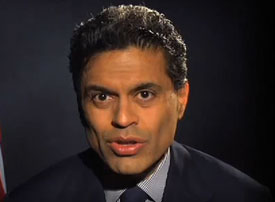 Why defense spending should be cut