Venessa Miemis: GAO Slams Fed for Lack of Integrity

03 Economy, 09 Justice, 11 Society, Commercial Intelligence, General Accountability Office
Venessa Miemis

From Senator Bernie Sanders, US Senator for Vermont

The Fed Audit

July 21, 2011

The first top-to-bottom audit of the Federal Reserve uncovered eye-popping new details about how the U.S. provided a whopping $16 trillion in secret loans to bail out American and foreign banks and businesses during the worst economic crisis since the Great Depression. An amendment by Sen. Bernie Sanders to the Wall Street reform law passed one year ago this week directed the Government Accountability Office to conduct the study. “As a result of this audit, we now know that the Federal Reserve provided more than $16 trillion in total financial assistance to some of the largest financial institutions and corporations in the United States and throughout the world,” said Sanders. “This is a clear case of socialism for the rich and rugged, you're-on-your-own individualism for everyone else.”

Among the investigation's key findings is that the Fed unilaterally provided trillions of dollars in financial assistance to foreign banks and corporations from South Korea to Scotland, according to the GAO report. “No agency of the United States government should be allowed to bailout a foreign bank or corporation without the direct approval of Congress and the president,” Sanders said.

Read the rest of this damning summary, and use link to full report….

DefDog: The Clash of Generations by Tom Friedman

03 Economy, 06 Family, 09 Justice, 11 Society, Civil Society, Corruption, Cultural Intelligence, Government, IO Deeds of War
DefDog Recommends....

Interesting perspective—especially the common focus on justice against crony capitalism.

The Clash of Generations

By

Published: July 16, 2011

EXTRACT

Indeed, if there is one sentiment that unites the crises in Europe and America it is a powerful sense of “baby boomers behaving badly” — a powerful sense that the generation that came of age in the last 50 years, my generation, will be remembered most for the incredible bounty and freedom it received from its parents and the incredible debt burden and constraints it left on its kids.

. . . . . . .

I was struck by one big similarity between what I heard in Tahrir Square in Cairo in February and what one hears in Syntagma Square today. It’s the word “justice.” You hear it more than “freedom.” That is because there is a deep sense of theft in both countries, a sense that the way capitalism played out in Egypt and Greece in the last decade was in its most crony-esque, rigged and corrupt deformation, letting some people get fantastically rich simply because of their proximity to power. So there is a hunger not just for freedom, but for justice. Or, as Rothkopf puts it, “not just for accounting, but for accountability.”

Read full article at Friedman's page….

See Also:

Clash of generations: Britain will be rent, not by class warfare, but by an age divide, a new book argues

The Economist, Feb 11th 2010 | from the print edition

David Willetts, The Pinch: How the Baby Boomers Took their Children’s Future—and Why They Should Give it Back (Atlantic Books, 2011)

Koko: Microsoft Fifth Largest Linux Company

03 Economy, 11 Society, Commerce, Commercial Intelligence, Cultural Intelligence, InfoOps (IO), IO Impotency
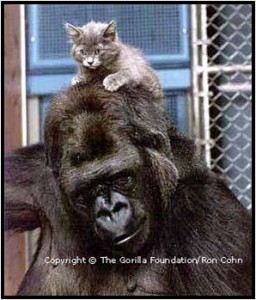
Koko the Reflexive

Top Five Linux Contributor: Microsoft

By Steven J. Vaughan-Nichols | July 17, 2011

Linux and Open Source

Steven J. Vaughan-Nichols & Paula Rooney
EXTRACT

In a Linux Weekly News story, currently only available to subscribers, an analysis of Linux 3.0 contributors reveals that Microsoft was the fifth largest corporate contributer to Linux 3.0. While only 15h overall, that still puts Microsoft behind only Red Hat, Intel, Novell, and IBM in contributing new code to this version of Linux.

To be exact, Microsoft developer K. Y Srinivasan gets the credit for helping to improve Linux. Of course, as you might guess, neither Srinivasan nor Microsoft are doing this due to any particular love tor Linux per se.

The vast bulk of Microsoft’s contributions has been to its own Hyper-V virtualization hypervisor drivers. Hyper-V is Microsoft’s 64-bit hypervisor-based virtualization system. It’s Microsoft’s answer to VMware and Linux’s own native Kernel-based Virtualization Manager (KVM).

Read full story….

Phi Beta Iota:  This is interesting–and disappointing.  Microsoft could be doing so much more.   OpenBTS, Open Data Access, Open Spectrum, and Open Source Intelligence (now M4IS2) are rapidly approaching take-off points that will see them join Free/Open Source Software and Open Hardware.  Microsoft could be central to all of this, but it evidently chooses not to.  It recent waste of Sir Richard Branson in delivering platitudes to their huge event is a real let-down.

See Also:

Graphic: Open Everything

Graphic: One Vision for the Future of Microsoft

Tom Atlee: Two Game-Changers

03 Economy, 04 Education, 11 Society, Advanced Cyber/IO, Civil Society, Cultural Intelligence, Ethics, InfoOps (IO), Methods & Process
Tom Atlee

Dear friends,

Every now and then potentially game changing innovations show up.   Wikileaks is one of them, something that shifts the relationship between centralized power and broader national and international populations.  We don't know what exactly will happen with it, but we do know that we're on a different playing field now.

I want to highlight two other potential game changers.

1.  THE KHAN ACADEMY

2.  CREWFUND

Details below the line…

Continue reading “Tom Atlee: Two Game-Changers”

DefDog: US Mass Psychosis? $14 Billion on Antipsychotics

03 Economy, 06 Family, 07 Health, 09 Justice, 11 Society, Civil Society, Commerce, Corruption, Earth Intelligence
DefDog Recommends....

Mass psychosis in the US

How Big Pharma got Americans hooked on anti-psychotic drugs.

James Ridgeway, 12 July 2011

Al Jazeera

Has America become a nation of psychotics? You would certainly think so, based on the explosion in the use of antipsychotic medications. In 2008, with over $14 billion in sales, antipsychotics became the single top-selling therapeutic class of prescription drugs in the United States, surpassing drugs used to treat high cholesterol and acid reflux.

Read rest of story…

Phi Beta Iota:  The industrialization of agriculture, and the industrialization of “medicine,” have poisoned the Western population, the USA most of all.  The degree to which toxins and other poisons are allowed by law is now criminally insane.

Koko: Oil Prices & Human Ingenuity

03 Economy, Advanced Cyber/IO, Blog Wisdom, Civil Society, Collective Intelligence, Commerce, Cultural Intelligence, Earth Intelligence
Koko the Reflexive

Published 23 August 2005, the Ludwig von Mises Institute article by Pierre Lemieux discusses the actual decline of resource prices–including “scarce” resources–and the reason: advances in human ingenuity.  This supports our basic proposition on this web site, that the single best investment that could be made to create a prosperous world at peace is to give the five billion poor free access to the Internet so as to nurture and harvest their brainpower.

The Oil Price Mirage

Mises Daily: Tuesday, August 23, 2005 by

EXTRACT

Until his death in 1997, economist Julian Simon predicted a continuous decline in resource prices. In 1980, he made a famous bet with environmentalist Paul Ehrlich. Simon’s bet was that a $1,000 basket of any five metals chosen by Ehrlich would be worth less (in constant dollars) 10 years later. Ehrlich lost. In 1990, the value of the basket at current market prices was down more than 50%. Ehrlich had to send a $576.07 check to Simon, representing the drop in the basket value. In fact, the prices of all the metals chosen by Ehrlich had fallen.[5]

In his challenging 1981 book The Ultimate Resource, Simon showed that resource prices had generally decreased over time. The relative price of oil (in terms of other goods) has fallen by perhaps as much as two-thirds between the 1860s and today. During the same period, the price of oil in terms of salaries has decreased by more than 90%.


YouTube: Five Interwoven Economies

03 Economy, Collaboration Zones, Communities of Practice, YouTube

Five Interwoven Economies: Subsistence, Gift, Exchange, Planned, and Theft (or Conquest)

This video presents a simplified education model about socioeconomics and technological change. It discusses five interwove economies (subsistence, gift, exchange, planned, and theft) and how the balance will shift with cultural changes and technological changes. It suggests that things like a basic income, better planning, improved subsistence, and an expanded gift economy can compensate in part for an exchange economy that is having problems.

The text for the presentation is here.

The content is under the CC-BY-SA license and you are encouraged to build on it, but the video itself is under CC-BY-ND. If you make derivatives, you can credit Paul Fernhout at http://www.pdfernhout.net/

noble gold