Did climate change play an indirect role in the political upheavals that rocked Egypt in 2011? Absolutely, says Troy Sternberg. As he sees it, a once-in-a-century drought in China dramatically reduced global wheat supplies and sent prices skyrocketing in the world’s largest wheat importer.
By Troy Sternberg for Henry L Stimson Center
This article was originally published in The Arab Spring and Climate Change, which can also be accessed here.
Click on Image to Enlarge
Chinese drought, global wheat prices, and revolution in Egypt may all appear to be unrelated, but they became linked by a series of events in the 2010–2011 winter.[1] As the world’s attention focused on protests in Egypt’s Tahrir Square, political and socioeconomic motives behind the protests were discussed abundantly, while significant indirect causes of the Arab Spring received little mention. In what could be called “hazard globalization,” a once-in-a-century winter drought in China reduced global wheat supply and contributed to global wheat shortages and skyrocketing bread prices in Egypt, the world’s largest wheat importer.[2] Government legitimacy and civil society in Egypt were upset by protests that focused on poverty, bread, and political discontent.
A tale of climate disaster, market forces, and authoritarian regimes helps to unravel the complexity surrounding public revolt in the Middle East. This essay examines the link between natural hazards, food security, and political stability in two developing countries—China and Egypt—and reflects on the links between climate events and social processes.
Here is the Koch brothers' latest move. These are evil people. Homeowners and businesses that wish to generate their own cheap, renewable energy now have a force of conservative political might to contend with, and the Koch brothers are leading the charge. The L.A. Times, to its credit, found the positive spin to put on this: Little old solar ‘has now grown big enough to have enemies.”
Interesting timing, as UK is seen to be protecting its elite pedophiles, and US begins slowly investigating the spread of pedophilia into common police and fire fighter ranks.
Here is the truth no one wants to admit, because it threatens the entire carbon energy infrastructure and its profits: Making the conversion out of the carbon era will not be that costly, and will actually create millions of jobs, and generate new fortunes, just as the conversion from sail to steam, or horse and buggy to internal combustion. But, like the Wizard of Oz, the carbon interests fill the air wi! th disinformation and nonsense to obfuscate this truth.
Salvation Gets Cheap
PAUL KRUGMAN, Nobel Laureate and Op-Ed Columnist – The New York Times
2.5 million outraged public comments and one honest state (Nebraska) — the Administration is, for the very first time, feeling the weight of collective intelligence both individual and state. Is fracking next?
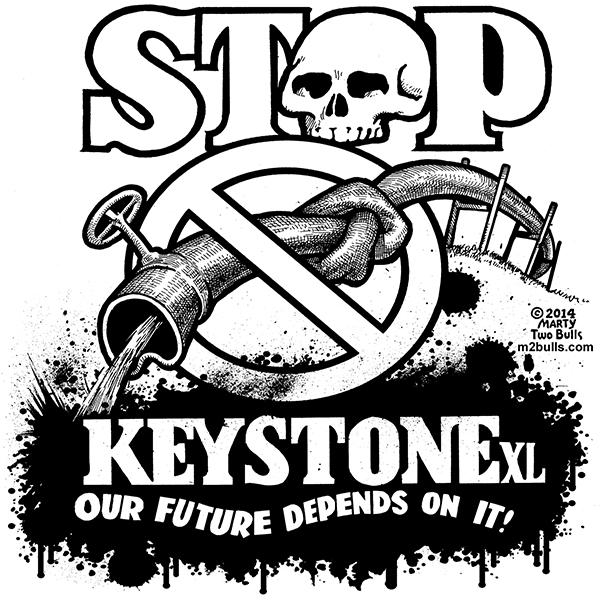
The Obama administration is putting off its decision on the Keystone XL oil pipeline, likely until after the November elections, by extending its review of the controversial project indefinitely.
In a surprise announcement Friday as Washington was winding down for Easter, the State Department said federal agencies will have more time to weigh in on the politically fraught decision — but declined to say how much longer. Officials said the decision will have to wait for the dust to settle in Nebraska, where a judge in February overturned a state law that allowed the pipeline's path through the state.
“In addition, during this time we will review and appropriately consider the unprecedented number of new public comments, approximately 2.5 million, received during the public comment period that closed on March 7, 2014,” the State Department said.