Cynthia McKinney: Libya Eyewitness Tour Final Report

04 Inter-State Conflict, 05 Civil War, 07 Other Atrocities, 08 Wild Cards, 09 Justice, 10 Security, 11 Society, Blog Wisdom, Civil Society, Corruption, Counter-Oppression/Counter-Dictatorship Practices, Cultural Intelligence, Government, IO Deeds of War, IO Impotency, Military, Misinformation & Propaganda, Money, Banks & Concentrated Wealth, Peace Intelligence, Power Behind-the-Scenes/Special Interests, Secrecy & Politics of Secrecy, Waste (materials, food, etc)
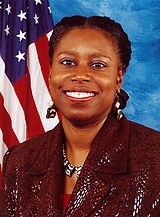
Cynthia McKinney

On today, the anniversary of the overthrow of King Idris in Libya, the neo-colonial powers met in France to continue their drive at the new carve-up of Africa. This set of circumstances makes many of us very sad.

I had a dream last night.  I was caught in the midst of intense fighting–street fighting:  house to house.  I guess I was channeling what the typical Libyan is feeling and has been feeling for the past 6 months.  In my chats with DIGNITY Delegation members, one thing is clear:  we are traumatized by what is happening to the lovely people of Libya.  But imagine, if we feel that way, how must they feel?  Terrorized and worse.

When the DIGNITY Delegation of journalists was there, we could already see the impact of the bombing on patients in the hospital, children trying to understand what was happening, women trying to soothe their families, men trying to carry on with their normal activities, shopkeepers trying to eke out a living despite fighting and bombing all around them, Black Libyans who felt threatened by their fellow countrymen and the outsiders who have streamed into the country, siding with NATO and openly boasted of killing dark-skinned Libyans (who number between 50% and 58% of the population, according to one of the Libyans who joined us on the tour, now returned to his country, not the 30% written in the special interest press) and non-Libyan Africans.
Continue reading “Cynthia McKinney: Libya Eyewitness Tour Final Report”


John Robb: Resilient Curiosity, Cities Under Seige

Blog Wisdom
John Robb

LINKS: August, 31 2011

Some items of interest:

  • Biocurious is a biohackerspace opening in Sunnyvale. Local software, hardware, and bio labs that connect to a global, R&D effort via online networks. A neighborhood location where professionals (formally educated) and amateurs (in the best sense of the word) can work together on building new things and improving on old ones. Every RC should have one…
  • Fake Facebook to harvest protestor identities in Syria.
  • The systemic threat presented by an overnight, term collateral swap market.
  • William Gibson on people and cities.
  • Talk by Stephen Graham on Cities Under Siege. Simply: an overview of military efforts to build systems that pervasively monitor all urban inhabitants. Seen as a way to control “feral” cities at a distance. This is the seed for how modern city states will be controlled in a neo-feudal system (after capitalism's crisis causes modern nation-states to disintegrate).
  • Cities as operating systems.
  • Lanier on the future. “What we have to do to create liberty in the future is to monetize more and more instead of monetize less and less, and in particular we have to monetize more and more of what ordinary people do…” NOTE: I'm not a fan of Lanier's thinking. Not sure why he gets as much play as he does.
  • English translation of a Bundeswehr report on peak oil. (PDF)
  • How solar can follow Moore's Law.
  • United States food insecurity

Phi Beta Iota:  We are a fan of Lanier.  See his essential “A Contrarian View” as published in Mark Tovey (ed), COLLECTIVE INTELLIGENCE: Creating a Prosperous World at Peace (Earth Intelligence Network, 2008).

Paul Fernhout: Bloomberg on Open Source Intelligence…

Advanced Cyber/IO, Articles & Chapters
Paul Fernhout

The author works for the Combating Terrorism Center at West Point, not for Bloomberg.  Still, it is nice to see Bloomberg taking notice of the obvious.

To Defeat Terrorists, Start Using the Library: Scott Helfstein

Bloomberg, 30 August 2011

The information glut that marks the 21st century is evidenced in some unexpected places. Last month, my organization, the Combating Terrorism Center at West Point, released a report that sharply disputed conventional wisdom about terrorism along the Afghanistan-Pakistani frontier.

The report argued that the Haqqani Network, a border- spanning tribal group with deep ties to Pakistan’s government, had been more influential than the Taliban in aiding al-Qaeda’s rise.

How did we support this thesis, which has vast implications for reconciliation efforts in the region as well as for the distribution of U.S. military aid? Not with data culled from clandestine operations in Pakistan’s tribal areas or from Osama bin Laden’s computer hard drive. The report was based on the public statements and writings of individual extremists over the past 30 years. Rather than ferreting out secret information, researchers merely took extremists at their voluminous word.

Read full article….

Phi Beta Iota:  The Center at West Point is known for its excellence, and far better at Open Source Intelligence (OSINT) in its narrow area of focus than those who claim to be national centers with a national mandate.  The USA continues to lack responsible management of OSINT and has zero in the way of Multinational, Multiagency, Multidimensional, Multidisciplinary Information-Sharing and Sense-Making (M4IS2).

Venessa Miemis: 4 Trends in Context Awareness & Mobile Web

Advanced Cyber/IO, Blog Wisdom
Venessa Miemis

4 Trends in Context Awareness & the Mobile Web

August 30, 2011

We are moving towards a reality where the web just is. It surrounds us, it’s in our pockets, and it can provide us contextual information about the world around us. Below are a few trends towards a location-aware web:

1. The Move Towards Mobility
2. Smartphones Become Digital Wallets
3. An Information Layer on Reality
4. Gaming Goes Social

Read full posts with graphics and many links….

Phi Beta Iota:  This is true, at best, for the top third of the one billion rich.  It is nowhere near true for the five billion poor, who will be lucky to have the basic mobile phone with digital cash, and call centers to educate them and monetize their aggregate knowledge.  There is a great deal to be done, and most of it will be about harnessing and harvesting Human Intelligence (HUMINT), not about technical gadgets and back office web sites.

Reference: Shadowy Figures – Tracking Illicit Financial Transactions in the Murky World of Digital Currencies, Peer-to-Peer Networks, and Mobile Device Payments

10 Transnational Crime, Budgets & Funding, Power Behind-the-Scenes/Special Interests, White Papers

Shadowy Figures: Tracking Illicit Financial Transactions in the Murky world of Digital Currencies, Peer-to-Peer Networks, and Mobile Device Payments

John Villasenor, Cody Monk, Christopher Bronk

Center for Technology Innovation at Brookings and James A. Baker III Institute for Public Policy Rice University, August 29. 2011

EXTRACT:

Scale enables vanishing low transaction costs, which are an essential element in the ability to hide larger movements of money by conducting many smaller transactions.  A movement of $900,000 using 100 different electronic transfers might be easy to spot.  If, however, the power of a large, distributed online networks were used to move this money using 100,000 transactions with randomized amounts generally in the $6 to $15 range, detection would be much more difficult.

Online Executive Summary

Online Free PDF of Full Document

Tip of the Hat to David Eisenberg at LinkedIn.

Phi Beta Iota:  As considerable as the illicit transactions are, we cannot help but observe that it is the licit transactions, the legalized crime by the financial industry, that have destroyed the global economy.  It would be helpful if the authors of this reference were to turn their attention to the obserse.

Reference: EUROPOL Organized Crime Overview 2011

EUROPOL, Law Enforcement, White Papers
Click on Image to Enlarge

Organised crime is changing and becoming increasingly diverse in its methods, group structures, and impact on society, reveals Europol’s 2011 Organised Crime Threat Assessment (OCTA), published today.

The bi–annual report, which assesses current and expected trends in organised crime affecting the European Union, explores how a new criminal landscape is emerging, marked increasingly by highly mobile and flexible groups operating in multiple jurisdictions and criminal sectors.

The report highlights the fact that criminal groups are increasingly multi–commodity and poly–criminal in their activities, gathering diverse portfolios of criminal business interests, improving their resilience at a time of economic austerity and strengthening their capability to identify and exploit new illicit markets. Activities such as carbon credit fraud, payment card fraud and commodity counterfeiting attract increasing interest due to a lower level of perceived risk.

Summary of the Report (Full Report Below)

EU Organised Crime Threat Assessment: OCTA 2011

Phi Beta Iota:  This is the executive summary paragraph that resonates with us:

  • The knowing cooperation of specialists in the transport, financial, real estate, legal and pharmaceutical sectors is a notable facilitating factor for organised crime. In the current economic climate businesses, particularly in sectors capable of providing support for commodity trafficking or money laundering, have become more vulnerable to corruptive influence.
noble gold