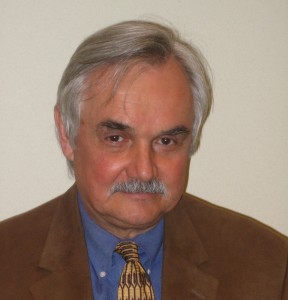
I will not replicate all that is at www.oss.net and to a much lesser extent, www.earth-intelligence.net, but do want to recognize a handful of extraordinary individuals by isolating their especially meritorious contributiions to the long-running debate about national intelligence reform and re-invention.
When Google + launched, millions of formerly optimistic people became optimistic again. Maybe this was going to be the one, the social network with just the smart people and none of the lame stuff, none of the spam or the pitches or the people we're trying to avoid.
And the same thing is true when the pack runs to the new nightclub, the new technology, the new suburban subdivision. Maybe this will be the one…
Of course, it rarely is. So much disappointment and so much bitterness. It's never as great as you hoped it would be. Ennui and then, eventually, waiting for yet another new frontier.
It's the old frontier that actually presents the most interesting opportunities, because the shine has worn off. This is your platform for real innovation, innovation in a place or a market or a situation that truly is ready for it.
Phi Beta Iota: Our collective interpretation of this is that the two old frontiers — a sustainable Earth and humanity prosperous and at peace — remain the greatest challenges and opportunities. Everything else is new, transient, and a tool rather than a fundamental.
Before Tuesday this week, Secretary of Defense Leon Panetta had been sprinkling Washington D.C. with words like “doomsday mechanism,” “catastrophic,” and “shooting ourselves in the head” to describe any cuts in the Pentagon's budget beyond the $450 billion over 10 years (overall a 4 percent reduction) he and President Obama have already committed to. Panetta had set a new standard for overheated rhetoric to defend the Pentagon's budget.
Phi Beta Iota: Panetta, like Gates and others before him, is a political toad incable of telling the truth or pursuing the public interest. He is telling two major lies in all of his speeches: 1) that cutting the defense budget will weaken national security; and 2) that what we pay $1 trillion a year (in borrowed money) for is “the finest fighting force in the world.” Not so less the infantry, which is 4% of the force, takes 80% of the casualties, and receives 1% of the budget. In an honest government, Panetta would be impeached–and all his senior generals and senior executive sychopants retired.
Here are some more good articles and websites about the Occupy Together movement, the global extension of Occupy Wall Street.
In this posting there are a number of pieces about strategy and tactics – appeals to and descriptions of nonviolence (including some tips useful in everyday life as well as demonstrations); what contributed to their success in holding onto their NYC site; the logic of their non-partisan messages that are not tied to specific demands; etc. You'll also find a powerful video highlighting the hypocrisy of US officials condemning crackdowns on Arab Spring protests while condoning crackdowns on domestic Occupy protests.
I've also excerpted an inspiring, sober open letter from long-time Christian activist Jim Wallis. His whole article is worth reading. It was sent to me by my friend and colleague Rosa Zubizarreta who writes:
“I highly recommend that people GO. visit. see for yourself. engage in wonderful conversations. volunteer. contribute…. yes, there are clearly challenges and difficulties (it's certainly not perfect, as Rainbow Gatherings and Peace Camps and Soup Kitchens and all of those various manifestations of “free zones” are not perfect…) AND, it is so very much alive, filled with many wonderful moments and lots of learning and creativity and connection… On Friday morning in Occupy Boston, there were several classrooms visiting… their teachers bringing them in for a field trip… it was awesome!”
Others have written to me about conversations happening among finance professionals about the changes that are needed in their sector – conversations stimulated and energized by the Occupy Wall Street protests. Increasingly, this aspect of nonviolent protest – encouraging urgently needed conversations about change – is becoming the trademark of this movement. And this is an invitation to those of us who know how to make conversations meaningful and productive…
Blessings on this 13.7 billion year old highly interactive Journey.
A recent happiness study from Matthew Killingsworth and Daniel Gilbert found that the more our minds wander, the less happy we are. Summing the research, the New York Times wrote, “Whatever people were doing, whether it was having sex or reading or shopping, they tended to be happier if they focused on the activity instead of thinking about something else.” In short, being mentally “present” and focused on the task at hand really does matter – quite a lot, in fact.
If only finding focus were so simple. With a tidal wave of information coming at us daily, focus is rapidly becoming the scarcest commodity of the 21st century. With this in mind, I’ve rounded up a handful of the best apps for fighting back against the constant distractions of our digital lives.
1. Self-Control – Block out distracting websites for a set amount of time.
2. TrackTime – Audit how you’re spending your time on your computer.
3. Concentrate – Maximize focus while shifting between different tasks.
5. FocusBooster – Focus on single tasks for 25 minutes apiece.
6. Think – Limit your attention to a single application at a time.
7. FocusWriter – Create a distraction-free environment for writing.
8. Anti-Social – Block the social websites that are killing your focus.
9. StayFocusd – Curb the time you spend browsing time-wasting sites.
10. Time Out – Take regular breaks to keep your focus sharp.
Phi Beta Iota: Read the original to see paragraphs for each of the above with excellent context. Both above and in the original, links lead to an application for those who need imposed discipline.
Interesting review Robert. I haven't read the book yet but I'm hopeful there are some new details of worth in it. I appreciate your regular mention of 9/11 issues in your book reviews. Don't know if you've read it yet but Kevin Fenton's DISCONNECTING THE DOTS is worth a look as it brings out new details in the (dubious) activities of the CIA and their Alex Station team prior to 9/11 – Peter Dale Scott recently praised this one highly in interviews. Additionally, if you Google ‘Who is Rich Blee?', the first link that comes up (SecrecyKills) offers a lengthy podcast from the same team that made 9/11 PRESS FOR TRUTH that fruitfully accompanies that DISCONNECTING book mentioned above with new interviews with Richard Clarke and statements from a very defensive George Tenet. They have a full transcript of the podcast on the site which is valuable reading, and author Kevin Fenton is again featured on that site and thanked in the podcast.
There's a lengthy 500 page book on 9/11 by a possibly pseudonymous author called E.P.Heidner, titled ‘The September Eleventh Commission Report' (a poor title for a valuable work) that a number of researchers have been discussing recently – David Ray Griffin mentioned to me in an email a month ago that he makes note of the book in his latest 9/11 TEN YEARS LATER volume. Heidner has done a massive amount of new research into who the likely background figures are (many linked to Iran Contra) and brings a lot of new information to the table. The book is currently unpublished but is available online for free as a PDF, at Scribd and elsewhere. If you Google the phrase ‘A remarkable new book on 9/11', the first link that comes up is a post by me at the Deep Politics forum where I and some others discuss the book in detail and post a number of links where any reader can get the book for free.
Researcher and journalist Jonathan Elinoff uploaded a fine documentary on 9/11 online a couple of years back called CORE OF CORRUPTION-FROM THE SHADOWS, which goes into a lot of depth about events prior to 9/11. (The currently available version has a minor sound issue where for the first 10 minutes or so, the background music is a little louder than it should be, but the film is still worth sticking with and is easily locatable online). I mention this as two(!) new follow up films to that documentary, the next of the series entitled CORE OF CORRUPTION-ECHOES OF TREASON, are reportedly being finished right now and will be released online for full viewing in March 2012. Elinoff reportedly has close to five years of research and relevant interviews and various revelations prepared for release with the new film, including new information from whistleblowers, fresh details about the participants in the rogue 9/11 stock trades, and a lot of juicy new info. The proof will be in the pudding but I expect it to be a formidable piece of work.
As a final note, if you haven't yet watched the recent feature length documentary 9/11 EXPLOSIVE EVIDENCE-EXPERTS SPEAK OUT, and its accompanying shorter featurette ARCHITECTS AND ENGINEERS-SOLVING THE MYSTERY OF WTC7 (hosted by Ed Asner) please go to Youtube and view them immediately. Both are superior works from Richard Gage's group of professionals and contain a lot of formidable evidence and testimony.
US Attorney General Eric Holder held a press conference on 11 Oct where he claimed Federal authorities had foiled a plot by men linked to the Iranian government to kill the Saudi ambassador to the United States and to bomb the embassies of Saudi Arabia and Israel in Washington (NYT).
The vagueness and innuendo in the language of the complaint filed with the federal court reek of a half-baked sting operation.
For example, attacking the embassy of Saudi Arabia is mentioned as merely a “possibility” of bombing foreign government facilities of Saudi Arabia and “another country” located “within and outside of the United States.”
Phi Beta Iota: Brother Chuck's entire commentary and all three attachments are fully repeated in this post (below the line). The Iranian “plot” is significant because it could serve as a precipitant of revolution in the USA. Combined with OWS and a soccer mom torching herself on the front steps of Capitol Hill, the USA is close to “the perfect storm.”
Earlier this week I attended a breakfast panel sponsored by Gensler (http://www.gensler.com), an architecture, design, planning and consultation firm that focuses (among other things) on effective workplace environments, consulting for companies like Google, HP, Yahoo and Facebook. The title of the panel was “Designing your workplace for a competitive edge.”
Here’s my set of notes from the panel:
Evolving workplace:
Version 1.0: Move fast and break things. Emerging culture. Workplaces built for speed, transparency, flexibility.
Version 2.0: 8×8, 1:1. Cubic farms on vast floor plates. Cube dwellers. Butts in seats. Embedded hierarchy.
Version 3.0: (Now). Activity-based era. Changing work process. Mobile, remote work. “We” spaces, not “me” spaces. Support for collaboration. Drivers: faster pace, distributed teams, lean and mean. Changing work processes (from waterfall to agile). Closed to open. Get products to market faster. Multiple space times for multiple work modes. Coworking. Workers not tethered to one company.
Panelists
Derek Woodgate, The Futures Lab: futurist perspective
Eden Bruckman, International Living Future Institute: sustainability perspective
David Bumgardner, HP: real estate acquisition and management perspective.
Bumgardner’s job is to maximize HP’s real estate portfolio. He has to consider how employees work and what kind of environment is conducive to productivity, at the same time maintaining standards across the global HP properties. He focuses on optimal use of all properties, noting that the workforce increasingly consists of mobile employees who require no office or desk. The need for consistent standards is so that wherever the mobile employee goes to an HP facility, the work environment is fairly consistent. Other factors: environmental sustainability, affordability.
A green and sustainable workplace environment can be a competitive edge: some of the most talented employees will factor environmental impact into their decisions about where to work.
Google is another company that focuses on sustainability. The focus is authentic, no greenwashing. Google wants to move beyond LEED, looking through the lens of the Living Building Challenge (https://ilbi.org/lbc).
The build environment is an extension of who we are. We see increasing interest in building bio measurement and feedback into environments. China is looking closely at metrics in building 20 megacities.
Community will no longer be a matter of who’s aggregated in any place, but also how they share and manage resources.
Health and well-being is the new perq for employees; it’s no longer about having a corner office or other sings of hierarchy.
At Zappos, the number 1 priority is company culture, feeling that if you get that right, the rest will happen naturally. How does the built environment impact that culture?
The contemporary work environment needs spaces for energizing and spaces for discharging that energy.
Technology is moving fast, but the build environment is inherently slow.
HP created the Halo Room (http://www.humanproductivitylab.com/archive_blogs/2007/08/28/hp_halo_releases_hp_meeting_ro.php), a set of global networked technology-mediated remote conferencing environments. As these kinds of environments proliferate, travel requirements will decrease. “You’re not going to see that people interaction go away. You’re going to see better ways to get it.”
Increasingly building sustainability into design standards, which may have to vary for different (non-U.S.) contexts. Striving for a zero effect (carbon neutral). Changing densities.
Currently workers don’t feel the same commitment from companies as before, and vice versa. Companies are reducing the numbers of employees and relying more on contractors. We’re creating a world of experts (consultants).
Future workers (currently under 25 years of age) are growing up with a different set of assumptions. Their world is a world of peer groups, not authoritarian hierarchies. It’s a world that’s saturated with technology, especially for communications. For the first time ever, we’re starting to see multiple generations of employees working together in the same office.
Phi Beta Iota: Notice the butts in seats model, which is where the US and most governments are today. OWS is already at the new model. All this was known in the 1980's, relearned in the 1990's, and is now being relearned a third time, but the lack of integrity in senior management–an inability to listen and adapt–has retarded both democracy and capitalism. See the list below for many new books, and the two books not on the old lists. The earliest book to “get it” that we know of was by Robert Carkhuff, The exemplar: The exemplary performer in the age of productivity (Human Resource Development Press, 1984).