My friend Bill Polk, a well-known historian with extensive experience in the Middle East and Central Asia and author of many books on these areas, has written a backgrounder on how to make sense out of the Syrian chemical weapons issue. He has given me permission to distribute it. Herewith is his most interesting primer on the Syrian chemical weapons issue.
Chuck Spinney
Reflections on the Syrian Chemical Weapons Issue and Beyond
William R. Polk
September 15, 2013
1.The Variety of Weapons and Their characteristics
2 A Short History of Chemical Weapons
3 The Russian Intervention
4 Why the Syrians Have Accepted the Russian Proposal
5. The Prospects for Ridding The Area of Weapons of Mass Destruction
6 The Possibility of Ending the Civil War
7 Who Are the Insurgents and What do they Want?
8 Predictable Results of a Collapse of the Syrian State
New revelations about National Security Agency abuses, which now include everything from industrial espionage to reports that the agency can access most data on our smartphones, seem to put everything we know about how business is done on the Internet in danger.
“There are very dark storm clouds gathering around the country and North America as a whole. Things are about to get dark, very dark in just a few short weeks. In just over two months, on November 13-14, 2013, the lights are about to go out. Will the lights come back on? It depends on who you ask. Given the past behavior of those in power, it would behoove all of us to prepare for the fact that we could be living for an extended time with no electricity…The working scenario that has emerged is that World War III is on the horizon. Syria was to be the flash point. However, with American and international sentiment running so high against American involvement in the Syrian conflict, Obama needs a Plan B in order to get America into war, because it does not appear that Congress is going to give him the authorization that he needs to force our way in Syria culminating in a military stand off between the Russians and the Chinese and the United States. Subsequently, if Obama fails to obtain Congressional support to attack Syria, he could very well turn his attention to the take down of the power grid and he could still achieve his goals in under two months.
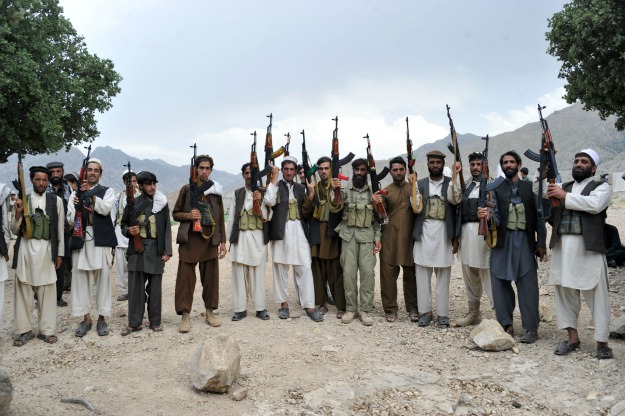
The United States, Afghan, Qatari, and Pakistani governments have all voiced their support for the opening of a Taliban office in Doha in order to promote peace negotiations. Some consider transforming the Taliban from an armed insurgency into a legitimate political group to be the critical first step in the Afghan peace process. However, to date, reconciliation efforts have stalled and focus more on rhetoric rather than substance.
There is no concrete evidence that Taliban leadership is either worn down or desperate to reach a peace agreement. Attempting to secure his legacy as a peacemaker, Afghan President Hamid Karzai wants to reach an agreement before the end of his term in April 2014. Because the Taliban have also cooperated somewhat with this principle of reconciliation, it is not immediately clear why the current approach has achieved nothing.
Viet-Nam Viet-Cong Redux
The answer is that the Doha peace process has been riddled with unrealistic expectations, and remains hopelessly inconsistent. Such reconciliation efforts without strategy and clear objectives reflect a hook without bait – while encouraging, these talks are doomed to fail without significant reform. Only with realistic expectations, a coherent strategy, national solidarity, and lots of patience, will reconciliation stand a chance of materializing.
Where We've Been Thus Far
The reconciliation offer requires three specific things from the Taliban: ending violence, breaking ties with al-Qaeda, and accepting the Afghan Constitution. The fourth, less advertised condition is the acceptance of a residual ISAF element in Afghanistan post-2014. At a recent summit in London, British, Afghan and Pakistani leaders set a six-month timeline to reach a peace settlement.
But substantive results are unlikely to emerge until after the 2014 Afghan Presidential elections. This is the single most important date in the reconciliation process and will set the tone for future debate. A six-month deadline to reach an agreement is not only unrealistic, but also damaging to the credibility of the process.
Maintaining a large military presence in Afghanistan is not in the strategic interests of either the U.S. or the Afghan government. It does not help the United States accomplish its long-term goal of countering terrorism from the Afghanistan-Pakistan region, nor its short-term goal of helping Afghanistan achieve stability and self-reliance in fighting insurgency. It is also economically unsustainable. However, retaining a smaller, lighter, residual presence in Afghanistan is critical to U.S. strategy and vital to core U.S. interests.
Additionally, U.S. strategy in Afghanistan must be based on a vision that goes out decades: Considering only short-term goals amounts to strategic myopia, unworthy of the sacrifices made by almost 2,200 U.S. service members in Afghanistan alone.
A Case for Lighter, Smarter, Long-term Residual Presence
With Osama Bin Laden dead and al-Qaeda's capabilities diminished in the Af-Pak region, the immediate threat of attacks on the U.S. from the region has greatly diminished. But the ingredients that could help Al Qaeda regenerate in the next decade remain, and thus the mission endures.
In fact, the “surge” of U.S. troops in Afghanistan in 2009 had little to do with bin Laden; rather, it was an attempt to rescue the failing mission of stabilizing Afghanistan. Bin Laden was hunted and killed not by the surge, but by a small, specialized group, the likes of which I argue should remain in Afghanistan to monitor and guard against the long-term threat of terrorist cells.
More importantly, a comprehensive counter-terrorism strategy must include the training of the Afghan National Security Forces (ANSF) to counter domestic threats. But this will take significantly longer than estimates suggest. As such, the U.S. must alter its stated strategy in Afghanistan to consider the training and equipping of the ANSF a key element of its plan to counter threats, and support Afghanistan in its domestic fight against terrorists that, left unchecked, could re-emerge. The numbers of trainers must be kept low and should not be outsourced to contractors. Currently, the only elements specifically designed to counter insurgencies are the U.S. Special Operations Forces (SOF). Considering the nuanced task, the training force should be predominantly SOF.