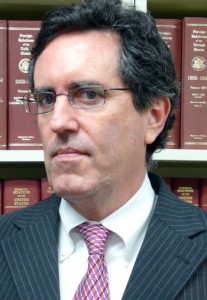
Chuck Spinney: NATO and Libya – What Next?

04 Inter-State Conflict, 05 Civil War, 07 Other Atrocities, 08 Wild Cards, 10 Security, Corruption, Counter-Oppression/Counter-Dictatorship Practices, Cultural Intelligence, Government, IO Deeds of War, Military, Peace Intelligence
Chuck Spinney

The interplay of chance with necessity means that no one can predict the future evolutionary pathway in Libya or the US role in Libya, but Ted Galen Carpenter of the libertarian CATO Inst. provides a thoughtful lens for thinking about potential ramifications of NATO's precipitate intervention in Libya.

Key issues discussed:

  • De facto or de jure partition vs a unification that sows the seeds of future conflict?
  • How to replenish empty Libyan treasury and repair infrastructure (including restoring oil production capability)?
  • Will US get sucked into another NATO stabilization, peacekeeping, nation-building mission?

CS

NATO’s New Problem: Post-Qaddafi Libya?

Ted Galen Carpenter, The National Interest, August 18, 2011

After weeks of very little movement either militarily or diplomatically in Libya, there are apparent developments on both fronts in recent days. Rebel forces, aided by NATO’s air support, finally appear to be advancing into western Libya and cutting off supply lines to Tripoli, the long-time stronghold of support for Muammar Qaddafi. And reports are swirling about secret negotiations that might provide a peaceful exit from the country for the aging dictator.

Those developments underscore that U.S. and NATO officials urgently need to consider what strategy they intend to pursue if Qaddafi’s more-than-four-decade hold on power finally comes to an end. That is more crucial for the leaders of the European members of the alliance, since Libya is located on Europe’s Mediterranean flank, but because the Obama administration unwisely chose to involve the United States in Libya’s internecine conflict by launching air strikes, it has become a pertinent issue for Washington as well.

The outlook for a post-Qaddafi Libya is midpoint between sobering and depressing. It is possible that the warring parties will accept a de facto division of the country between the eastern and western tribes, although a formal agreement to that effect is unlikely. Even an informal partition would more accurately reflect the demographics, politics, and history of that territory than an insistence on keeping Libya intact.

Read more….

Phi Beta Iota:  A serious world power would heed the wisdom of Ambassador Mark Palmer, and have Undersecretaries for Peace at both foreign affairs and defense, with two strategies: one for dictators that agree to a five year non-violent exit strategy, and another for those that do not.  What is happening in the Middle East today is a direct representation of the fact that there are no serious world powers in being today.

Tom Atlee: Citizen Deliberations – Chart and Options

Advanced Cyber/IO, Civil Society, Counter-Oppression/Counter-Dictatorship Practices, Cultural Intelligence, Ethics, Government, InfoOps (IO), Methods & Process, Open Government, Policies, Real Time, Threats
Tom Atlee

Dear Friends

I am quite excited about the progress that has been made in various citizen political participation proposals. All of these clearly have tremendous potential and the articulations of their rationales are becoming quite compelling.

With such innovative deliberative democracy proposals, I want them to be thought through well beforehand, engaging a variety of authorities and perspectives in a search of answers that can embrace that diversity with greater wisdom than otherwise. I am especially interested in finding out people's concerns and what solutions appear when we seriously seek to understand and address those concerns (this being a basic principle of creative consensus processes and of collective wisdom in general). I consider this vital if we seek to inject sane, powerful initiatives into the kind of toxic political environment that exists today. There is just too much at stake to fail simply because we didn't explore our design issues sufficiently ahead of time.

With that intention in mind, I have the following twelve thoughts and inquiries to offer. I would love to be part of a serious inquiry into questions like these, both in person and online.

Coheartedly,
Tom

Observations

Comparison Chart

Jon Stewart Slams Commentators on Ignoring Ron Paul

07 Other Atrocities, 11 Society, Corruption, Counter-Oppression/Counter-Dictatorship Practices, Cultural Intelligence, Media
Michael Ostrolenk

Jon Stewart skewers the media, and especially the right-wing media, for obviously and deliberately refusing to name Ron Paul or mention his various victories.

Monday August 15, 2011

Indecision 2012 – Corn Polled Edition – Ron Paul & the Top Tier

Even when the media does remember Ron Paul, it's only to reassure themselves that there's no need to remember Ron Paul.

Phi Beta Iota:  The corruption of the media, including CNN and Bloomberg, is despicable.  They dishonor the public from whom they derive their public commissions to do business.

Dolphin: Seasteading Away from Governments?

Advanced Cyber/IO, Civil Society, Counter-Oppression/Counter-Dictatorship Practices, Cultural Intelligence, Earth Intelligence, Ethics, Government, Methods & Process, Policies, Threats

We dolphins are not too thrilled about this idea.  Humans have not evolved very far from their Neanderthal roots, and the idea of human hoards invading and polluting the seas is scary to those of us for whom sustainability and resilience comes naturally.  Requires further study.

Silicon Valley billionaire reveals plan to launch floating ‘start up country' off San Francisco

Daily Mail, 11 August 2011

PayPal-founder Peter Thiel was so inspired by Atlas Shrugged – Ayn Rand's novel about free-market capitalism – that he's trying to make its title a reality.

The Silicon Valley billionaire has funnelled $1.25 million to the Seasteading Institute, an organization that aspires to launch a floating colony into international waters, freeing them and like-minded thinkers to live by Libertarian ideals.

Click on Image to Enlarge

Mr Thiel recently told Details magazine that: ‘The United States Constitution had things you could do at the beginning that you couldn't do later. So the question is, can you go back to the beginning of things? How do you start over?'

The floating sovereign nations that Thiel imagines would be built on oil-rig-like platforms anchored in areas free of regulation, laws, and moral conventions.

The Seasteading Institute says it will ‘give people the freedom to choose the government they want instead of being stuck with the government they get.'

See Also:

Journal: Seasteading and Start-Up Countries

Phi Beta Iota:   The idea of seasteading in some form of idealic libertarian island of paradise is fairly distant from reality.  Accepting that the libertarians will be armed and alert, this concept fails to account for a) the outlaw sea; and b) the dead sea.   There is no solution for any group of humanity that is sustainable absent its embracing all humanity.

Steven Aftergood: When Secrecy Gets Out of Hand

07 Other Atrocities, 09 Justice, 10 Security, 11 Society, Corruption, Counter-Oppression/Counter-Dictatorship Practices, Government, IO Impotency, Law Enforcement, Media, Military
Steven Aftergood

“WHEN SECRECY GETS OUT OF HAND

The government's relentless pursuit of people suspected of mishandling or leaking classified information underscores the need to combat the misuse of classification authority, wrote J. William Leonard, the former director of the Information Security Oversight Office (ISOO), in an op-ed in the Los Angeles Times today.

“The Obama administration, which has criminally prosecuted more leakers of purportedly classified information than all previous administrations combined, needs to stop and assess the way the government classifies information in the first place.”

“Classifying information that should not be kept secret can be just as harmful to the national interest as unauthorized disclosures of appropriately classified information,” he wrote.  See “When Secrecy Gets Out of Hand” by J. William Leonard, Los Angeles Times, August 10.

Mr. Leonard recently filed a complaint with the new ISOO director, John Fitzpatrick, based on his assessment that a document that served as a basis for criminal prosecution in the case of Thomas Drake should never have been classified at all.

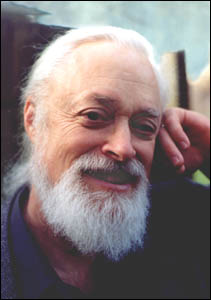
John Steiner: Celebrating Chalmers Johnson

03 Economy, 04 Inter-State Conflict, 07 Other Atrocities, 08 Proliferation, 09 Justice, 10 Security, 11 Society, Academia, Advanced Cyber/IO, Analysis, Budgets & Funding, Civil Society, Corporations, Counter-Oppression/Counter-Dictatorship Practices, Cultural Intelligence, Ethics, History, Military, Officers Call, Peace Intelligence, Politics of Science & Science of Politics, Power Behind-the-Scenes/Special Interests, Reform, Secrecy & Politics of Secrecy, Strategy, Waste (materials, food, etc)
John Steiner

Best of TomDispatch: Chalmers Johnson, Dismantling the Empire

Chalmers Johnson (RIP)

TomDispatch.com, 7 August 2011

EXTRACT

Three Good Reasons to Liquidate Our Empire and Ten Steps to Take to Do So

1. We Can No Longer Afford Our Postwar Expansionism

2. We Are Going to Lose the War in Afghanistan and It Will Help Bankrupt Us

3. We Need to End the Secret Shame of Our Empire of Bases

. . . . . . . .

Chalmers Johnson

10 Steps Toward Liquidating the Empire (Abridged)

Dismantling the American empire would, of course, involve many steps. Here are ten key places to begin:

1. We need to put a halt to the serious environmental damage done by our bases planet-wide. We also need to stop writing SOFAs that exempt us from any responsibility for cleaning up after ourselves.

2. Liquidating the empire will end the burden of carrying our empire of bases and so of the “opportunity costs” that go with them — the things we might otherwise do with our talents and resources but can't or won't.

3. As we already know (but often forget), imperialism breeds the use of torture.  Dismantling the empire would potentially mean a real end to the modern American record of using torture abroad.

4. We need to cut the ever-lengthening train of camp followers, dependents, civilian employees of the Department of Defense, and hucksters — along with their expensive medical facilities, housing requirements, swimming pools, clubs, golf courses, and so forth — that follow our military enclaves around the world.

5. We need to discredit the myth promoted by the military-industrial complex that our military establishment is valuable to us in terms of jobs, scientific research, and defense. These alleged advantages have long been discredited by serious economic research. Ending empire would make this happen.

6. As a self-respecting democratic nation, we need to stop being the world's largest exporter of arms and munitions and quit educating Third World militaries in the techniques of torture, military coups, and service as proxies for our imperialism.

7. Given the growing constraints on the federal budget, we should abolish the Reserve Officers' Training Corps and other long-standing programs that promote militarism in our schools.

8. We need to restore discipline and accountability in our armed forces by radically scaling back our reliance on civilian contractors, private military companies, and agents working for the military outside the chain of command and the Uniform Code of Military Justice. Ending empire would make this possible.

9. We need to reduce, not increase, the size of our standing army and deal much more effectively with the wounds our soldiers receive and combat stress they undergo.

10. To repeat the main message of this essay, we must give up our inappropriate reliance on military force as the chief means of attempting to achieve foreign policy objectives.

Read full article with many links…

The Impact Today and Tomorrow of Chalmers Johnson

Steve Clemons

The Washington Note, 21 November 2010

Read full summary….

Phi Beta Iota:  The second article is a stunning review of the intellectual life of Chalmers Johnson, who was among many things a net assessments analyst for Allen Dulles.  He pioneered the study of “State Capitalism” and considered the US to be a greatly under-performing economy for its failure to move away from military unilateralism and toward sustainable development.


noble gold