Best in Class, Very Technical, Saluting and Moving On, May 31, 2008
John H. Miller
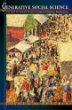
Sometime I encounter books that are extremely important, that give me an appreciation for a knowledge domain I do not know enough about, and that I simply cannot read and review.
Howard Bloom, in Global Brain: The Evolution of Mass Mind from the Big Bang to the 21st Century teaches us that the only way to create a sustainable peace in the Palestine region is to provide absolute security for an entire generation, and raise two whole generations, one on each side, from kindergarten on us, generations that do not consider “the other” to be “pigs and monkeys” by the age of five.
Similarly, the literature on wealth of networks and the fortune at the bottom of the pyramid is growing, and I am convinced that public intelligence (decision support, full disclosure, end of information asymmetries) is going to accomplish two things in the next twenty years:
1) Eradicate corruption and enforce the triple-bottom line
2) Elevate five billion poor by teaching them one cell call at a time so that they can create infinite stabilizing wealth.
So the very best thing I can say about this book is that I am glad I bought it, I am very glad to have a sense, however weak, of this important exploratory area, and now I know that I need a team of generative social scientists that can do complex modeling for peace and prosperity solutions.
I urge one and all to become familiar with World Index of Social and Environmental Responsibility (WISER), as best I can tell that is the center of gravity for empowering individuals with deep knowledge of the true costs and many human rights abuses and other crimes that we support today for lack of knowledge. I also recommend the pioneering EarthGame work of Medard Gabel, at BigPictureSmallWorld.
Instead of Can You Explain It, Can You Build It?, May 31, 2008
Joshua M. Epstein
Sometimes I encounter books that are extremely important, that give me an appreciation for a knowledge domain I do not know enough about, and that I simply cannot read and review in the traditional sense. However, having invested good money and time in the book, if I admire I book, I generally seek to use my broad reading as a base for putting the book in an appreciative context with useful links for other readers.
Howard Bloom, in Global Brain: The Evolution of Mass Mind from the Big Bang to the 21st Century teaches us that the only way to create a sustainable peace in the Palestine region is to provide absolute security for an entire generation, and raise two whole generations, one on each side, from kindergarten on us, generations that do not consider “the other” to be “pigs and monkeys” by the age of five.
Similarly, the literature on wealth of networks and the fortune at the bottom of the pyramid is growing, and I am convinced that public intelligence (decision support, full disclosure, end of information asymmetries) is going to accomplish two things in the next twenty years:
1) Eradicate corruption and enforce the triple-bottom line
2) Elevate five billion poor by teaching them one cell call at a time so that they can create infinite stabilizing wealth.
So the very best thing I can say about this book is that I am glad I bought it, I am very glad to have a sense, however weak, of this important exploratory area, and now I know that I need a team of generative social scientists that can do complex modeling for peace and prosperity solutions.
I urge one and all to become familiar with World Index of Social and Environmental Responsibility (WISER), as best I can tell that is the center of gravity for empowering individuals with deep knowledge of the true costs and many human rights abuses and other crimes that we support today for lack of knowledge. I also recommend the pioneering EarthGame work of Medard Gabel, at BigPictureSmallWorld.
Eventually I see the USA Waging Peace, with a Multinational Decision Support Center providing unclassified intelligence to all actors on the world stage, and publishing an annual and constantly updated Global Range of Gifts Table to connect the billion rich with the five billion poor at the $1-$100 level.
In commenting on this book, I am primarily seeking to point readers toward other books on the substance of peace and prosperity and our many ills. If you are technically inclined, this is a very top work that also inspires the lay reader who “does not do math.”
I own this set. As I pass through the 55-year old mark, I keep coming back to it and will read it from start to finish one day. The price is a bargain.
It's a pity this work is not more readily available. The best work right now that is available is Marc Pensky's Don't Bother Me Mom–I'm Learning!, whose 2005 article in Educational Review (December 2005/January 2006) on “Listening to the Natives,” first illuminated this huge distinction. As Pensky says, children today are no longer “little versions of us.”
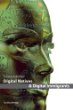
Forthcoming in August 2008 is Born Digital: Understanding the First Generation of Digital Natives. The key point that I have seen in my broad reading is that the future is not here now–it will be here when the digital natives are digital adults, and overthrow the “command and control” (“do it because I say so”) regimes that are all too prone to corruption and misdirection behind closed doors.
5 for Christian wisdom, Chapters on Iraq Questionable, May 18, 2008
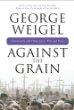
George Weigel
This was my first exposure to this author, who has 14 other books to his credit and was for seven years president of the ethics and public policy center. The essays that comprise the book were written over the course of 15 years, generally as lectures at Catholic centers of learning excellence. Each has a current introduction and explanation of provenance.
Highlights of this extraordinary work:
Six big ideas:
01 Religion and its moral views are a huge part of the public dialog
02 Abortion, euthanasia, and stem-cell research destructive of embryos violate first principles.
03 Free economy empowers the poor
04 Just war tradition balances freedom, justice, & security
05 John Paul II/Second Vatican was about challenging modernity to rediscover the value of truth and love
06 Catholic Church has a “form” from Christ
The author calls on reviewers to pay attention to his introduction to the book, which is indeed a very fine summary (but no substitute for a full reading). He outlines why he titled the book “Against the Grain:”
01 Political science is not just about statistics
02 Democracy is not just procedural
03 Challenges functional pacifism
04 Challenges the amorality of RealPolitic (AMEN!)
05 Asserts the inherent Christianity of America and the constant propositions (see The Thirteen American Arguments: Enduring Debates That Define and Inspire Our Country and also The Faiths of the Founding Fathers
06 Disintegration of mainline Protestantism *combined with* the abdication of universities from teaching values opened door for Catholic reflection but the door was slammed shut by the 1960's
I have a note at this point that the book is an inspiring example of political theology, and am surprised at its stark conservatism.
The author develops a theme throughout the book, to wit that there are three major spheres: the political, the economic, and the cultural, and that it is the Church–the Catholic Church alone among all religions in having diplomatic representation across 172 nations, that is a major player in the cultural arena while having a helpful influence on the other two spheres.
At this point I am furious to discover a really crummy index, mostly names. This work is too important to allow a lazy publisher to dismiss a proper indexing job, and I recommend the author demand a proper index for the paperback edition.
He cites John Paul II as saying that work is “becoming” not drudgery, and those who revere Peter Drucker will remember that he said precisely the same thing.
The author discusses how the Church “proposes”
01 Free *and* virtuous society (see my review of Forbidden Knowledge: From Prometheus to Pornography
02 Combination of democratic political community, free economy, *and* public moral culture
03 Democracy and economy are not machines that can run on their own. See the many books I have reviewed on the complete break-down of the government, predatory capitalism, and the mass media that has betrayed the public trust.
04 Freedom must be tethered to moral truths
05 Voluntary associations are vital (and citing others, freedom must characterize both a choice of faith and a choice of society)
06 Wealth is ideas, not just resources. See The Wealth of Networks: How Social Production Transforms Markets and Freedom and The Fortune at the Bottom of the Pyramid: Eradicating Poverty Through Profits (Wharton School Publishing Paperbacks).
07 Poverty in the 21st Century is about being excluded from the network that can create infinite wealth in every clime and place. AMEN!
I have another six pages of notes but am certain to run into the 100 word limit. A tiny taste of what else this author offers all of us:
Three competing political theologies today: Pragmatic Utilitarianism (Europe), Political Islamism (Caliphate), and Catholic Social Doctrine. Not sure where that leaves those discussed in American Fascists: The Christian Right and the War On America).
Quote: “The social doctrine of the Church is rarely preached and poorly catechized.” Quoting John Paul II, “Bishops don't know the social doctrine of the Church.” (pages 23 and 24).
Five specific issues
01 Need to appreciate Catholic international relations concepts and doctrine
02 Inter-religious dialog and global “social question” must be addressed
03 Emerging global economy & the environment must be addressed
04 Life issues *are* social doctrine
05 Priority of culture and deepening of civil society matters
Church's first task is to *be* the Church, not be too accommodating of political and economic norms de jure, and fully represent the Catholic Church in the ideal. This book is a superb manifestation of that ideal.
The author suggests that the Church makes three contributions in support of democracy, its natural ally:
01 Makes room for democracy by rendering unto Caesar
02 Makes democrats (citizens)
03 Enables “giving an account”
The author articulates strong feelings of betrayal in how three Supreme Court Justices in particular have sought to elevate the individual's self-determination above communal moral precepts, and he is especially damning of the Clinton Administration for seeking to make abortion-on-demand a human right worldwide.
I must close without listing the elements of the Catholic theory of international relations, or the five realities facing the Church. Buy the book (or some other reviewer, take those two chapters).
On Iraq, he is way out of his league on intelligence and policy matters. I did not allow that to detract from my appreciation of the book over-all, for his is a great mind, broadly read, and most challenging.
5.0 out of 5 stars Can Cause Discomfort, But This Book MATTERS
May 17, 2008
Grover Norquist
I was given this book as a gift, along with Groundswell: Winning in a World Transformed by Social Technologies and to my great surprise, being an estranged moderate Reagan Republican, I found that I am much more of a Libertarian than I realized, and this author, although he causes me great discomfort in some areas (such as privatizing Social Security), he makes complete sense. I learn he has been voted one of the 50 most powerful people in DC by GQ (2007) and I believe it. Senator McCain has better listen this time around. I urge all who are enthused with Senator Obama to read Obama – The Postmodern Coup: Making of a Manchurian Candidate. Senator Obama is NOT transparent and I consider his top foreign policy advisors to be dangerous–Dr. Strangelove (Brzezinski) has one last war with Russia left in him, and seriiousl believes he can confront the Chinese in Africa–this is lunacy (search for my Memorandum online <Chinese Irregular Warfare oss.net>.
The book lacks an index. This is a HUGE MISTAKE on the part of the publisher because there are too many important ideas in this book. The publisher should create and post online an index to this book. The publisher can also be criticized for failing to provide Library of Congress cataloguing information. This is a REFERENCE work. The author should consider holding the publisher accountable for such fundamental incompetencies that detract from the book's lasting value.
The five core reforms that he builds up to are:
1) Portable pensions
2) Competitive health care
3) Educational choice including home schooling
4) Outsourcing of all government functions possible
The author posits a stark choice between the Leave Us Alone movement, that appears to be growing daily (and included 27 secessionist movements that meet annually at a conference organized by Kirkpatrick Sale, author of Human Scale, and what he calls the Takings Group, the tax and spend elected officials both Republican and Democratic.
This is a serious reference work with an even mix of books, articles, and online citations.
There are some areas where the author could benefit from knowledge that is not yet mainstream–for example, we can blow away the Medicare unfunded obligations by negotiating prices that are 1% (ONE percent) of what we foolishly pay now, and as a recent PriceWaterHouseCooopers study documented so well, also eliminating the 50% of the medical professional that is waste, including (the author does address this–the tort lawyers like Senator John Edwards who make millions putting good doctors out of business so bad doctors can do more elective operations).
On balance–and this was my first exposure to this individual–I put the book down thinking to myself that this author deserves his reputation, and that he combines a very powerful intellect with an equally powerful moral force.

 Best in Class, Very Technical, Saluting and Moving On, May 31, 2008