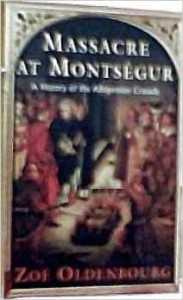
In January of 1208, a papal legate was murdered on the banks of the Rhone in southern France. A furious Pope Innocent III, accused heretics of the crime and called upon all Christians to exterminate heresy between the Garonne and Rhone rivers–a vast (now very popular wine-producing region) known as Languedoc — in a great crusade. This most holy of wars, the first in which Christians were promised salvation for killing other Christians, lasted twenty bloody years. It was a long savage war fought for the very soul of Christendom.
The author, Zoe Oldenbourg, born in St Petersburg in 1916 and educated at the Lycee Moliere and the Sorbonne, has produced a swift-moving, gripping novelistic narrative of this horrific crusade. Like others before her, she has drawn in part on thousands of testimonies collected by inquisitors in the years 1235 to 1245 and woven it into a stunning narrative.
Why did revenge and vengeance dominate the 9-11 discussion by public officials and the media? Why do our public discourse and media images seem virtually bereft of the common sense that informs many other areas of life?
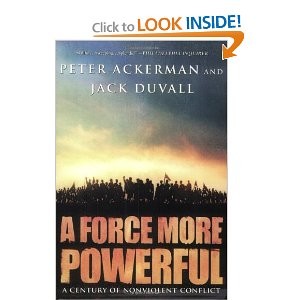
This outstanding book could help fill the void. It consists of a dozen very well-written and well-documented case studies of the power of nonviolence in dealing with injustice on a national or international scale. And I mean the power of nonviolence like King and Gandhi lived it, not the stereotype of nonviolence as passivity or cowardice.
Good parents know revenge doesn't work with their children, good teachers know it doesn't work in the classroom, good citizens know it doesn't work in their community, and a growing proportion of the criminal justice world is embracing the vision of “restorative justice” as a much more functional grounding for most of their work.
On November 29, 2013 colleagues from the International Center on Nonviolent Conflict (ICNC) learnt about Howard Clark’s passing.
Amazon Page
He left us much too early and too suddenly. And we lost not only a close, dear friend that could cheer and energize people around him but also an effective collaborator and a scholar-practitioner with a deep knowledge about and a sophisticated understanding of the field of nonviolent conflict.
Forthcoming (2014) According to some global estimates, one in ten internet users is a Muslim. This volume offers an ethnography of ICT in Muslim communities. The contributors to this volume also demonstrate a new kind of moderation with regard to more sweeping and avant-gardistic claims, which have characterized the study of ICT previously. This moderation has been combined with a keen attention to the empirical material but also deliberations on new quantitative and qualitative approaches to ICT, Muslims and Islam, for instance the digital challenges and changes wrought on the Qur’an, Islam’s sacred scripture. As such this volume will also be relevant for people interested in the study of ICT and the blooming field of digital humanities.
Amazon Page
Available now (2011). “Muslims and the New Medias” explores how the introduction of the latest information and communication technologies are mirroring changes and developments within society, as well as the Middle East's relationship to the West. Examining how reformist and conservative Muslim ‘ulama' have discussed the printing press, photography, the broadcasting media (radio and television), the cinema, the telephone and the Internet, case studies provide a contextual background to the historical, social and cultural situations that have influenced theological discussions; focusing on how the ‘ulama' have debated the ‘usefulness' or ‘dangers' of the information and communication media. By including both historical and contemporary examples, this book exposes historical trajectories as well as different (and often contested) positions in the Islamic debate about the new media.
5.0 out of 5 starsExplosive Opening, Less Satisfying Conclusion, January 5, 2014
The book explodes on page one: no bankers arrested — none, zip, nada, rein — 7,762 Occupiers arrested from the first 80 in NYC on 24 September 2001 to the two arrested in SF on 15 June 2013. Talk about GRIFTOPIA — the police work for the thieves and arrest the owners!
There are a number of key insights within this book, and I strongly recommend it to anyone who wishes to pulse the state of the union — Chomsky, who eulogizes Howard Zinn throughout, brackets our current situation with two trenchant observations early on:
3.0 out of 5 starsRooted in State Paradigm, Ignores Non-State World, January 5, 2014
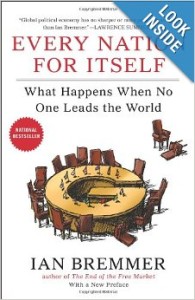
I made a mistake buying this book. I let the marketing hype get to me. As soon as I got the book in my hands and saw that it had jacket blubs from Fareed Zakaria and Larry Summers, the sinking feeling in my stomach was plapable.
I've gone through the book, which is double-spaced without a single chart or map or table. This is a long essay by someone who is out of touch with the latest thinking, still in the nation-state / banks rule the world mode.
For someone that reads very broadly, as I do, virtually every page in this book is irritating. The author's treatment of water, something I looked into for UNESCO (see my easily found review of fourteen books on water and water wars, < Water: Soul of the Earth, Mirror of Our Collective Souls >) the author considers the privatization of water and charging more for water to be a solution, never mind that fracking and Nestle-Coca Cola and all other predations on water by unregulated idiot practices (both individual and corporate) are wiping out hundreds of thousands of years worth of fresh water.
My sinking feeling grew stronger and stronger to the point of great dismay. This author clearly gets along with the powers that be, and he has a facile patter that suggests he has a very high elite social IQ, but from my point of view, that of an ethical 21st Century intelligence professional for whom transparency, truth, and trust are the bottom line, this book is lacking a holistic analytic model and not truly helpful to the public interest.
Most irritatingis the recognition that comes with the a reading of the author's conclusions. It just makes me sick to my stomach to read any endorsement of the Trans-Pacific Partership (Trade) Agreement. The author is a smart man, so I have to conclude that he has chosen to embrace evil. The Trans-Pacific (Trade) Partnership Agreement is the most secretive, most convoluted, most unethical, most anti-public trade agreement in the history of modern civilization. The 15 Asian nations meeting in November 2012 kicked Obama's ass out of town with good reason. The Regional Comprehensive Economic Partnership (the Association of Southeast Asian Nations, plus China, India, Japan, South Korea, Australia and New Zealand, will form a club and leave out the United States). The same thing is happening in South America (CELAC) and I expect it in Africa as well as South and Central Asia as well. Afghanistan has not signed the Bi-Lateral Security Agreement (BSA) in part because the US has blown the past twelve years, and in combination, a variety of non-ISAF nations are ready to step in with a focus on real trade instead of false terrorism (China, India, Iran, Pakistan, Qatar, Russia, Saudi Arabia, Turkey, UAE, among others).
This is a disappointing book that can be used as a measure of the elite hypocrisy, idiocy, and betrayal of the public trust as of today. In terms of substantive analytics and plausible sustainable solutions helpful to the 99% as opposed to the 1%, this book is not satisfactory.
Here are ten books whose summaries alone are worth more than this book (and free as well) — they are drawn from my broader collections of lists that are easily found at the Book page of Phi Beta Iota the Public Intelligence Blog (“the truth at any cost lowers all others costs”):
4.0 out of 5 starsSuperb Appetizer Book — a Potpourri of Genius — Not the Main Plate, December 26, 2013
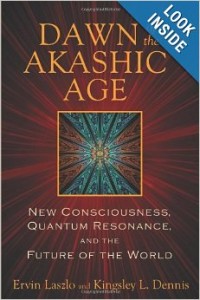
Buy and read this book for a marvelous panoramic view of the latest thinking circling around the end of the top-down scarcity model that concentrates wealth, and the emergence — sooner than most might expect — of the distributed bottom-up local to global harmonization.
This is a hybrid book — the first two thirds are written by the co-authors (Laszlo and Dennis), while the last third is a collection of eleven very short essays, each generally provocative and each providing me with at least one insight, web site, or book that I was not aware of. The book ends with recommended readings in the following categories that are a also a summary of what the book strives to cover at a very high level:

 Setting the Parameters for Modern Western Genocide, January 7, 2014