Important History Not Understood By Most, November 22, 2013
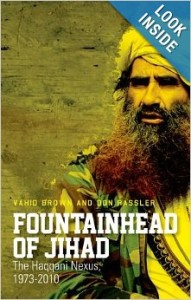
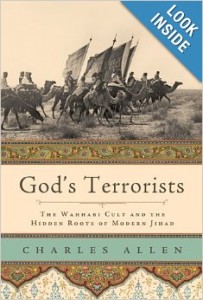
The historical half is mind-glazing, the more recent chapters highly relevant to understanding the deep ignorance of the US Intelligence Community and the US policy (prostitution) community these past 12 years.
I have given the book four stars in part because it is not designed to illuminate the threat in visualizable terms, and it is not up to date. Now that Saudi Arabia has declared war on the USA and the West generally (joining with Israel in a truly bizarre satanic alliance), and on Iran and the Shi'ite portion of Afghanistan specifically, this book absolutely merits updating and republication, hopefully with some decent maps and graphics and tables this next time around.
Early on in a nut-shell: Wahhabism spread in the 19th century, first throughout the Arabian penninsula and then to the Indian subcontinent including what are now India, Pakistan, and Afghanistan. Wahabbism is both a fundamentalist ideology that wins over deep converts, and a form of mercenary religion, buying its way into susceptible corners.
The most important point stressed throughout the book is that Wahhabism is outside the mainstream of Muslim society.
The big surprise for me, and one reason I am distressed at how badly we prepare people for service in this area, is the deep history of Wahhabism among the Pashtun. Today Saudi Arabia and to a lesser extent Qatar and the United Arab Republic seem bent on funding a religious war in Central and South Asia, and no one seems to be paying attention to this emergent threat. I would go so far as to say we are now, in this region, where we were in 1988-1989 when the Saudis first began funding the global Islamic outreach program led by Sheikh Binbaz and represented in part by young Bin Laden.
5.0 out of 5 starsAn amazingly deep yet concise review of Haqqani balancing act — local, regional, global, November 22, 2013
This book is in our J-2 library in Afghanistan and while I have not discussed it with others, believe it is well-regarded. For me it accomplishes something I have not seen elsewhere: it explains the Haqqani, the second most violent and largest group after the Taliban, and it does so concisely.
What I particularly appreciate about this book is the coherent manner in which it examines the value propositions that have positioned Haqqani today at the local, regional, and global levels.
The author's credit Haqqani's emergence in the early days to two value propositions: first, the offering of safehaven in Waziristan; and second, the ability to deliver violence on order for the Pakistani military and ISI.
The authors conclude that Haqqani displaced Hezb-i-Islami HIA/HIG) because the Haqqani have had and still have a superior savvy of tribal politics which in turn led to their earning a larger share of the CIA money passed through the ISA by CIA. Above all the authors credit the Haqqani with being able to manage a nuanced balancing act across borders and interests.
Here is the meat, summary notes for those without the time to absorb this excellent book directly:
5.0 out of 5 starsWell-Regarded in Afghanistan, A Real Gem, November 22, 2013
This book is in our J-2 Library in Afghanistan, and it is a very well-regarded gem.
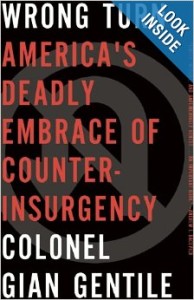
This is a vitally important book. The author drives the value-proposition home with his Afterword, entitled “Truth as a Casualty of COIN.” His core point: lies kill military efficiency (including military learning). Those who would cite the vast spectrum of presidential and DoD directives and concepts and so on clearly are as out of touch with reality as the well-intentioned dolts that signed off on all that junk. Prior to reading this book I articulated — and had checked by colleagues at the US Army Strategic Studies Institute (SSI) and across Special Forces — some harsh comments in my summary critical review of The Accidental Guerrilla: Fighting Small Wars in the Midst of a Big One.
Being a strong critic of defense idiocy and corruption myself, coming off 20 years of trying to get the US Intelligence Community to actually produce ethical evidence-based decision-support, this book by a former commander who is now teaching history at West Point should be required reading in all the schools from entry-level to war college.
The author opens early with his view that the COIN understanding of “the population” is delusional (he is being kind). The population is indeed the center of gravity, but if one is going to substitute technology for thinking, ideology for policy, and corrupt puppets for indigenous leadership, then one should expect to implode. As I have lectured here are there, including to civil affairs cannon fodder at Fort Bragg, “no amount of tactical excellence can make up for strategic decrepitude.” (see the definition of the latter term of art in my review of Clausewitz and Contemporary War).
The book focuses on the disconnect between a military trained, equipped, and organized to fight wars, and the “light infantry” variant that pretends to win hearts and minds while kicking down doors and running air strikes on civilians. The fact is that if there is no Whole of Government endeavor, if the Department of State is the Department of Nothing as Andrew Cockburn recently slammed Boffo Haircut (who gave up his integrity when looking into CIA's role in Iran Contract and the cocaine crack explosion), then the military is on a fool's errand at great expense in terms of blood, treasure, and spirit.
I am reminded of DIME by the early portion of the book. We need all four — diplomatic, informational, military, and economic. The fact is that we have a military that is dysfunctional and corrupt to the bone across strategy, policy, acquisition and operations, and a “paper tiger” across the other three domains.
There are five short quotes I have selected that capture the essence of the book, which I will follow with a final comment and eight other recommended books.
QUOTE (117): “When a state gets its strategy right in war, tactical problems tend to be subsumbed and improved within it.” This is an entire book waiting to be written — and the obverse of my comment to the civil affairs gladiators.
QUOTE (118): “But sometimes, in a war that involves limited policy airms, there may well be alternatives to victory.” Here I would point out that until last year the morons in DC conflated Al Qaeda and the Taliban — I do not make this stuff up. These are the same people that did not know Iraq was a Sunni minority ruling over a Shi'ite majority.
QUOTE (127): “The counterintelligence narrative posits that savior generals have game-changing effects, but it over-states their influence on the course of the war.” Yes, to which I would add, it is not helpful to have a Zionist bimbo sharing your bed and a G-2 without the balls the call a counterintelligence foul when he sees one.
QUOTE (128): “…hearts and minds counter-insurgency carried out by an occupying power in a foreign land doesn't work, unless it is a multigenerational effort.” To understand the details, search for my Marine Corps University short paper (summary of a 1976 thesis), < 1992 MCU Thinking About Revolution >. No one in DC gets any of this.
QUOTE (132): “American strategy has failed in Afghanistan because it became tapped by the promise that counterinsurgency can work only if it is given enough time…” See my summary review of Colin Gray's utterly gripping Modern Strategy — time is the one strategic variable that cannot be bought nor replaced. The corruption of US foreign and national security policy, deepened by the assassination of John F. Kennedy 50 years ago by a mix of Texas energy, New York money, CIA, and out of control elements of the rest of the US government, has wasted 50 years and destroyed the Republic. Time matters. So does integrity.
I am not going to summarize the most precious part of the book, pages 133-135, read these in the library or a bookstore if you cannot take the time to ingest the entire book.
I've had to work my way through multiple generations of flag officers divorced from reality and inattentive to the public interest. I dare hope that the serving Chief of Staff of the US Army is paying attention, and that this particular colonel might rise to be one of the thinking generals. Certainly I cannot count more than five in my lifetime out of the sixty or so I have known (Zinni is one of best and on record as saying that the US IC provided him “at best” 4% of what he needed to know as CINCENT). Consider helping me with the following SSI monograph under development, search for < 2013 ON REVOLUTION — Helpng Transform the US Army Consistent with CSA Guidance >
Buy this book, read it, display it, and share it. Let that be your act of loyal dissent this week.
Semper Fidelis,
Robert David STEELE Vivas INTELLIGENCE for EARTH: Clarity, Diversity, Integrity, & Sustainability
In Switzerland a petition from 100,000 people, or about 1.25% of the population, creates a public referendum. By this means, last March, Swiss voters created strict limits on executive pay.
On November 24, the Swiss will vote on whether to take a further step — limiting executive pay to no more than 12 times the lowest salary in the company. Such a maximum wage policy allows the CEO pay increases, but only if workers get at least a twelfth as much.
The Swiss are also set to vote, on a date yet to be set, to create a guaranteed basic income of $2,800 (2,500 Swiss francs) per month for every adult. That's about $16 per hour for a full-time worker, but it's guaranteed even for those who can't find work.
You know what country can afford such a measure even more easily, given its vast supplies of wealth? The United States of America.
Here in the United States, had the minimum wage kept pace with productivity since the 1960s it would now be $21.72 an hour, or $3,722 a month. The Congressional proposal of $10.10 an hour, which President Obama now says he supports, equals $1,751 a month for a fulltime job. The actual U.S. minimum wage of $7.25, which does not apply to all workers, makes $1,242 a month. But only if you can find work.
That's less than half what the Swiss are voting on, and Swiss workers also have their healthcare paid for, public transportation widely available, quality education and higher education free or affordable, 14 weeks paid parental leave, and a nearly endless list of other advantages provided by the government.
I read stories like this and wonder what is our culture thinking? Children, as everyone says, yet few in public office seem to believe, are our future. On the basis of stories like this, our future is increasingly bleak. Where do you have to be in your own mind when feeding children, and seeing they get a good start, is not important?
Yet another story illustrating why the Theocratic Right is the most dangerous toxic social movement in America today. It's hard to believe that people think this way.
Usually ignored by the press as insufficiently interesting to technology dazzled editors and reviled by the civilian and military leadership of the Air Force as not what they think they should spend money and careers on, the A-10 “Warthog” has broken through into Washington DC's consciousness. Interestingly, the attention was provoked by a heavy handed effort by the Air Force to wipe out the entire remaining fleet of approximately 350 A-10 close air support aircraft in order to plough the money saved into “higher priority” programs, most specifically the F-35.
Five articles in major national or regional news media just this week make painfully obvious that in attempting to get rid of the A-10, the Air Force has kicked itself into a hornet's nest. Most importantly, the growing controversy is revealing that in warfare since Operation Desert Storm in 1991, the A-10 has performed spectacularly well, significantly better than other more complex and costly aircraft, in its primary mission (helping Soldiers and Marines fight on the ground) and it performs–equally well–missions for which it was not originally intended.
The issues go to the very nature of the Air Force, how to fight effectively in the twenty-first century, and what kinds of weapons should be bought (and how to buy them).
These issue will be the focus of a seminar tomorrow (Friday): “Close Air Support with and without the A-10: Will US Troops Get the Help They Need?” sponsored by the Straus Military Reform Project and the Project On Government Oversight. It's located at the Carnegie building at 1779 Massachusetts Avenue, NW, very near the DuPont Circle (South) Metro stop. Sessions will start at 9:30, lasting until 3:30.
November 22, 2013, is the 50th anniversary of the assassination of President John F. Kennedy. The true story of JFK’s murder has never been officially admitted, although the conclusion that JFK was murdered by a plot involving the Secret Service, the CIA, and the Joint Chiefs of Staff has been well established by years of research, such as that provided by James W. Douglass in his book, JFK And The Unspeakable, published by Simon & Schuster in 2008. Ignore Douglass’ interest in the Trappist monk Thomas Merton and Merton’s prediction and focus on the heavily documented research that Douglass provides.
Or just turn to the contemporary films, taken by tourists watching JFK’s motorcade that are available on YouTube, which show clearly the Secret Service pulled from President Kennedy’s limo just prior to his assassination, and the Zapruder film that shows the killing shot to have come from President Kennedy’s right front, blowing off the back of his head, not from the rear as postulated in the Warren Commission Report, which would have pushed his head forward, not rearward.
I am not going to write about the assassination to the extent that the massive information permits. Those who want to know already know. Those who cannot face the music will never be able to confront the facts regardless of what I or anyone else writes or reveals.

 Important History Not Understood By Most, November 22, 2013