Robert Young Pelton: Crowd-Funding and Crowd-Sourcing the Hunt for Joseph Kony — with Public Lessons Learned

Crowd-Sourcing, Innovation, Sources (Info/Intel)
0Shares
Robert Young Pelton
Robert Young Pelton

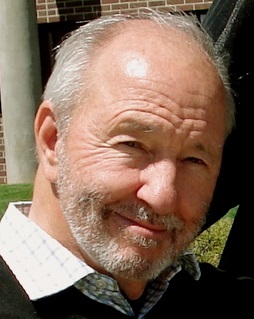
As some of you know, I like to find people who don't want to be found. Since the mid 90's I have located and connected with over two dozen terrorist, criminal, jihadi and drug groups. The alphabet list of people I have tracked down and lived with include the taliban, FARC, LURD, al Qaeda, BRA, GIA, MILF, ABB, AUC, HEK, Haqqani, Shining Path, ADF, Chechens along with various mafyia, gang and drug groups. My resume includes correctly identifying the location of bin Laden and Zawahiri in 2003. I have spent significant time tracking the exact location and condition of hundreds of kidnap victims in Somalia, Pakistan, Iraq, Afghanistan and Colombia. I don't come to this task lightly

I am trying a new concept. Crowd-funding and crowd-sourcing a real search for a dangerous group. Your dollars supports an expedition led by myself along with professionals on the ground. Our task is to locate Joseph Kony along with understanding and communicating why Kony has not been found. Then we also need to communicate our efforts, discoveries and lessons learned in an open transparent way. Only then can criminals realize that there is no place left on earth to hide.

Phi Beta Iota:  Crowd-funding is raising money from an infinite diversity of sources.  Crowd-sourcing is aggregating information from an infinite variety of sources.  They are different.  They go well together.  This is an example of public intelligence in the public interest funded by the public, of, by, and with the public.

We will go deeply into how $200 million spent by charities and U.S. tax dollars have not resulted in the locating or capture of Kony . Our goal is not to critique but to enlighten our followers so that we can apply this model to other expeditions.

Continue reading “Robert Young Pelton: Crowd-Funding and Crowd-Sourcing the Hunt for Joseph Kony — with Public Lessons Learned”

Sreeram Chaulia: Russia-China-India “Strategic Triangle”

02 China, 03 India, 06 Russia
0Shares
Sreeram Chaulia
Sreeram Chaulia

A new power triangle

The relative decline of America’s military, economy and soft power has led to new possibilities for restructuring leadership. Russia, India and China have been grasping at these new horizons.

The Asian Age, 22 October 2013

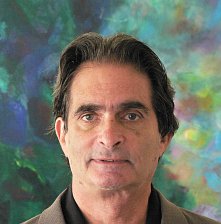
Two back-to-back diplomatic summits this week between India and Russia, followed by India and China, are manifestations of an altered world order where major non-Western actors are pooling resources and strategies. Although Indian Prime Minister Manmohan Singh’s meetings with Russian President Vladimir Putin and Chinese President Xi Jinping are exclusive of each other and bilateral, they play into a broader dynamic of intensifying linkages and coordination that has ushered in a world with multiple power centres.

While the Brics (Brazil, Russia, India, China and South Africa) formulation has captured attention over the last decade, a parallel “RIC” grouping comprising just Russia, India and China has existed since 1996. RIC was the first front that sparked questioning about the unipolar, US-dominated international system of the post-Cold War years. More explicitly anti-American coalitions like the Shanghai Cooperation Organisation (SCO) arrived after RIC had sown the seeds of a multipolar world.

Continue reading “Sreeram Chaulia: Russia-China-India “Strategic Triangle””

SmartPlanet: China’s Global Investment in One Map

02 China, 03 Economy, Commercial Intelligence, Cultural Intelligence
0Shares

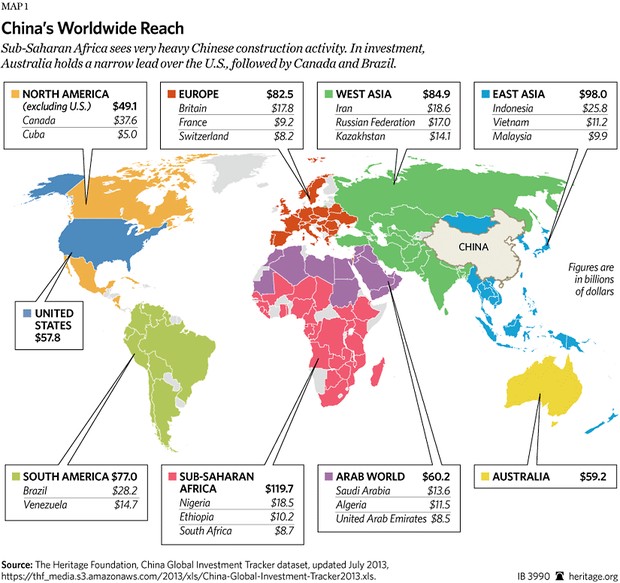
smartplanet logoChina’s massive foreign investment, in one map

By | October 22, 2013, 5:32 AM PDT

Click on Image to Enlarge

Living in the United States, the scale of foreign investment by Chinese companies isn’t so obvious. Much of the $57.8 billion of Chinese investment in the U.S. since 2005 has been in the finance sector. I didn’t comprehend the scale of the Chinese investment until I visited Ethiopia earlier this month where nearly all the construction projects — including a major light rail line — were being done by Chinese firms (sub-Saharan Africa has the most investment from China of any region). Many huge factories on the outskirts of the capital city are joint projects between China and Ethiopia with the flags of both countries flying side-by-side. The redevelopment of a major road was paid for by Chinese government and is now dubbed “Ethio-China Friendship Avenue.” In other words, the scale of Chinese investment is overtly apparent in Ethiopia and many other countries around the world, if not as obvious in the developed world.

Heritage Foundation provides more insight into China’s massive investment all over the world with a new report showing moderate growth in Chinese investment so far in 2013 and the map above with total investment and contracts won since 2005. There’s also a fascinating interactive map with detailed information on Chinese investment for every country where it has investments over $100 million.

Most people I talked to in Ethiopia about all the Chinese investment had mixed feelings. They were glad for the investment — in just a few years the country will have its first light rail — but there’s also skepticism. What are their ulterior motives? Will all the investment ultimately help Ethiopians in the long run? Why us?

As Quartz points out, even if Chinese companies have nothing to hide there’s good reason to be skeptical. The main reason? A lack of transparency. In a report on 100 multinational corporations in emerging markets, Transparency International, an anti-corruption organization, shows that Chinese multinationals perform poorly. “Results show that companies from China lag behind in every dimension with an overall score of 20 percent (2 out of a maximum of 10),” the report said. “Considering their growing influence in markets around the world, this poor performance is of concern.”

David Sabow: White House/Pentagon/CIA Iran Contra Drug Running — and Destruction of Senator Gary Hart to Stop Investigation

07 Other Atrocities, 09 Justice, 11 Society, Corruption, Cultural Intelligence, Government, Military
0Shares
David Sabow
David Sabow

This is NOT speculation. Everything told here is documented and supported by a Tosh Plumlee's testimony and supported by letters from Senator Gary Hart to the “Kerry Commission”. I have copies of the letters.  David

Phi Beta Iota: This series by Dr. David Sabow is posted in honor of his brother Col James Sabow, USMC (Aviation), murdered at the direction of Marine Corps General Officers co-conspiring with the CIA to introduce drugs into the USA in the 1980's and early 1990's.  We note with interest that Senator John Kerry, today Secretary of State, became complicit after the fact.  The truth at any cost lowers all others costs.  The day is coming when the public appreciates the truth, and the freedom and dignity and prosperity that the truth can bring to a community and to its governance.

David Sabow: Posted on my Face Book Page in ref to John Carman contact and reply.

John very interesting background. That's what I meant when I said you paid some dues.

I don't know those people you worked with but that doesn't mean anything.

I flew into China Lakes a few times in the eighties and early nineties, and into El Toro's Marine Naval Air Station for mostly refueling before going on the “Roster Hop' to Mexico and Central America, in operation Penetrate. That was mostly in the early stages of what would be later called Iran Contra.

Continue reading “David Sabow: White House/Pentagon/CIA Iran Contra Drug Running — and Destruction of Senator Gary Hart to Stop Investigation”

SchwartzReport: Celibacy Syndrome in Japan — An End to Skin on Skin, Heart to Heart?

Cultural Intelligence, Earth Intelligence
0Shares

schwartzreport newThis is an extraordinary trend going on in Japan. It is a very clear example of how national beingness is shaped through unnumbered small seemingly mundane choices made by individuals.

Why Have Young People in Japan Stopped Having Sex?
Abigail Haworth – The Guardian/Observer (U.K.)

Ai Aoyama is a sex and relationship counsellor who works out of her narrow three-storey home on a Tokyo back street. Her first name means “love” in Japanese, and is a keepsake from her earlier days as a professional dominatrix. Back then, about 15 years ago, she was Queen Ai, or Queen Love, and she did “all the usual things” like tying people up and dripping hot wax on their nipples. Her work today, she says, is far more challenging. Aoyama, 52, is trying to cure what Japan's media calls sekkusu shinai shokogun, or “celibacy syndrome”.

Japan's under-40s appear to be losing interest in conventional relationships. Millions aren't even dating, and increasing numbers can't be bothered with sex. For their government, “celibacy syndrome” is part of a looming national catastrophe. Japan already has one of the world's lowest birth rates. Its population of 126 million, which has been shrinking for the past decade, is projected to plunge a further one-third by 2060. Aoyama believes the country is experiencing “a flight from human intimacy” – and it's partly the government's fault.

Continue reading “SchwartzReport: Celibacy Syndrome in Japan — An End to Skin on Skin, Heart to Heart?”

Jon Rappoport: How the Matrix Deals with Power

Corruption, Cultural Intelligence, Media
0Shares
Jon Rappoport
Jon Rappoport

How the Matrix deals with power

by Jon Rappoport

I've been asked to reprint this piece.

Here it is a with a new brief introduction.

Most people use memory to explain why they're living the lives they have. They arrange memories as if they're symbols, and the sum is: this is the life I have; no other.

If you could somehow take away all those memories and insert a whole new synthetic raft, people would arrange those to come to the same conclusion. And the same life.

So it is with the world. People look out at it and decide, on some subterranean level, that the world dictates what degree of choice and power they possess.

Put them in a different home, a different city, on a different planet, and they would eventually settle on the same assessment of their power: small.

In that sense (and many others), memory and the world are constructs the individual ingests, arranges, and builds to suit and fortify his conception of his “geometry”: the shape of his life.

In previous articles, I've been making clear how THE VOICE narrates the story of our times through television anchorage.

Continue reading “Jon Rappoport: How the Matrix Deals with Power”