Ron Powell with Michael Saylor: The Impact of the Mobile Wave

Advanced Cyber/IO, Knowledge
0Shares
Michael Saylor

The Impact of the Mobile Wave: A Spotlight Q&A with Michael Saylor of MicroStrategy

This BeyeNETWORK Spotlight features Ron Powell's interview with Michael Saylor, Chairman of the Board, President and CEO of MicroStrategy, and author of the recently released book, The Mobile Wave. Ron and Michael discuss the changes we will experience – and benefit from – as the mobile wave advances throughout the world.

BeyeNETWORK Spotlights focus on news, events and products in the business intelligence ecosystem that are poised to have a significant impact on the industry as a whole; on the enterprises that rely on business intelligence, analytics, performance management, data warehousing and/or data governance products to understand and act on the vital information that can be gleaned from their data; or on the providers of these mission-critical products.

Presented as Q&A-style articles, these interviews conducted by the BeyeNETWORK present the behind-the-scene view that you won’t read in press releases.

Michael, congratulations on your new book The Mobile Wave. Why did you feel it was time to write this book?

Michael Saylor: Ron, I think every ten years or so there's something really exciting in the information technology business. We’ve had the mainframe wave, the mini-computer wave, the personal computer (PC) wave, and then the Internet wave. I thought about writing a book around the Internet wave, but I was busy taking my company public and I didn't really have the time.

Now, along comes the mobile wave. It’s the fifth wave, I think, of computing. I feel this is my chance to actually put down in book form my thoughts about the history of science and how things all relate to this current mobile wave, and I may not get another chance in my lifetime. It's my first book, and I'm excited about it.

For readers of The Mobile Wave, what is the most surprising thing they will learn?

Continue reading “Ron Powell with Michael Saylor: The Impact of the Mobile Wave”

Patrick Meier: Evolution in Live Mapping: The 2012 Egyptian Presidential Elections

Geospatial, Knowledge
0Shares
Patrick Meier

Evolution in Live Mapping: The 2012 Egyptian Presidential Elections

My doctoral dissertation compared the use of live mapping technology in Egypt and the Sudan during 2010. That year was the first time that Ushahidi was deployed in those two countries. So it is particularly interesting to see the technology used again in both countries in 2012. Sudanese activists are currently using the platform to map #SudanRevolts while Egyptian colleagues have just used the tool to monitor the recent elections in their country.

Analyzing the evolution of live mapping technology use in non-permissive environments ought to make for a very interesting piece of research (any takers?). In the case of Egypt, one could compare the use of the same technology and methods before and after the fall of Mubarak. In 2010, the project was called U-Shahid. This year, the initiative was branded as the “Egypt Elections Project.”

According to my colleagues in Cairo who managed the interactive map, “more than 15 trainers and 75 coordinators were trained to work in the ‘operation room' supporting 2200 trained observers scattered all over Egypt. More than 17,000 reports, up to 25000 short messages were sent by the observers and shown on Ushahid’s interactive map. Although most reports received shown a minimum amount of serious violations, and most of them were indicating the success of the electoral process, our biggest joy was being able to monitor freely and to report the whole process with full transparency.”

Contrast this situation with how Egyptian activists struggled to keep their Ushahidi project alive under Mubarak in 2010. Last week, the team behind the current live map was actually interviewed by state television (picture above), which was formerly controlled by the old regime. Interestingly, the actual map is no longer the centerpiece of the project when compared to the U-Shahid deploy-ment. The team has included and integrated a lot more rich multimedia content in addition to data, statistics and trends analysis. Moreover, there appears to be a shift towards bounded crowdsourcing rather than open crowd-sourcing as far as election mapping projects go.

Continue reading “Patrick Meier: Evolution in Live Mapping: The 2012 Egyptian Presidential Elections”

Berto Jongman: Top 40 Useful Sites to Learn New Skills

Knowledge, P2P / Panarchy
0Shares
Berto Jongman

Top 40 Useful Sites To Learn New Skills

The web is a powerful resource that can easily help you learn new skills.  You just have to know where to look.  Sure, you can use Google, Yahoo, or Bing to search for sites where you can learn new skills, but I figured I’d save you some time.
Here are the top 40 sites I have personally used over the last few years when I want to learn something new.

  1. Hack a Day – Hack a Day serves up fresh hacks (short tutorials) every day from around the web and one in-depth ‘How-To hack’ guide each week.
  2. eHow – eHow is an online community dedicated to providing visitors the ability to research, share, and discuss solutions and tips for completing day-to-day tasks and projects.
  3. Wired How-To Wiki – Collaborate with Wired editors and help them build their extensive library of projects, hacks, tricks and tips.  Browse through hundreds how-to articles and then add to them, or start a new one.
  4. MAKE Magazine – Brings the do-it-yourself (DIY) mindset to all of the technology in your life.  MAKE is loaded with cool DIY projects that help you make the most of the technology you already own.
  5. 50 Things Everyone Should Know How To Do – While not totally comprehensive, here is a list of 50 things everyone should know how to do.  It’s a great starting point to learn new skills.
  6. wikiHow – A user based collaboration to build and share the world’s largest, highest quality how-to manual.
  7. Lifehacker – An award-winning daily blog that features tips, shortcuts, and downloads that help you get things done smarter and more efficiently.
  8. 100+ Google Tricks That Will Save You Time – Today, knowing how to use Google effectively is a vital skill.  This list links out to enough Google related resources to make you an elite Google hacker.
  9. Instructables – Similar to MAKE, Instructables is a web-based documentation platform where passionate people share what they do and how they do it, and learn from and collaborate with others as the tackle new projects and learn new skills.
  10. Merriam-Webster Online – In this digital age, your ability to communicate with written English is paramount skill.  And M-W.com is the perfect resource to improve your English now.

See another 30 with links.

P2P Foundation Features The Open Source Everything Manifesto

Manifesto Extracts
0Shares
P2P Foundation

Open-Source Everything Manifesto

* Book: The Open-Source Everything Manifesto: Transparency, Truth, and Trust. By Robert David Steele. Evolver, 2012.

URL = http://phibetaiota.net/2012/06/buy-today-the-open-source-everything-manifesto-transparency-truth-trust-the-meme-the-mind-set-and-the-method/

Contents

Phi Beta Iota: This will be an on-going page. To be included in the P2P Foundation wiki is a huge blessing that will bring the work to the attention of tens of thousands of people if not more.

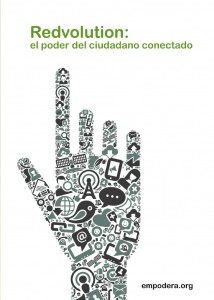
Book: Redvolution: The Power of Connected Citizens

5 Star, Change & Innovation, Civil Society, Complexity & Resilience, Consciousness & Social IQ, Culture, Research, Democracy, Economics, Education (General), Environment (Solutions), Future, Information Society, Intelligence (Public), Intelligence (Wealth of Networks), Nature, Diet, Memetics, Design, Philosophy, Politics, Stabilization & Reconstruction, Truth & Reconciliation, Values, Ethics, Sustainable Evolution, Voices Lost (Indigenous, Gender, Poor, Marginalized)
0Shares
Free Online

Free online as PDF, 180 pages, a great deal in English.

Part I:  Experiences

Part II:  Reflections

Part III:  Tools and Applications

Part IV:  Interviews

Michel Bauwens: Interview on Empowering Citizens with ICT

P2P / Panarchy
0Shares
Michel Bauwens

Book: RedVolution: El poder del ciudadano conectado. Empodera.org

This book contains both Spanish and English-language essays and interviews.

This is the text we contributed, based on an email interview.

Interview with Michel Bauwens

Tell us a little about you

I’m the founder of the P2P Foundation, a global research collaborative on the collaborative economy and especially, peer production, governance and property, i.e. anything that is related to peer to peer dynamics and the commons as the modality of creating value, through the mutualization of either knowledge or tangible resources. Our motto’s are, ‘together we know everything’, ‘together we have everything’… We create a knowledge commons on the topic, have a nonprofit foundation to manage and fund our infrastructure where possible (p2pfoundation.net), and a p2p coop to found ourselves as individuals. Our coop is modeled as a phyle, a community-oriented enterprise, which sustains our engagement with our commons1. I live in Chiang Mai, Northern Thailand, with my Thai wife, 2 children and an extended family, which includes 24 cats and five different altars (buddhist, ganesh, protective spirits, forefathers, and more), even though I’m guided a secular spirituality myself.

What is empowerment for you?

We honour the principle of equipotentiality, i.e. to design social systems that harmonize individual and collective interest, and let anyone contribute to the commons of their choice, and make a living from it. There is always something in which you are better than another person, and which you can most usefully contribute to a common project which creates value for humanity. I believe that self-actualisation always has a ‘horizontal’ component, it’s not something that you do on our own, but in alignment with others. Each of us can realize ourselves through our connection with others, and the best way is to follow the emergent self-unfolding of a person who has to freedom of his own pursuits, yet can find a collective context in which this pursuit is a gift to others.

Continue reading “Michel Bauwens: Interview on Empowering Citizens with ICT”

Michel Bauwens: P2P Foundation Books of the Day Archive

P2P / Panarchy
0Shares
Michel Bauwens

Phi Beta Iota:  Peer to Peer (P2P) is the foundation for Panarchy, and Open Source Everything is the method.  P2P includes one to many and many to one as well as ever-changing mixtures of grids of interest and influence.  Above all it is about the primacy of the individual over the institution.

As of 2 July 2012:

2012

April 2012

  1. Bernard Lietaer and Stephen Belgin. New Money for a New World. 2012
  2. Law of the Ecological Commons David Bollier.
  3. Faith of the Faithless. Simon Critchley, How Politics is Rooted in the Spiritual
  4. Occupy World Street
  5. Raúl Zibechi. Dispersing Power: Social Movements as Anti-State Forces. AK Press, 2010.
  6. After the Future
  7. Sharing for Survival: Restoring the Climate, the Commons and Society. Feasta, 2012
  8. Networks Without a Cause, A Critique of Social Media. by Geert Lovink. Polity Press, 2012
  9. Doing Good Things Better. Brian Martin. Irene Publishing, 2011
  10. Future Learning Spaces
  11. Richard Sennett. Together: The Rituals, Pleasures, and Politics of Cooperation. Yale University Press, 2012.
  12. Foundations of a Love Economy
  13. Networked: The New Social Operating System
  14. The End of Leadership

May 2012

  1. Digital Public Domain
  2. Ethics for the Information Age (5th Edition)
  3. Abundance – The Future Is Better Than You Think
  4. Digital Vertigo
  5. Misunderstanding the Internet
  6. Open Source Intelligence in a Networked World. by Anthony Olcott
  7. The Neighborhood in the Internet: Design Research Projects in Community Informatics


  1. Cloud Time
  2. Green Governance, Human Rights, and the Commons

June 2012

  1. Towards Peer Production in Public Services
  2. Occupy This
  3. Case for Copyright Reform
  4. Money and Sustainability
  5. Life Changing
  6. Occupy Consciousness: Essays on the Global Insurrection. Evolver, 2012. [1]
  7. Interop: The Promise and Perils of Highly Interconnected Systems. Byh John Palfrey and Urs Gasser. Basic Books, 2012
  8. Promise of Regional Currencies
  9. Divine Right of Capital
  10. Zapotec Science
  11. Economic Democracy in the Network Century
  12. Redvolution, see also the excerpts

To Do:

  1. Open-Source Everything Manifesto
  2. Media Ecosystem
  3. Intention Economy, only: [2]
  4. The Organic Internet. May First / People Link. [3]
  5. Paul Mason's “Why it’s Kicking Off Everywhere: The New Global Revolutions” (Verso)
  6. Energy and the Wealth of Nations
  7. Emergent Ownership Revolution
  8. Cooperative Transitions to a Steady-state Economy

NOT READY

  1. Carta de los Comunes – Not enought english material
  2. Getting Results from Crowds – Not enought material
  3. Theft Law in the Information Age – Not yet published
  4. From Goods to a Good Life – Not yet published