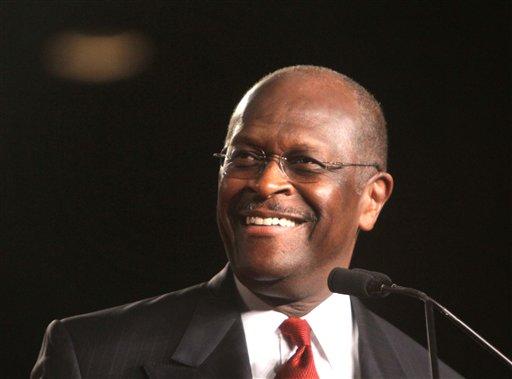
The former CEO of Godfather's Pizza won the test of conservative strength with roughly 37 percent of the vote. Texas Governor Rick Perry came in second place, followed by former Massachusetts Governor Mitt Romney, who did not actively compete in the event. Here's a full breakdown of the results:
Herman Cain: 37.11% Rick Perry: 15.43% Mitt Romney: 14.00% Rick Santorum: 10.88% Ron Paul: 10.39% Newt Gingrich: 8.43% Jon Huntsman: 2.26% Michele Bachmann: 1.51%
Gary Johnson was excluded from the poll by the Florida GOP despite being admitted to the debate.
Knowledge is dispersed and shared. Friedrich Hayek was the first to point out, in his famous 1945 essay “The Uses of Knowledge in Society,” that central planning cannot work because it is trying to substitute an individual all-knowing intelligence for a distributed and fragmented system of localized but connected knowledge.
So dispersed is knowledge, that, as Leonard Reed famously observed in his 1958 essay “I, Pencil,” nobody on the planet knows how to make a pencil. The knowledge is dispersed among many thousands of graphite miners, lumberjacks, assembly line workers, ferrule designers, salesmen and so on. This is true of everything that I use in my everyday life, from my laptop to my shirt to my city. Nobody knows how to make it or to run it. Only the cloud knows.
One of the things I have tried to do in my book “The Rational Optimist” is to take this insight as far back into the past as I can—to try to understand when it first began to be true. When did human beings start to use collective rather than individual intelligence?
In doing so, I find that the entire field of anthropology and archaeology needs Hayek badly. Their debates about what made human beings successful, and what caused the explosive take-off of human culture in the past 100,000 years, simply never include the insight of dispersed knowledge. They are still looking for a miracle gene, or change in brain organization, that explains, like a deus ex machina, the human revolution. They are still looking inside human heads rather than between them.
5.0 out of 5 stars Four for Omissions, Six for Precision Relevance,September 22, 2011
EVENT ALERT:
Paul Pillar is speaking at Brookings Institute on Wednesday 5 October 2011 from 10:00 to 11:30, RSVP is required to 21DefenseInitiative[…]
I will attend that session. This alert will be deleted on 5 October.
– – – – –
I have to give the book a solid five, not my norm by any means for books on the intelligence profession. It loses one star for eschewing deeper discussions of the lack of integrity across the intelligence system (to include George Tenet refusing to implement any of the recommendations of the Aspin-Brown Commission, or Jim Clapper continuing to do the wrong things more expensively than ever before), but abundantly compensates for those omissions with devastatingly fresh precision attacks on the political side of the house, where intelligence is generally irrelevant. This is, without question, the ONLY first class book on this topic, and it is certain to be of lasting value, along with a still relevant companion by Mort Halperin, Bureaucratic Politics and Foreign Policy; Second Edition, in which “rule one” is–I do not make this stuff up–“Lie to the President if you can get away with it.”
The killer quote that makes the book for me is from Richard Immerman, and appears on page 318:
“regardless of any benefit from reform of the intelligence community, ‘the effect on policy is likely to be slight so long as the makers of that policy remain cognitively impaired and politically possessed.'”
JERUSALEM — Marijuana administered in a timely fashion could block the development of post-traumatic stress disorder symptoms in rats, a new study conducted at Haifa University has found.
The study, which was conducted by researchers at the university's psychology department and published in the Neuropsychopharmacology journal, found that rats which were treated with marijuana within 24 hours of a traumatic experience, successfully avoided any symptoms of PTSD.
“There is a critical ‘window of time' after trauma, during which synthetic marijuana can help prevent symptoms similar to PTSD in rats,” said Dr Irit Akirav who led the study.
In the first part of the experiment, rats were exposed to extreme stress, and were found to display symptoms resembling PTSD in humans.
They were then divided into four groups, with the first given no marijuana, the second given a marijuana injection two hours after being exposed, the third after 24 hours and the fourth after 48 hours.
Even a rather non-observant person would have noticed by now that the Occupy Wall Street protest is being ignored by the mainstream media, or at least not taken seriously. Corporate-owned media knows its masters well.
Phi Beta Iota: The Wall Street Occupation, now going into its second week, with many additional demonstrations planned across the USA for 6 October 2011, is being ignored by the elite and their media sock-puppets. This is one reason most do not realize that the “Day of Rage” is about electoral reform and a non-violent repossession of the US and the US Government.
The Chinese government’s ‘vacuum cleaner’ approach to espionage is worrying foreign governments, companies and overseas dissidents. They’re right to be concerned.
Phi Beta Iota: China graduates more honors students from high school than the USA graduates from high school across the board. China has also made the leap away from English toward all the other languages that the US refuses to be serious about. China is further along toward being a “Smart Nation,” aided by its outposts in Singapore, Hong Kong, Macau, and Taiwan, as well as Diasphora, while the US diddles around not even understanding its own preconditions of revolution. There is only one non-zero solution, and the US government, two-party tyranny, and Wall Street have absolutely no interest in going there.