Chuck Spinney: What Caused the Fukushima Meltdowns?

05 Energy, 07 Other Atrocities, 08 Wild Cards, 09 Justice, Civil Society, Commerce, Commercial Intelligence, Corruption, Cultural Intelligence, IO Impotency, Law Enforcement, Politics of Science & Science of Politics, Power Behind-the-Scenes/Special Interests, Secrecy & Politics of Secrecy
0Shares
Chuck Spinney

The Tsunami or the Earthquake Preceding the Tsunami?????

Below is another pathbreaking report in Counterpunch on the Fukushima question.  Fukushima may be off the front pages, but the catastrophe is still generating serious questions with profound ramifications.  In a few days, I will forward another blaster will showing how the some of these ramifications this catastrophe reaching into the good ole USA.  In the meantime, I urge you to read this report.

Chuck Spinney
Nice, France

The Fukushima Daiichi Reactors Were in Meltdown After the Earthquake, But Before the Tsnumami Hit

TEPCO's Darkest Secret

By DAVID McNEILL and JAKE ADELSTEIN

It is one of the mysteries of Japan’s ongoing nuclear crisis: How much damage did the March 11 earthquake do to the Fukushima Daiichi reactors before the tsunami hit? The stakes are high: If the quake structurally compromised the plant and the safety of its nuclear fuel, then every other similar reactor in Japan will have to be reviewed and possibly shut down. With virtually all of Japan’s 54 reactors either offline (35) or scheduled for shutdown by next April, the issue of structural safety looms over the decision to restart every one in the months and years after.

. . . . . .

Problems with the fractured, deteriorating, poorly repaired pipes and the cooling system had been pointed out for years. In 2002, whistleblower allegations that TEPCO had deliberately falsified safety records came to light and the company was forced to shut down all of its reactors and inspect them, including the Fukushima Daiichi Power Plant.  Sugaoka Kei, a General Electric on-site inspector first notified Japan’s nuclear watchdog, Nuclear Industrial Safety Agency (NISA) in June of 2000.  The government of Japan took two years to address the problem, then colluded in covering it up — and gave the name of the whistleblower to TEPCO.

Read full report….

See Also:

Crazy, Maybe True: US/Israel Role in Japan Disaster — State Eco-Terrorism, Nuclear or HAARP Trigger, Supplementary “Camera Bombs” from Israeli Security Company — Germany Being Blackmailed Also?

Nuclear/Climate Change: CLOSED 17 May 2011

Patrick Meier: On Synchrony, Technology and Revolutions – The Political Power of Synchronized Resistance

09 Justice, 10 Security, 11 Society, Advanced Cyber/IO, Blog Wisdom, Civil Society, Cultural Intelligence
0Shares
Patrick Meier

On Synchrony, Technology and Revolutions: The Political Power of Synchronized Resistance

Synchronized action is a powerful form of resistance against repressive regimes. Even if the action itself is harmless, like walking, meditation or worship, the public synchrony of that action by a number of individuals can threaten an authoritarian state. To be sure, synchronized public action demonstrates independency which may undermine state propaganda, reverse information cascades and thus the shared perception that the regime is both in control and unchallenged.

Read full posting–includes a TED video.

Worth a Look: Books on Reinventing Education Updated July 2012

04 Education, Education (General), Education (Universities), Worth A Look
0Shares

Phi Beta Iota:  There are other books but these are the ones that have caught our attention.

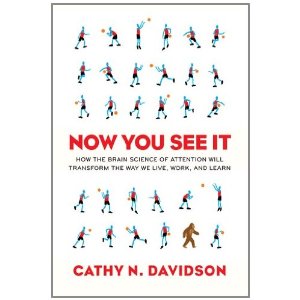
Now You See It, by Cathy N. Davidson

A New Culture of Learning by Douglas Thomas and John Seely Brown

21st Century Skills by James Bellanca and Ron Brandt

Making Learning Whole: How Seven Principles of Teaching Can Transform Education David N. Perkins

Reinventing Higher Education: The Promise of Innovation by Ben Wildavsky, Andrew Kelly, Kevin Carey

Rethinking Education in the Age of Technology by Allan Collins and Richard Halverson

Teaching Digital Natives by Marc Prensky

The Leader's Guide to 21st Century Education: 7 Steps for Schools and Districts by Ken Kay and Valerie Greenhill

The Innovative University by Clayton Christensen and Henry Eyring

The Open Source Everything Manifesto by Robert Steele

The Seven Futures of American Education: Improving Learning & Teaching in a Screen-Captured World by John Sener

The World Is Open: How Web Technology Is Revolutionizing Education by Curtis J. Bonk

John Steiner: Education Needs a Digital-Age Upgrade

04 Education, Academia, Advanced Cyber/IO, Cultural Intelligence, Worth A Look
0Shares
John Steiner

Education Needs a Digital-Age Upgrade

By VIRGINIA HEFFERNAN

The New York Times, August 7, 2011

The contemporary American classroom, with its grades and deference to the clock, is an inheritance from the late 19th century.

Amazon Page

In her galvanic new book, Now You See It, Ms. Davidson asks, and ingeniously answers, that question. One of the nation’s great digital minds, she has written an immensely enjoyable omni-manifesto that’s officially about the brain science of attention. But the book also challenges nearly every assumption about American education.

. . . . . .

Simply put, we can’t keep preparing students for a world that doesn’t exist. We can’t keep ignoring the formidable cognitive skills they’re developing on their own. And above all, we must stop disparaging digital prowess just because some of us over 40 don’t happen to possess it. An institutional grudge match with the young can sabotage an entire culture.

Read more….

Search: who is the mother of civics

Searches
0Shares

We deeply appreciate searches–both to help connect searchers with existing content, and to learn from searchers about content that should be on this public intelligence website.

What comes up does not address the  requirement.

Reference: On the Issues from Abortion to War & Peace

What comes up in a Google Search (on Phi Beta Iota, from Penguin):

Forgotten Mother of Civic Intelligence Apps

Other external searches of possible interest:

DuckDuckGo on Civics [Wikipedia on Civics recommended]

Search: readable version of alternative paradigm

Searches
0Shares

There are two alternative paradigms in the history of this modern reform fight.  Here they are:

1992 E3i: Ethics, Ecology, Evolution, & intelligence (An Alternative Paradigm)

2001 Threats, Strategy, and Force Structure: An Alternative Paradigm for National Security

Not labeled an alternative paradigm, but of over-arching importance, is this contribution:

1996: CREATING A SMART NATION: Strategy, Policy, Intelligence & Information

Emergent, to be articulated in the new book below, is the expansion of the open source revolution, a rejection of the Industrial-era commoditization of everything including humans:

2012 Manifesto for Truth: Expanding the Open Source Revolution (Evolver Editions, July 2012)

Dolphin: Connecting to Earth Point by Point

Advanced Cyber/IO, Earth Intelligence, Geospatial
0Shares

iPhone App From SimpleGeo Discovers the History, Politics & Wildlife Around You
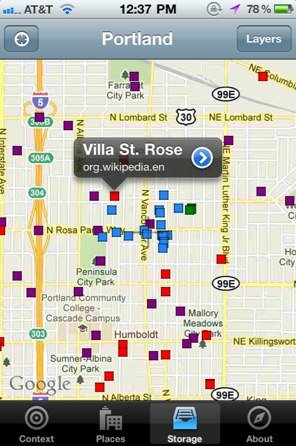
Geolocation data platform SimpleGeo released its own iOS app this morning to the app store (iTunes link). It clearly points to a future where all the data that's available online about the real-world locations we find ourselves will be available in our hands with the click of a button.

Click on Image to Enlarge

Right now, the app lets you quickly view the boundaries of geographic areas you're in (neighborhood, postal code, congressional district) and it lets you view other layers on top of your map like Wikipedia entries, Flickr photos and Project Noah wildlife sightings. Users with a SimpleGeo Storage account can log-in on the app and then view their own data layers placed on top of the map. That's pretty awesome. Now if only we could share and view each others' layers easily!

Read more….