Review: Sacred Economics – Money, Gift, and Society in the Age of Transition

6 Star Top 10%, America (Founders, Current Situation), Capitalism (Good & Bad), Change & Innovation, Complexity & Resilience, Consciousness & Social IQ, Culture, Research, Democracy, Economics, Environment (Solutions), Intelligence (Collective & Quantum), Intelligence (Public), Intelligence (Wealth of Networks), Peace, Poverty, & Middle Class, Politics, Power (Pathologies & Utilization), Stabilization & Reconstruction, Survival & Sustainment, Values, Ethics, Sustainable Evolution, Voices Lost (Indigenous, Gender, Poor, Marginalized), Water, Energy, Oil, Scarcity
0Shares
Amazon Page

Charles Eisenstein

5.0 out of 5 stars Beyond 5 Stars, an Integrative Pioneering Work,August 13, 2011

Sacred Economics is the second book in the new Evolver Editions imprint, following Jose Arguelles Manifesto for the Noosphere. Other books in the first season include What Comes After Money, The Secret Tradition of the Soul, The Four Global Truths, The Electric Jesus, Star Sister, and Nothing and Everything.

I read a lot, and the one word that really describes this book is “integrative.” The author describes, in three parts, what is wrong with what he calls the “economics of separation,” today's money and financial network economy that lacks soul or spirit; its alternative, the “economics of reunion” in which all forms of transaction have memories, gifts and reciprocal gifts and localized forms of exchange rule, and economics is fully integrated with society to produce social and cultural dividends. The third and last part closes the circle with a hundred-page discourse (double-spaced large print, this is not a hard book to read) on how to live within the new economy in which gifting, community, and beauty are integrated.

Throughout the book the author evolves his core point: money is “hard” and nurtures external diseconomies, including grave destruction of cultural and social intangible value-gradually the author builds up to his conclusion, that beauty is a tangible value, that relatedness is a tangible value, and that in the past century or two we have stripped so much value from what it means to be human as to have become less than human, less than we can be.
Continue reading “Review: Sacred Economics – Money, Gift, and Society in the Age of Transition”

Koko: CIA 9/11 Cover-Up? Business As Usual

07 Other Atrocities, 09 Justice, 09 Terrorism, Director of National Intelligence et al (IC), Government, IO Impotency
0Shares
Koko

A CIA 9/11 Cover-Up?

Did the CIA keep mum about two 9/11 hijackers because it tried and failed to recruit them? Anthony Summers and Robbyn Swan, authors of ‘The Eleventh Day,' on whether there’s any truth behind ex-Bush official Richard Clarke’s claim.

Daily Beast, 12 April 2011

EXTRACT

At the heart of the suggestion that the agency intentionally withheld information was the discovery by the Justice Department’s inspector-general of a draft cable—one that was prepared but never sent—by an FBI agent on attachment to the CIA’s bin Laden unit.

The CIA’s “screw-up” explanation of its lamentable failure to act remains at best unconvincing, at worst indicative that it conceals a very different, secret scenario.

Read full article…

See Also:

White House Terror Chief Alleges CIA 9/11 Malfeasance, Cover Up in New Interview: PBS Colorado's Exclusive Ignites Battle Among Bush Officials

An Explosive New 9/11 Charge

Review: Wedge–From Pearl Harbor to 9/11–How the Secret War between the FBI and CIA Has Endangered National Security

Worth a Look: Book Reviews on Intelligence (Most)

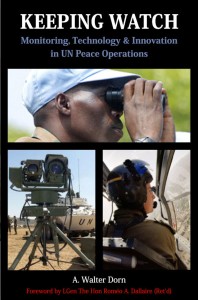
Review: Keeping Watch – Monitoring Technology and Innovation in UN Peace Operations

5 Star, Information Operations, Information Technology, Intelligence (Government/Secret), Intelligence (Public), Peace, Poverty, & Middle Class, Stabilization & Reconstruction, United Nations & NGOs, War & Face of Battle
0Shares
Amazon Page

Walter Dorn

5.0 out of 5 stars Phenomenal Contribution to UN and to Literature,August 13, 2011

Professor Walter Dorn is the de facto dean of the small number of scholars who study the specific topic of peacekeeping intelligence, or intelligence support to United Nations (UN) operations. Since his pioneering early studies of UN successes in the Congo in the 1960's to his more recent articles on the introduction of the Joint Military Analysis Centre (JMAC) in Haiti, he is both the closest academic observer, and the most well-written in this area.

I read this book with great interest. It is the first comprehensive look at technologies that are directly applicable to the fulfillment of UN mandates, the design and security of multinational forces, the effective management of tactical campaigns, and of course being technical, it is the first and last word on surveillance technologies vital to peacekeeping and peace enforcement across vast regions.

Pending the “Inside the Book” feature being available for this just published book, here is the table of contents from my own copy.

1 Introduction
2 The Evolution of Peacekeeping
3 Monitoring: The Constant Need
4 Survey of Technologies
5 Aerial Surveillance: Eye in the Sky
6 Traditional Peacekeeping: Cases
7 Modern Multidimensional Peacekeeping: Cases
8 Current UN Standards: Starting from Near Zero
9 Challenges and Problems
10 Recommendations
11 Conclusions

I recently attending a conference on the history and future of UN Air Power, and in both my own presentations and those of others, “Peace from Above” was a recurring theme. The importance of assuring that UN elements have the best possible human and technical surveillance technologies cannot be understated–for modest investments–including Unmanned Aerial Vehicles–the UN can save lives, money, and time–on the latter point, Colin Gray, in Modern Strategy, observes that time is the one strategic variable that can neither be purchased nor replaced.

A word on pricing: as those who follow my reviews know, I will occasionally single out extraordinary books that are so grotesquely priced as to dishonor the entire publishing world. This book is perfectly priced, close to my standard of page count with one decimal. I salute the UN Press for bringing this book into the world. It should become a standard volume, not only for UN training classes, but for all war colleges as well as for commercial security training and operations.

See Also:

Peacekeeping Intelligence: Emerging Concepts for the Future

Vote on Review

Worth A Look: Healing the Heart of Democracy

Worth A Look
0Shares
John Steiner

Recommended!

…the most important manifesto in generations for breaking through the divisiveness that has paralyzed our democracy. — Bill Shore, founder of Share Our Strength, author of The Imaginations of Unreasonable Men

Amazon Page

Marcus Aurelius: Richard Clarke Slams CIA on 9/11

07 Other Atrocities, 09 Justice, Corruption, Government
0Shares
Marcus Aurelius

Public Intelligence Net has consolidated two separate items that I repeat below. Net interest is high, this consolidated version is more reliable.

Phi Beta Iota:  Worth a full read.  Comments at end below the line.

Richard Clarke

Richard Clarke Says CIA Tried to Recruit 9/11 Terrorists

An Explosive New 9/11 Charge (Daily Beast):

In a new documentary, former national-security aide Richard Clarke suggests the CIA tried to recruit 9/11 hijackers—then covered it up. Philip Shenon on George Tenet’s denial.

With the 10th anniversary of the 9/11 attacks only a month away, former CIA Director George Tenet and two former top aides are fighting back hard against allegations that they engaged in a massive cover-up in 2000 and 2001 to hide intelligence from the White House and the FBI that might have prevented the attacks.

The source of the explosive, unproved allegations is a man who once considered Tenet a close friend: former White House counterterrorism czar Richard Clarke, who makes the charges against Tenet and the CIA in an interview for a radio documentary timed to the 10th anniversary next month. Portions of the Clarke interview were made available to The Daily Beast by the producers of the documentary.

Continue reading “Marcus Aurelius: Richard Clarke Slams CIA on 9/11”

Robert Young Pelton: Bin Laden “Kill” & Back Story

07 Other Atrocities, 08 Wild Cards, 09 Terrorism, 10 Security, Corruption, Government, IO Deeds of War, Military
0Shares
Robert Young Pelton

The story continues to develop.   This “house arrest” thing popped up when the US was beating on the Talibs to hand him over in Kandahar in 2001, then some faux intel from Brad Thor about Mullah Omar being under “house arrest” in Karachi and then now this. Sounds very familiar. Two fiction authors in the intel field being played for reasons unknown.  My jury is out on how much I want to believe Raelynn. There are some holes you can drive a truck through in flaws in logic but some ideas could be untangled to pick up a few new truths. Kinda like the blind man and the elephant.

Bin Laden Turned in by Informant — Courier Was Cover Story

Forget the cover story of waterboarding-leads-to-courier-leads-to bin Laden (not to deny the effectiveness of waterboarding, but it’s just not applicable in this case.)   Sources in the intelligence community tell me that after years of trying and one bureaucratically insane near-miss in Yemen, the US government killed OBL because a Pakistani intelligence officer came forward to collect the approximately $25 million reward from the State Department's Rewards for Justice program.

The informant was a walk-in.  The ISI officer came forward to claim the substantial reward and to broker US citizenship for his family.

Read more….

Questions Raised by Real Story of How US Found Bin Laden

The real story of how the US found bin Laden raises some key questions, namely:

  • Why did the Saudis pay the Pakistanis to keep bin Laden?
  • Why did the Pakistani's cooperate?
  • Did the ISI run the safe house itself or did it use a third party?
  • How permeable was the safe house?

A key to understanding why Saudi Arabia would finance bin Laden's hideout is clarifying what the Saudis were actually paying for.  Bin Laden was esentially being kept under house arrest.

Read more….

See Also:

Bin Laden Show: Entries 01-76 CLOSED 17 May 2011

Marcus Aurelius: Al Qaeda Ricin, USG, Israel, Nuts

07 Other Atrocities, 09 Terrorism, 10 Security, 11 Society, Cultural Intelligence, Government, Intelligence (government), IO Deeds of War, Law Enforcement, Military
0Shares
Marcus Aurelius

From the underpants bomber to exploding print cartridges to ricin bombs…

Qaeda Trying to Harness Toxin for Bombs, U.S. Officials Fear

By and

The New York Times, August 12, 2011

WASHINGTON — American counterterrorism officials are increasingly concerned that the most dangerous regional arm of Al Qaeda is trying to produce the lethal poison ricin, to be packed around small explosives for attacks against the United States.

. . . . . .

But senior American officials say they are tracking the possibility of a threat very closely, given the Yemeni affiliate’s proven ability to devise plots, including some thwarted only at the last minute: a bomb sewn into the underwear of a Nigerian man aboard a commercial jetliner to Detroit in December 2009, and printer cartridges packed with powerful explosives in cargo bound for Chicago 10 months later.

Read full article….

Phi Beta Iota:  The insular insanity of the US Government continues.  We note with interest that the NYT does not qualify either of the two preceeding plots, both of which are very likely to have been Israeli false flag operations to keep the “terror” myth alive, neither of which was properly investigated.  We are right back in the 1970's, and repeat below what Daniel Elsberg said then to Henry Kissinger:

The danger is, you’ll become like a moron. You’ll become incapable of learning from most people in the world, no matter how much experience they have in their particular areas that may be much greater than yours” [because of your blind faith in the value of your narrow and often incorrect secret information].