Journal: Lean Sigma, ScrumMasters, & Deja Vu

03 Economy, 04 Education, Commerce, Commercial Intelligence, Methods & Process
0Shares

If You're Looking At The Past To Design The Future, You're Going To Crash And Burn

One reason why Apple is innovating and winning, while Nokia is not.

Unfortunately, the headline using a dramatic effect to get attention, but is not an accurate statement.   Be careful about too much credit to Apple's current design efforts. Apple has had several flops in the past. Is this conscious or are they experiencing their own randomness?

It can be easily observed that systems endure with marginal improvements. Of course, if you do not want the undesirable effects that are being generated by your system, making marginal improvements has little hope of removing these undesirable effects, since effects can only be created by deeper cause(s).

So to claim that looking at the past to design the future demands that you will crash and burn is an easily disproved hypothesis. Yet, we also know that when you design a system for the future, you can also build an ineffective system. The world is littered with dead businesses created on the belief that they will have the utopian design.

Continue reading “Journal: Lean Sigma, ScrumMasters, & Deja Vu”

Event: 19 Oct DC GSA Seeing Through the Clouds: Exploring Early Communities and Markets Streamlined by Open Government Principles

Uncategorized
0Shares

Expedition Workshop

  • 1 Seeing Through the Clouds: Exploring Early Communities and Markets Streamlined by Open Government Principles
  • 2 October 19, 2010 from 9:00 AM – 4:PM
  • 3 RSVP along with Workshop Location/ Directions, and Remote Teleconferencing
  • 4 Workshop Purpose
  • 5 Workshop Questions
  • 6 Agenda
  • 7 Resources
  • 8 Workshop Series Background
  • Phi Beta Iota: RSVP requested.  Highly recommended.  Dr. Susan Turnbull, one of the great spirits at GSA, is returning from a two-year rotational to the Department of Energy.  This is one of the most professional and interesting gatherings we know of in Washington, D.C.  It is open to the public including attaches from the Embassies.  Robert Steele will attend.

    Journal: BRICS Innovate Externally Not Internally

    01 Brazil, 02 China, 03 India, 06 Russia, Commerce, Commercial Intelligence, Cultural Intelligence
    0Shares

    Full Story Online

    How BRIC Innovators Will Defeat You

    11:13 AM Thursday October 14, 2010

    For reasons yet unclear, BRIC companies and entrepreneurs now consume roughly half my professional time. The Brazilian, Russian, Indian, and Chinese (BRIC) managers I meet are as sharp, credentialed, energetic, and hungry as their Silicon Valley or Rte. 128 counterparts. Sometimes their English is even better. They desperately want to be world-class innovators.

    These people aren't interested in launching imitations. They're not looking to be even lower-cost suppliers or sub-contractors to a WalMart or HP or JPMorganChase. They want to be valued as much for their ingenuity as for their prices.

    Consequently, they appear particularly open to ideas and experimentation. They know they lag so they'll grasp any reasonable innovation edge they can. Measured by brainpower and grit, there's no reason why BRIC enterprises shouldn't consistently out-innovate their richer rivals. Money isn't the vital variable holding them back. So what's the issue?

    Read about the BRIC cultural flaws….

    Tip of the Hat to  Pierre Levy at LinkedIn.

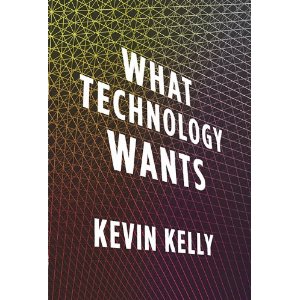
    Review (Guest): What Technology Wants

    5 Star, Change & Innovation, Culture, Research, Information Society, Information Technology, Nature, Diet, Memetics, Design, Science & Politics of Science, Technology (Bio-Mimicry, Clean)
    0Shares
    Amazon Page

    Kevin Kelly

    From Booklist:  Verbalizing visceral feelings about technology, whether attraction or repulsion, Kelly explores the “technium,” his term for the globalized, interconnected stage of technological development. Arguing that the processes creating the technium are akin to those of biological evolution, Kelly devotes the opening sections of his exposition to that analogy, maintaining that the technium exhibits a similar tendency toward self-organizing complexity. Having defined the technium, Kelly addresses its discontents, as expressed by the Unabomber (although Kelly admits to trepidation in taking seriously the antitechnology screeds of a murderer) and then as lived by the allegedly technophobic Amish. From his observations and discussions with some Amish people, Kelly extracts some precepts of their attitudes toward gadgets, suggesting folk in the secular world can benefit from the Amish approach of treating tools as servants of self and society rather than as out-of-control masters. Exploring ramifications of technology on human welfare and achievement, Kelly arrives at an optimistic outlook that will interest many, coming, as it does, from the former editor of Wired magazine. –Gilbert Taylor

    5.0 out of 5 stars A fascinating look at how technology evolves, October 14, 2010

    WHAT TECHNOLOGY WANTS offers a highly readable investigation into the mechanisms by which technology advances over time. The central thesis of the book is that technology grows and evolves in much the same way as an autonomous, living organism.

    The book draws many parallels between technical progress and biology, labeling technology as “evolution accelerated.” Kelly goes further and argues that neither evolution nor technological advance result from a random drift but instead have an inherent direction that makes some outcomes virtually inevitable. Examples of this inevitability include the eye, which evolved independently at least six times in different branches of the animal kingdom, and numerous instances of technical innovations or scientific discoveries being made almost simultaneously.

    Continue reading “Review (Guest): What Technology Wants”

    Review (Guest): The War of Art–Break Through the Blocks and Win Your Inner Creative Battles

    5 Star, Change & Innovation, Consciousness & Social IQ, Cosmos & Destiny, Education (Universities), Nature, Diet, Memetics, Design, Philosophy
    0Shares
    Amazon Page

    From the Library Journal:  He identifies and explains seven distinct stages of the creative process: discovery and encounter, passion and commitment, crisis and creative frustration, retreat and withdrawal, epiphany and insight, discipline and completion, and responsibility and release. He also develops his view of the three principles of the creative impulse, which include creative courage, being in the right place at the right time, and deepening connections with others.

    5.0 out of 5 stars A powerful and potentially life-transforming book!, September 10, 2004
    Review by Joe Tye
    Steven Pressfield

    Know the enemy, know yourself, wrote Sun Tzu in his classic The Art of War, and your victory will be certain. For anyone who is stuck at a level below their God-given potential, who can't seem to get on track to do the things they need to do in order to achieve their most authentic goals, knowing the enemy and knowing yourself are one and the same.

    Steve Pressfield's magnificent little book The War of Art is about being more creative – but more important, it's also about fulfilling your potential as a human being. To do this, he says, you must overcome Resistance (the “R” is capitalized be Pressfield to represent the fact that it is a very real entity – as real to your authentic Self as Charles Manson or Genghis Khan were to their victims).
    Continue reading “Review (Guest): The War of Art–Break Through the Blocks and Win Your Inner Creative Battles”

    Reference: When NOT to Follow the Leader….

    11 Society, Blog Wisdom, Cultural Intelligence
    0Shares

    Seth Godin Home

    Time to get off the brandwagon

    Marketing involves spending money and it's fraught with the fear of failure (because it often doesn't work).

    This mix creates the perfect opportunity to play it safe and to follow the leader.

    Jumping on the brandwagon, if you must coin a phrase.

    Here's the thing: while the second imitator might make it pay, the third, the fourth, the tenth–not so much. The more you try to fit in, the worse you do. The more you rush to follow the leader, the less likely you will be to catch up.

    Phi Beta Iota: A major negative feature of bureaucracy, apart from its inherent propensity to magnify fraud, waste, and abuse, lies in its eradication of diversity and innovation.  It is a bureaucracy precisely because the past demanded control and repetition and reliability from small cogs in big machines.  That is NOT what we need now, in fact it is counter-productive.  Live free or die….

    Reference: How Web-Code Geeks Help NGO’s and Media

    Blog Wisdom, Civil Society, Journalism/Free-Press/Censorship, Media, Methods & Process, Non-Governmental, Open Government, Reform, Tools
    0Shares

    Jon Lebkowsky Home

    Events this week – NPOCamp and Austin News Hackathon

    Cross-posted from http://effaustin.org.

    Two great events coming up this weekend in Austin, sponsored by EFF-Austin.

    Friday, join us at NPO Camp – a Barcamp for Nonprofits and Techs. We had one of these several months ago, and it was a real blast! The idea here is to bring the nonprofit and technology communities together for a day and talk about the technical challenges the NPOs face, while educating the techs about that world. Last event, we had 200+ attendees forming into sessions and pods; all were lively.  Greg Foster, our newest EFF-Austin board member, has done most of the legwork in organizing the event, with major production assistance from Maggie Duval, also a board member and producer of the annual Plutopia event during SXSW. Sign up here.

    Saturday, coders and journalists come together to build innovative news applications at the Austin News Hackathon, cosponsored by EFF-Austin and the local Hacks Hackers chapter led by Cindy Royal.  The day will begin with a presentation by Matt Stiles and Niran Babalola of the Texas Tribune, talking about some of the news apps they’ve been developing. Then teams will form to match ideas from journalists with technical expertise from the coders who are attending. These kinds of events are the future of journalism!  This event also benefited from Maggie Duval’s production assistance. Sign up here.

    Both events will be catered by Pick Up Stix of South Austin.

    Phi Beta Iota: The convergence-emergence that is starting to pick up momentum is happening all around us.  Here we see two example of “cognitive surplus” creating “infinite wealth” as web and code geeks help, respectively, non-profit organizations and journalists.  This is the model of the future–there is plenty of wealth for everyone, we just need to stop corruption at all levels across all domains–we do this with transparency where money is involved, and with open space where money is not involved.