Journal: A Conversation with Clay Shirky

Media
0Shares
Full Story Online

Net Positive: A Conversation with Clay Shirky
in Media | October 14th, 2010

EXTRACT:

My current formulation is that markets supply less accountability than democracies demand—that if you leave the presence of accountability to an entirely market-driven press corps, you get less coverage than democracies need to survive. And we’ve had all of these ways in the past of subsidizing that, right? So broadcast news had to be subsidized because the FCC said so when they handed out the licenses, and newspapers subsidized it because they had essentially enjoyed local monopolies but were relatively free of too much interference by advertisers. But a lot of those old subsidies are breaking. So the advertising subsidies that newspapers enjoyed, and the subsidies that were essentially required by the federal government of broadcast outlets, are all going away at the same time, and they’re all going away for the same reason, which is to say, none of those subsidies survive abundance. So the question I’m asking myself is—assuming this hypothesis is right—what are other ways that society can subsidize the kind of journalism that leads to accountability of elites, principally politicians but also business and religious elites? I don’t know the answer to that. There’s a lot of interesting experiments: ProPublica, Spot.us, GroundReport. But that’s the question I’m turning my attention to.

Tip of the Hat to Stan Garfield at LinkedIn.

See Also:

Review (Guest): Cognitive Surplus–Creativity and Generosity in a Connected Age

Review: Here Comes Everybody–The Power of Organizing Without Organizations

Review: The World Is Open–How Web Technology Is Revolutionizing Education

Review: Everything Is Miscellaneous–The Power of the New Digital Disorder

Review: Mobilizing Minds–Creating Wealth From Talent in the 21st Century Organization

Event: 12 Nov 2010 HealthCamp (BlueCross)

07 Health
0Shares
Event Home Page

HealthCampDC

Friday, November 12, 2010 from 8:30 AM – 4:30 PM (ET)

Washington, DC

About HealthCampDC

CareFirst BlueCross BlueShield is the Foundation Sponsor for HealthCampDC which takes place on Friday November 12th, 2010.

HealthCampDC is the latest in the HealthCamp un-conference series addressing the Transformation of Health Care to a participatory model with active patient engagement through the use of Social Networks, Open Standards and Web 2.0 Technology. This is part of the Health 2.0 movement towards participatory health care inspired by the definition that Ted Eytan and others (including patients) evolved for Health 2.0:

Health 2.0 is participatory Healthcare

Enabled by information, software, and community that we collect or create, we the patients can be effective partners in our own healthcare, and we the people can participate in reshaping the health system itself.

Join Physicians, entrepreneurs, bloggers and others who are passionate about improving Health Care at CareFirst BlueCross BlueShield's DC offices (at 840 1st St, NE, Washington, DC 20002) on Friday November 12th, 2010.

Reference: BarCamp–Self-Organized Learning & Sharing

Blog Wisdom, Methods & Process
0Shares

BarCamp is an international network of user-generated conferences (or unconferences). They are open, participatory workshop-events, whose content is provided by participants. The first BarCamps focused on early-stage web applications, and were related to open source technologies, social protocols, and open data formats. The format has also been used for a variety of other topics, including public transit, health care, and political organizing.

BarCamps are organized and evangelized largely through the web; anyone can initiate a BarCamp using the BarCamp wiki.

The procedural framework consists of sessions proposed and scheduled each day by attendees, mostly on-site, typically using whiteboards or paper taped to the wall. This approach has been dubbed to play on words, The Open Grid approach.

FooCamps and BarCamps are based on simplified variations of Open Space Technology (OST), relying on the self-organizing character of OST. Unlike classical conference formats, BarCamps and OST rely on the passion and the responsibility of the participants.

Although the format is loosely structured, there are rules at BarCamp. All attendees are encouraged to present or facilitate a session. Everyone is also asked to share information and experiences of the event via public web channels, including blogs, photo sharing, social bookmarking, twitter, wikis, and IRC. This encouragement to share is a deliberate change from the “off-the-record by default” and “no recordings” rules at many invite-only participant driven conferences. It also turns a physical, face-to-face event into a ‘hybrid event‘ which enables remote online engagement with Barcamp participants.

Learn more:

Wikipedia Page for BarCamp

Wikibook: BarCamp – How to Run Your Own

History: Open Space TechnologyFoo CampBarCampUnconference

Tip of the Hat to Paul Harper.

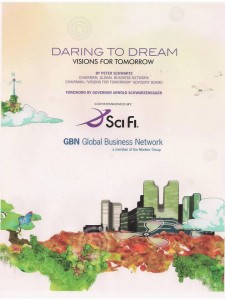
Reference: Daring to Dream

Collaboration Zones, Communities of Practice, Key Players, Policies
0Shares

33 Pages Online

Seven Challenges

1.  Restoring Belief in the Future  to Overcome Fear, Pessimism, and Passivity

2.  Cultivating Leaders Who are Thoughtful, Inspiring, and Think Long-Term

3.  Empowering Six Billion People Economically and Politically

4.  Harmonizing Cultural, Racial, and Gender Differences in a  Globalizing World

5.  Reinventing an Outdated Educational System for the 21st Century

6.  Guiding Technological Progress Wisely

7.  Addressing Climate Change and Creating Social and Environmental Responsibility

Tip of the Hat to Paul Harper.

Phi Beta Iota: There are two sucking chest wounds in this otherwise superb report:  first, the complete absence of any sort of strategic analytic model with which to actually inform decisions; and second, the no doubt deliberate avoidance of the raw fact that corruption is the single largest obstacle to achieving any of these dreams, the reason the public strategic analytic model and public intelligence in the public interest are needed.

Journal: What to do with all this data?

Analysis, Commerce, Commercial Intelligence, Earth Intelligence, Government, InfoOps (IO), Intelligence (government), Methods & Process, Mobile, Real Time
0Shares
Marjorie Hlava Taxodiary Home

October 15, 2010
Posted in Business strategy, News, indexing, metadata

October 15, 2010 – Large institutions have massive amounts of data in this modern age, the question is what to do with all of it. Extracting the right information can help avoid waste, delays, systems failures, even terrorist threats. A perfect example is Toyota’s customer support and repair data. If business intelligence had been applied and management had been looking, they would have noticed that something was going terribly wrong.

NewsBreak brought this to our attention in their article, “Search and Business Intelligence: The Humble Inverted Index Wins Again.” Business intelligence means mining through all that digital data—in legacy systems, databases, and even spreadsheets—and reporting what’s going on. Institutions with all that data know its value. When implemented well, business intelligence can be a huge success to all involved.

Melody K. Smith

Sponsored by Access Innovations, the world leader in thesaurus, ontology, and taxonomy creation and metadata application.

Phi Beta Iota: The two graphics below, one from the 1990's the other very recent, sum up all that governments and businesses simply do not get, do not practice, and do not leverage.  Dashboards, like Smart Phones, are fairly stupid.  Existing “data mining” systems do not adapt, scale, or make sense in relation to externalities.  It takes humans to do that, and not geek IT humans but rather all-source holistic analytics humans.  We have a ways to go.

Graphic: Four Quadrants J-2 High Cell SMS Low

Graphic: OSINT and Full-Spectrum HUMINT (Updated)

Journal: Microsoft Ad Trashes OpenOffice.org

Commerce, Commercial Intelligence, Standards, Strategy, Technologies, Tools
0Shares

A recent Microsoft video suggests the company considers OpenOffice.org a significant threat to its own Office suite.

Titled “A Few Perspectives on OpenOffice.org,” the video features a series of horror stories from customers who tried the open-source productivity suite and suffered from excess costs as well as IT resources, performance and compatibility issues.

A series of customer quotes flashes across the screen in the slickly animated video, read aloud by a series of unseen narrators. “If an open-source freeware solution breaks, who's going to fix it?” according to a statement ascribed to a school district official in the U.S.

“When we returned to Microsoft Office after our experience with OpenOffice, you could practically hear a collective sigh of relief across the entire district,” states another comment attributed to a U.S. school system official.

Comments are not enabled on the video's YouTube page.

Microsoft is facing competition from OpenOffice.org on multiple fronts, from the commercial version sold by project owner Oracle, as well as offshoots like the recently announced LibreOffice.

Read rest of article…

See the Video

Phi Beta Iota: Google is in more trouble than Microsoft.  Oracle will not scale, and IBM is not as imaginative as it likes to believe.  Microsoft, however, has no strategy at all.  Attacking OpenOffice in an era of Open Everything is a sure sign that Microsoft leadership is struggling–and this tracks with the decline of the company under Steve Balmer.  We believe there will be a need for Bill Gates to take the helm again, or Microsoft is going to start falling apart and will fail to use the time it has right now–the next two years–to bury the competition by innovating itself into the future.

Guest Comment:

“Microsoft as a corporation is disgraceful. The classic case is when they bribed Nigerian Officials to replace Linux with Windows on school computers. http://www.facebook.com/l/8396a;www.geek.com/articles/news/mandriva-ceo-calls-out-microsoft-ceo-steve-ballmer-2007112/ I prefer to work with an operating system with a Social Contract  http://www.facebook.com/l/8396a;www.debian.org/social_contract or code of conduct: http://www.facebook.com/l/8396a;www.ubuntu.com/community/conduct

Tip of the Hat to Paul Harper at Facebook.

Robert Steele's response:  Quite right. Not sure we can turn a pig into a cow, but miracles do happen. I predict Bill Gates will return to run Microsoft, the question is, has he learned to listen to others? Jury is still out on that one.

Reference: Peggy Holman on Government and Change

03 Economy, 11 Society, Blog Wisdom, Collective Intelligence, Communities of Practice, Cultural Intelligence, Methods & Process, Real Time
0Shares
Peggy Holman

The Challenge of Power (Extract)

There are virtually always political barriers!

What I have found to be true is that when the issue faced is more important than their position, people in power positions will engage. In other words, they’ll step up when:

  • the situation reaches the point that they realize that they can’t solve it alone;
  • it is critical to their success; and
  • they’ve found a partner to work with that they’re willing to trust.

Essentially, these are the conditions when anyone will engage. It’s just that people with more to lose tend to wait longer. By then, the situation is really messy and they’re desperate.

Don't Hold On

Peggy Holman knows a lot about change in organizations and communities and she wrote Engaging Emergence to help people not only deal with unexpected and chaotic change, but even come out ahead by engaging it proactively.

But proactive engagement means letting go of some things just as much as discovering new things. To help you navigate, Peggy presents her list of The Five Things We Need To Let Go Of To Effectively Deal With Emergence:

1. Give Up Command and Control.

2. Give Up Habit and Routine.

3. Give Up Top-Down Decision-Making.

4. Give Up the Existing Order.

5. Give Up Thinking That You Have the Answers.

Read the full blog with paragraphs and examples for each of the above….

See Also:

Worth a Look: Engaging Emergence

Journal: Self-Organizing Emergence from Chaos

Review: The Change Handbook–The Definitive Resource on Today’s Best Methods for Engaging Whole Systems

Reference: Peggy Holman Free Video on Emergence

Who’s Who in Collective Intelligence: Peggy Holman