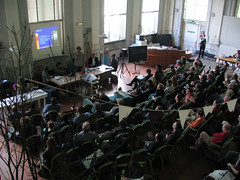
The annual Open Knowledge Conference (OKCon) is a day of presentations, discussions and workshops related to open knowledge. There is always a wide range of participants – from academics, policy makers and lawyers to geeks, artists and civil society activists.
The QDR slides got me thinking about the fact that DIA could be a really first rate intelligence agency and an effective counter to ODNI and CIA for the SecDef, JCS, and the military services, especially field commanders.
Although badly executed, DIA has two vitally important missions: support to military operations; and support to military strategy formulation. Unfortunately, DIA has always suffered from unimaginative senior leadership and the worst form of military thinking whereby rank trumps truth and an incompetent major trumps a competent lieutenant.
If DIA is going to achieve its potential and rally to provide the best intelligence possible to the SecDef, JCS, and service field commanders it needs to break free from the military hierarchical thinking and its influences on intelligence judgments.
In point of fact DIA has and has always had an excellent group of military and civilian analysts working there although there is a constant churn due to service requirements and limited prospects for civilians.
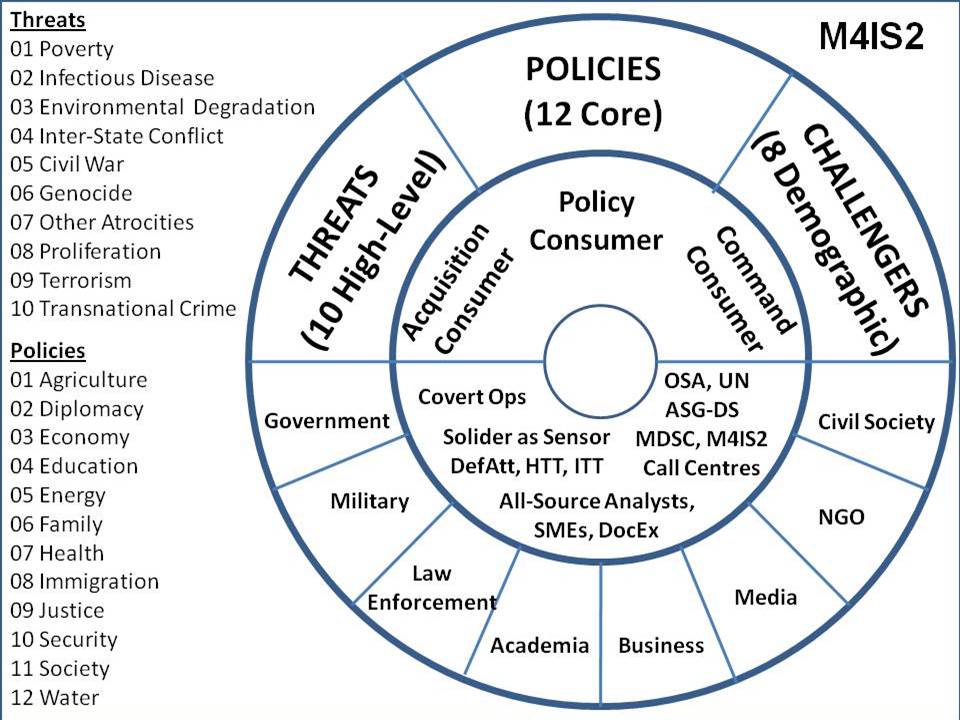
So what does DIA need? It needs an influx of original (out of the box) strategists who can visualize and articulate the multi-level threats to U.S. National Security, who understand the phenomenon of globalization and its effect on DOD strategic thinking, and can effectively relate such 21st Century phenomenon as trans-national asymmetric warfare to U.S. force and command structures.
Perhaps most importantly, DIA needs to build a capability to exploit the fact that increasing amounts of information relative to DOD concerns that are actually available from open sources. At the same time DIA needs to introduce much more effective information management systems to support its intelligence production.
CNN Editor's note: Charles S. Faddis is a retired CIA operations officer and the former head of the CIA's unit focused on fighting terrorism involving weapons of mass destruction. The author of a recently published book about the CIA, “Beyond Repair,” Faddis is also president of Orion Strategic Services, a Maryland-based consulting firm.
Phi Beta Iota: We know and admire Charles Faddis. Below the fold are other references on the implosion of CIA, which is no longer fit for duty. Panetta means well, but he does not know what he does not know, and the stuffed shirts surrounding him are not about to tell him what he really does need to know, in part because they don't know, they've made a career out of pushing paper, inflating success, and avoiding accountability. The difference between the earlier set of anti-CIA retirees and our set are two: 1) we're not breaking rules and cannot credibly be labeled as traitors; and 2) we know vastly more about the real world of all-source intelligence than the incompetent insiders and we cannot be silenced. Eventually an honest political leadership will hear us.
Full Story Online
STORY HIGHLIGHTS
We owe it to 7 fallen CIA agents (sic) to examine the state of the CIA, says Charles Faddis [PBI: US citizens are officers, the recruited foreigners are agents]
A retired CIA officer, Faddis says the agency is hobbled by bureaucracy
He says the CIA's leaders lack the experience to run counter-terror operations
CIA needs stronger training, better leadership and higher standards, he says
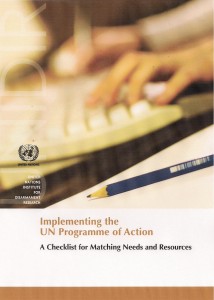
UNIDIR (United Nations Institute for Disarmament Research) has produced a superb checklist approach to the mission of reducing the proliferation of small arms, which kill and maim and orphan tens of millions at a time. The Director of UNIDIR at the time, Dr. Patricia Lewis, was the first UN official in modern times to contemplate the need for a UN-sponosred World Brain. 2003 Lewis (UNIDIR) Creating the Global Brain: The United Nations.
Somebody somewhere has to do this, and do it with over 90 nations, all NGOs, and global reach into all academic and private sector organizations desiring to share information and do multilateral sense-making.