Review: Evolutionary Dynamics–Exploring the Equations of Life

5 Star, Change & Innovation, Cosmos & Destiny, Decision-Making & Decision-Support, Environment (Solutions), Geography & Mapping, Information Operations, Intelligence (Collective & Quantum), Intelligence (Commercial), Intelligence (Public), Nature, Diet, Memetics, Design, True Cost & Toxicity
0Shares
Amazon Page

Exquisite in Every Respect, Two-Fifths Equations & Charts, April 3, 2008

Martin A. Nowak

I don't do math, so I must disclose right away that the math was lost on me, except in the context of this equisitely presented book, I am compelled to recognize that mathematics as well as computation science is going to be a major player is the EarthGame, in modeling alternative outcomes for social and cultural complexity, and in cross-fertilizing disciplines by creating a common language.

I tend to be hard on publishers, so in this instance I want to say right away that the Belknap Press of Harvard University has done an absolutely phenomenal job with this book. The paper, the use of color and white space, every aspect of this book is exquisitly presented, and at an affordable price. I therefore recommend this book for content as well as for its artistic context, for both those who love mathematics, and those who do not, but want to understand the promise of mathematics for the future of life.

The text across the book is elegant, clear, easy to understand, and coherent. The summaries at the end of each chapter are in English, and for me at least, obviate the fact that I am mathematically-challenged.

I have a number of notes that merit sharing as encouragement to buy and read this book, one of just two that I found in the right context and price range as I venture into the intersection of modeling social complexity and doing real-time science in the context of an EarthGame where everyone plays themselves. The other book I bought and will read shortly is Complex Adaptive Systems: An Introduction to Computational Models of Social Life (Princeton Studies in Complexity). Too many otherwise worthwhile books are grotesquely over-priced, and the authors should release free PDFs online in protest and to have effect on this exciting emergent inter-disciplinary endeavor.

The author stresses early on that Information is what evolves–errors are mutations, mutation plus selection in a noisy (i.e. natural) environment is evolution. I like that idea, and point the reader to Hans Swegen's “The Global Mind: The Ultimate Information Process” (Minerva UK, 1995)which first made the connection for be from DNA to World Brain.

The author inspires with his view that the field of evolutionary dynamics is “on brink of unprecedented theoretical expansion.” I must say, as one who is focused on connecting all people to all information in all languages all the time, I have been slow to understand that while that is a wonderful baseline, only models can project alternative scenarios into the future, and hence, the modeling of the past is but a prelude to the shaping of the future by displaying compelling alternative paths.

The author sees mathematics as a common language that can help disciplines interact, and when they do so, progress occurs. He speaks specifically of disciplinary “cultures” that must understand each other.

Early on he delimits the book, and in the process notes that mathematical biology includes:

+ Theoretical ecology
+ Poulation genetics
+ Epidemiology
+ Theoretical immunology
+ Protein folding
+ Generic regulatory networks
+ Neural networks
+ Genomic analysis
+ Pattern formulation

The main ingredients of evolutionary dynamics are

+ Reproduction
+ Mutation
+ Selection
+ Random Drift
+ Spatial Movement

Terms of interest (all explained in English not just mathematics):

+ Sequential space
+ Fitness landscape
+ Error threshold
+ Neutral versus random drift

Thoughts that grabbed me across the book (all from the author):

+ Evolutionary game theory is the most comprehensive way to look at the world.

+ Natural selection favors the defectors over the cooperators BUT if there are repeated interactions, cooperation is not assured, but is made possible.

+ Models show alternative scenarios–inclulding coexistence of all.

+ Evolutionary graph theory yields a remarkably simple rule for the evolution of cooperation.

+ Under natural selection the average fitness of the population continuously declines [we're there!]

+ Direct reciprocity is a mechanism for the evolution of cooperation (the collective intelligence world has been calling for reciprocal altruism and a shift to a gift economy with open money and an end to scarcity–I see all this converging).

+ War and peace strategies CAN be modeled (as my own books suggest, the problem is the information asymmetry that Charles Perrow speaks of. Elites make decisions that have consequences for all of us, but they lie to us (935 lies leading to the war on Iraq) and they also externalize costs into the future.)

+ A SINGLE INDIVIDUAL can move an entire population from war to peace.

+ 10 cooperators in a string comprise a sustainable “walker,” and is two such cooperative walkers meet, they can induce a “big bang” in which cooperatives sweep the game away from defectors.

+ Cooperators and defectors can co-exist for near-eternity.

+ Evolutionary graph theory can plot relationships (I think to myself, not only of people to people, but costs to things, time, and space).

+ Language makes infinite use of finite media–bulk of progress in last six hundred million years has been cultural, using language, not genetic.

+ The author credits Noam Chomsky with the Chomsky hierarchy relating language to mathematics. I read most of what Chomsky publishes, and had no idea he had done original work in mathematics back in the day.

+ Learning differs from memorization in that the learner is enabled to acquire generalizations that can then be applied in novel circumstances. I strongly believe that we must radically redirect education toward team learning, project learning, learning to learn, and learning in vivo, one reason I want to map every person, every dollar, every thing, every language, every idea, in Fairfax County.

+ Mathematical analysis of language must combine three fields (at least):
– Formal language theory
– Learning theory
– Evolutionary theory

The author concludes that mathematics is a way to think clearly. I cannot disagree, but as I put the book down, VERY PLEASED with the complete package of such very high quality, I was not convinced that mathematics can do intangible value and cultural nuance is multi-cultural context under stress and with time limitations.

The author provides both a bibliographic essay and a superb extensive bibliography, but if I could change one thing and one thing only in this book, it is that I would integrate the two. I have neither the time nor the inclination to look up each cryptic (Bloom, 1997) in the longer list. I would have preferred to see the actual bibliography organized by chapter, with all books on, for example, “Evolution of Virulence” listed there after the explicatory section. This is a nit.

I learned enough from this book to budget for and demand the full inclusion of evolutionary dynamics in all that the Earth Intelligence Network will strive to accomplish in the next twenty years.

Kudos again to the publisher. Nothing gives me more pleasure, apart from intelligent content, than very high-quality materials, thoughtful editing and lay-out, and honorable pricing. This book is a gem in all respects. BRAVO.

I did not appreciate Stephen Wolfam's A New Kind of Science but treasure the book (another enormous gift to mankind at an affordable price) and urge the mathematically-gifted to take a close look at that work.

Other books that have caught my attention as I circle this area of interest:
Panarchy: Understanding Transformations in Human and Natural Systems
Resilience Thinking: Sustaining Ecosystems and People in a Changing World
The Philosophy of Sustainable Design
Green Chemistry and the Ten Commandments of Sustainability, 2nd ed
The Future of Life
Plan B 3.0: Mobilizing to Save Civilization, Third Edition
High Noon 20 Global Problems, 20 Years to Solve Them

I would also point the reader toward Pierre Levy's Information Economy Meta Language (IEML) as one approach to creating a universal dictionary of concepts, easily found on the Internet, and also Doug Englebart's Open Hypertextdocument System (OHS), easily found at the Bootstrap Institute.


Vote and/or Comment on Review

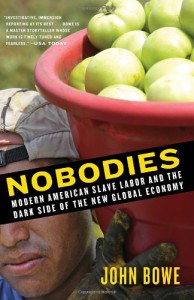
Review: Nobodies–Modern American Slave Labor and the Dark Side of the New Global Economy

5 Star, Atrocities & Genocide, Capitalism (Good & Bad), Crime (Organized, Transnational), Culture, DVD - Light
0Shares
Amazon Page
Amazon Page

Riveting, Gifted Reporting, Deeply Depressing, Call to Arms, May 18, 2008

John Bowe

This is a spectacular piece of work with many gifted turns of phrase. The author has done his homework, and melds economic facts and philosophical reflections in a worthy manner. The author opens with a challenge: how should a free people respond to slavery, i.e. should they knowingly buy products and services that are rooted in slavery?

I ordered this book on the strength of the author's appearance on CSPAN BookTV, and this is one of those instances where I think that listening to him talk about the book first is hugely beneficial to appreciating the book. The author, in person (on CSPAN), is funny, intelligent, informative, a really excellent presenter of facts in a coherent manner.

Supreme Court Justice Brandeis is cited in this book: “You can have great concentration of wealth in the hands of a few or you can have democracy. You can't have both.” While the author documents slavery, at least 27 million world-wide (not counting the prison-slave population) with 800 million not enslaved but utterly poor going hungry each day, 33 million of them in the USA, his book is a socio-economic ideo-cultural treatise on “whither globalization.” His bottom line is clear: if we allow slave labor and sweatshop conditions to undercut each of our homeland industries, we are toast.

The author does something quite special with this book. I am deeply impressed. Since the 1970's I have understood the conflict between multinational corporations and governments, the trade-offs between profits and social value, but it is only recently that my reading has brought forth the sharp battle that will define the 21st Century: the battle between Collective Intelligence (one for all, all for one) and Corruption at all levels of government and business.

The meme “true cost” is the ideological battle line. Also known as the triple bottom line (economic, social, and environmental), it is my view that the ability of my generation to promulgate True Cost information in the next ten years is going to determine what kind of future our children have. The author provides numbers, and I am gripped by the 40 cents paid to the slave laborer for a bucket of tomatos, versus the $12.00 plus paid to the farmer or “organizer/enforcer.” The author is eloquent in describing how slave wages have not risen in thirty years, while all else has….

This book is deep, richly textured, a tremendously informative and socially-valuable offering.

Here are a few highlights that stayed with me:

1) US Census statistics are so “delusional and deceptive” that Wall Street investors no longer use them–they commission their own studies.

2) The conditions of slavery and poverty and abuse are so deeply entrenched, and imposed on individual held in isolation from society and the rule of law–when the law is willing to be enforced–that they might as well be on another planet, a slave planet.

3) FBI Special Agents get very high marks for being able to master law enforcement in an illegal immigration environment, but the author speaks of “institutional malfeasance” in how often the FBI transfers people. I have long felt that we need to turn government inside out–we need to mass Latin American specialists across government, military, law enforcement, etc, and we need to start putting people into 10 year tours.

4) It is clear we need a “white hat” side of the Immigration and Naturalization Service (INS), I envision something in which all information they might collect in investigating human rights and other labor violations is firewalled from illigal immigrant status.

5) 911 operators are virtually helpless in responding to foreign langugage calls. I have been saying for years that we need to have an international implementation using Telelanguage.com.

6) The author surprises me with his optimism, his expectation that we can achieve a profound change in attitude across our population, completely boycotting all products and services whose “true cost” include slave labor.

I want to end this laudatory review by pointing readers toward the World Index of Social and Environmental Responsibility, the Interra Project, the World Cafe, and the Earth Intelligence Network.

Below I list a few other books that support this one. The first book documented the commoditization of human labor as the beginning of commercialized evil. The rest are increasingly positive about all of us coming together to overcome power and information asymmetries. “Put enough eyes on it, no bug is invisible. That's us: intelligence officers to the poor and the disenfranchised, who in being lifted from slavery, will create infinite revolutionary wealth. We can do this.

The Manufacture Of Evil: Ethics, Evolution, and the Industrial System
The Working Poor: Invisible in America
Nickel and Dimed On (Not) Getting By in America
The Case Against Wal-Mart
Off the Books: The Underground Economy of the Urban Poor
The Power of the Powerless: Citizens Against the State in Central-Eastern Europe
A Power Governments Cannot Suppress
The Tao of Democracy: Using Co-Intelligence to Create a World That Works for All
The Wealth of Networks: How Social Production Transforms Markets and Freedom
Collective Intelligence: Creating a Prosperous World at Peace

Vote on Review

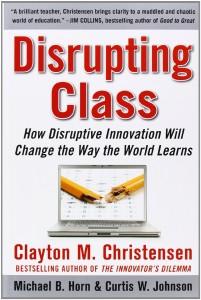
Review: Disrupting Class–How Disruptive Innovation Will Change the Way the World Learns

4 Star, Change & Innovation, Education (General)
0Shares
Amazon Page
Amazon Page

Almost a Three, Solid Four for Americans Only, June 7, 2008

Clayton Christensen

The earlier books on innovation, and especially The Innovator's Dilemma: The Revolutionary Book that Will Change the Way You Do Business (Collins Business Essentials), are better. I strongly recommend that you buy both the above book and this book to have a larger understanding.

The book reads like a Harvard case study fleshed out from 40 pages to 230.

The book has exactly one bottom line: that self-paced instruction using online learning and (this is the cool part) interaction with other languages and cultures (e.g. connect an Arab learning English with an American learning Arabic), is the only way to introduce flexibility. It is this human dimension that carried the book to a four for the US audience only.

Everywhere else in the world they substitute discipline for technology and do quite well. I was troubled by the book/s very narrow focus. There is no consideration in this book, for example, of any of the following (just one example per literature category):

Don't Bother Me Mom–I'm Learning!
Teaching to Transgress: Education as the Practice of Freedom
The Landscape of History: How Historians Map the Past
Fog Facts: Searching for Truth in the Land of Spin
Weapons of Mass Deception: The Uses of Propaganda in Bush's War on Iraq
The Cultural Creatives: How 50 Million People Are Changing the World
Idea Of A University: Philosophy (Notre Dame Series in the Great Books)
Forbidden Knowledge: From Prometheus to Pornography
Collective Intelligence: Creating a Prosperous World at Peace

Flyleaf notes:

+ Need to migrate from monolithic “one size fits all” methods (meaning teacher talks, all listen, or “didactic instruction” to student-centric technologies (my note: rather than human scale and practice)

+ Ages 0-4 are where the child actually learns all the self-confidence and other characteristics needed to succeed down the road (but no real discussion of this and how computers could help, that I saw)

+ Schools are too standardized, need modularity and flexibility (of course this is what the last two generations, and especially Generation 2.0, have been telling us–schools beat the creativity out of kids by the fourth grade, and today the best student drop out of high school rather than sit still for another two years).

+ They give Gardner full credit for discovering multiple intelligences, but they lost me a second time when they focus only on technology as the innovative solution, and fail to properly develop the theme for art, music, theater, social work, apprenticeships, and etcetera. This is a book with one simple message and focus on computers in the US classroom.

+ Schools have four jobs (none of them actively discussed in dollar and cents or program planning terms):
– Preserve democracy, inculcate values
– Provide something for every student
– Keep America competitive (ha. China graduates more HONOR students than we graduate students across the board)
– Eliminate poverty (this is a bit lame, reflecting no appreciation for structured inequalities outside the classroom, as well as political disenfranchisement and banking fraud including red-lining for future development profit).

The authors repeat one of the pearls of wisdom from The Innovators Dilemma (link in first line above), and suggest that those who wish to innovate should go after those not served, citing Apple's genius in offering its early computers as toys for children.

+ Four factors are in favor of innovation (in US schools):
– Computer-based learning keeps improving (see Don't Both Me Mom, link above, that book ends with recommendations for learning programs across the board that are online now)
– All can select pathways (this assumes they have been taught discipline and curiosity someplace along the line)
– Looming teacher shortage (I agree–advanced child care and factory worker angle are history–we need to learn to learn in all places)
– Costs fall significantly as market scales

They spend too much time on three business models, my first hint this might be a Harvard Case Study in book form:
– Solution shops
– Value chains
– Facilitated user networks

I write down from the book “best to combine disruptive business model with disruptive commercial system.” I have no idea what this means. From the poverty literature (see my lists), I received the idea of hybrid organizations, non-profits that catalyzed profits sufficient to attract foreign investment, e.g. low cost nutritious yogurt for children in India). Perhaps that is what they mean, I concluded after reading this twice that maybe they meant go after those not served *and* make it free at first (upgrades can cost).

Harnessing user-generated content is a key idea that may not be noticed. It is in fact the foundation for Web 2.0 and I expect the human factor will continue to scale in importance and the cost of technology declines.

The book ends weakly, with disappointing coverage of the 0-4 age or on educational research needed. They conclude with short messages for various stakeholder groups.

I went back through the book a second time, and would note that there are some very clever useful visualizations in the book, especially Figure 8.2 on page 187, and these alone are worth the price of the book.

In the end for me, the book was worthwhile but could have so much better if they had started with innovation ideas for each of the stake-holder groups they address in ending. The five billion poor are never going to be educated in a classroom, but we *can* give out free cell phones and create two call centers, one in China and one in India, that combine Internet access, Skype free telephone access, and access to a global network of 100 million or more volunteers able to answer any question in any language, free, at the time of it value to the poor person asking the question. THAT is world-class innovation because it creates infinite wealth, and does not limit itself to justifying charter schools because they can buy more computers.

Review: Palestine Inside Out–An Everyday Occupation

5 Star, Atrocities & Genocide, Country/Regional
0Shares

Palestine Inside OutAbsolutely Vital, June 8, 2008

Saree Makdisi

FINAL REVIEW of 15 June 2008

I was moved and outraged by the cancellation of the author's appearance at the Politics & Prose bookstore, which shall never–in consequence–receive my custom. However, the benefit is that the author received space in the Washington Post, and the idiocyof the Politics & Prose management may well have done more good than bad as a result.

I have one word that summarizes my feelings after reading this book:

FURY

The other word, now in vogue in Egypt, is

ENOUGH

The author, an American with both Lebanese and Palestinian heritages, is a scholar of English literature. His book is NOT a polemic. His book is an elegant essay on reality, perhaps the finest work I have ever been privileged to read on this topic, with notes, maps, and statistics of the first order.

The author does NOT seek to damn the Israelis, only to demonstrate, in calm reasoned well-documented language, that the Israelis have become the Nazis of our era, and that their ghettoization of Palestine, with gates, roadblocks, checkpoints, and walls, has become the atrocity of all atrocities in our time.

The opening insight grabs me: like Gandhi, the author sees that Palestine and Israel are one in spirit. He nails the Israeli objective: to occupy as much sacred land as possible, without regard to other peoples, religions, historic rights, or common perceptions of justice.

Gandhi had it right in the first place: the English were idiots to divide India. Similarly, Palestine is a Holy Land for all of us, and if the Israeli's cannot accept Gandhi's vision, then it is time we imposed it on them–there could be no better expenditure of $250 billion a year than in occupying Palestine, knocking down the fascist walls, and restoring the nature of that land to green and goodness, while making Jerusalem an international city similar to the Vatican, but open to all faiths.

I am completely fed up with ideological zealots, both left and right. Israel is clearly the enemy of peace in the Middle East, and an obstacle to progress there. I support the author's view, that a single holy state is needed, one that does not allow the Israelis to be the Gestapo of our time. More to the point, I agree with the author with respect to the inhumanity, immorality, indignity, and fiscally fatal inconvenience being imposed by the Israelis on the Palestinians.

This is where the book shines brightly: it is a meticulou8sly documented, ably presented catalogue of the day to day atrocities committed by the Israeli “police state” against individual Palestinians, families, and small businesses. Kafka could not have done better, but in this case, the author is not making it up. It is real, and it is a genocidal crime against humanity, day after day after day.

I have read many books, and a number on the Middle East, and I can only conclude that this book is totally extraordinary for the following reasons:

1) Multicultural perspective
2) Pragmatic review of the consequences of Israeli Gestapo tactics
3) Fullsome use of statistics to demonstrate Israeli atrocities against “day to day” Palestinian life and families
4) Timely–the era of state terror is over. It is time for We the People, including Palestinians and Jews, to rise up and dismember governments that cheat us, steal from us, and misrepresent us.

For perspectives that completely support the author's views as described in his article (I have posted a summary review of each):

A Power Governments Cannot Suppress
The Unconquerable World: Power, Nonviolence, and the Will of the People
The Looming Tower: Al Qaeda and the Road to 9/11 (Vintage)
Web of Deceit: The History of Western complicity in Iraq, from Churchill to Kennedy to George W. Bush
The Sorrows of Empire: Militarism, Secrecy, and the End of the Republic (American Empire Project)
Failed States: The Abuse of Power and the Assault on Democracy
Democracy Matters: Winning the Fight Against Imperialism
All Rise: Somebodies, Nobodies, and the Politics of Dignity (BK Currents)
Society's Breakthrough!: Releasing Essential Wisdom and Virtue in All the People
The Health of Nations: Society and Law beyond the State

I have also published (free online, in superb low-cost hardback on Amazon), COLLECTIVE INTELLIGENCE: Creating a Prosperous World at Peace, the first in a series from Earth Intelligence Network.

The bottom line of all of the above books is that governments are dysfunctional, corrupt, and cannot deal with complexity and adversity. We the People need to revitalize participatory democracy and stop waging war. Peace and prosperity for all seven billion can be achieved for one third the price we pay now for war. A strategy of peace is a strategy that will create infinite wealth.

It's time for America the Beautiful to be honest and open again. I totally embrace the idea of an international occupation of the Holy Land, with Jerusalem as an international city, the Israeli's stuffed back in their box, and a 50-year occupation that fully integrates Palestine and Israel and Lebanon, while providing both an international and a regional guarantee of dignity and justice for all in this sacred land.

The Israelis have dishonored God, dishonored man, and dishonored faith. They have become a modern holocaust unto themselves. For this they are damned by this author's bearing witness, as a people, absent a public uprising or international intervention.

Review: Your Government Failed You–Breaking the Cycle of National Security Disasters

4 Star, Executive (Partisan Failure, Reform), Security (Including Immigration)
0Shares

Government FailedSelf-Serving Goo–Useful as a Light Primer, June 17, 2008

Richard A. Clarke

Edit of 28 June to acknowledge Retired Reader's comment in favor of the author. I yield to his more direct knowledge. In the larger context, however, all of our civil servants and flag officers failed to do their duty to the Constitution (as did Congress, abdicating on Article 1).

I was hoping for more from this book, but a close examination of the chapters, the notes, and the recommendations quickly established that this book is largely self-serving goo intended to make money and profit from one public moment that I thought was as contrived as Ollie North's shaking his head over the dead Contra during Congressional testimony.

There is NOTHING is this book that has not been known to all of us who actually cared about intelligence reform and who did as much as humanly possible, especially in 1992, to get a National Security Act of 1992 passed, an Act that was destroyed by Senator John Warner (R-VA) and Dick Cheney, then Secretary of Defense.

I find this book especially annoying–to the point of anger–because both Senator Obama and Senator McCain are surrounded by very old dogs long overdue for total exile, and young to middle age staff pukes that are part of the “don't make waves, go along with institutionalized insanity.” The next Administration, regardless of who wins, is going to have no one with a radical iconoclastic brain or an open mind. Voters should take great care in understanding with precision the money and the minds (I use the term loosely) that are “behind” the front running for President.

The idiocy and myopia of Clarke's self-congratulatory and sanctimonious pontification can be readily discerned if one takes a moment to digest a few facts:

1) The world is unconquerable. Get over it.

2) The US is best friends with 42 of 44 dictators, ostensibly because they support the war on terror (a tactic, not an enemy) while sucking our treasury dry in getting arms and training for looting their own commonwealths and repressing their indigenous peoples.

3) There are ten high-level threats to humanity, as identified by LtGen Dr. Brent Scowcroft, USAF (Ret) and other members of the international panel, and I list them here to place the narrow, inflammatory, deceitfully presented Clarke book in perspective–note that terrorism is next to last in this list, and only because of the potential for catastrophic consequences:

— Poverty
— Infectious Disease
— Environmental Degradation
— Inter-State Conflict
— Civil War
— Genocide
— Other Atrocities
— Proliferation
— Terrorism
— Transnational Crime

I won't bother to list the twelve core policies from Agriculture to Water, or the eight demographic challengers that must be wooed with an EarthGame that demonstrates how we can create a prosperous world at peace without repeating the mistakes of the West. Clarke has no clue how to manage a government, balance a budget, articulate reality to We the People, or stand up to those who wear their rank on their foreheads with little else in their brain housing group.

This is the last book I am going to buy by anyone who has served in this or any recent Administration. These are the losers that got us into today's mess–losers who valued their jobs more than the truth, their perks more than our lives.

One cannot have a government that functions when Congress has abdicated its Article 1 authorities; the media is owned by those who would happily consent to 935 lies and 25 documented impeachable offenses by Dick Cheney, and a public that is oblivious to the perils, perils that escape them because the USA is no longer a smart industrious nation.

ENOUGH. It is time to take the 27 secessionist movements seriously, to have a Citizens' Summit (Chicago, on Lincoln's Birthday 2009) and to demand both an Electoral Reform Act and a Smart Nation-Multinational Information Sharing Act. Senators Hagel and Feingold, with their recent call for a commission to draw a new map of the world, are on the right track. Sadly, they are most likely to draw on all these self-congratulating peons who have been happy to be lions to the public, and ants in the White House.

Vastly better more relevant books include:
The Unconquerable World: Power, Nonviolence, and the Will of the People
Breaking the Real Axis of Evil: How to Oust the World's Last Dictators by 2025
Web of Deceit: The History of Western complicity in Iraq, from Churchill to Kennedy to George W. Bush
Vice: Dick Cheney and the Hijacking of the American Presidency
Breach of Trust: How Washington Turns Outsiders Into Insiders
Running on Empty: How the Democratic and Republican Parties Are Bankrupting Our Future and What Americans Can Do About It
The Health of Nations: Society and Law beyond the State

On a positive note, see:
The Cultural Creatives: How 50 Million People Are Changing the World
Society's Breakthrough!: Releasing Essential Wisdom and Virtue in All the People
Collective Intelligence: Creating a Prosperous World at Peace

Our government did not fail us. We failed our Republic, and gave it up for dismemberment. Our government did not fail us. The individuals who served in the highest elected, appointed, and civil service positions failed to honor their Oaths of Office and defense the Constitution against all enemies, domestic and foreign. It takes real guts to speak truth to power, and bet your livelihood on being honorable.

There are only a handful of truly honest and intelligent wizards left, and I can name them on one hand: Zinni, Nye, Oakley, Palmer, Hagel, and if I use the other, Bloomberg, Iacocca, Biden, Schoomaker, Cochran. Everyone else has sold out and betrayed the public trust, and I especially include the 9-11 Commissioners who put the icing on the whitewash cake with their pretentious and deliberately ineffective “road show.” A few, like Gates and Clapper, could be saved, but need to discover their innovative bones and their future sight–current ops is NOT where it's at.

We the People are angry, very angry, and 2009 is going to see our anger in full display. The 2008 election is fradulent for having disenfranchised both third party candidates, and close to half the citizens eligible to vote.

Review: The Back of the Napkin–Solving Problems and Selling Ideas with Pictures

5 Star, Change & Innovation, Decision-Making & Decision-Support
0Shares

NapkinRefreshing, June 17, 2008

Dan Roam

I found this book refreshing, even relaxing, and recommend it as a gift item for any student or adult. Had I been the publisher I would have made the book larger and the visuals (by definition, handwriting and sketches) consequently larger and fresher, but what is offered suffices.

I have been immersed for the past several weeks in some of the most advanced technical automated multi-media, multi-dimensional, geospatially-grounded visualizations with time lines and cross-cutting cultural dimesions, and after all of that, this book not only stands the test of holding my attention, but proves itself equal to the task of challenging what is supposed to be “state of the art.”

A few other books that come to mind that complement this one:
Orbiting the Giant Hairball: A Corporate Fool's Guide to Surviving with Grace
The Attention Economy: Understanding the New Currency of Business
Selling the Invisible: A Field Guide to Modern Marketing
The Design of Dissent: Socially and Politically Driven Graphics
Information Design
Visual Interfaces to Digital Libraries (Lecture Notes in Computer Science)