Phi Beta Iota: Occasionally we stumble across value-added efforts by others who have re-mixed or clipped portions of longer pieces featuring our founder, Robert Steele. Provided for information.


The truth at any cost lowers all other costs — curated by former US spy Robert David Steele.
Phi Beta Iota: Occasionally we stumble across value-added efforts by others who have re-mixed or clipped portions of longer pieces featuring our founder, Robert Steele. Provided for information.
Talk of wealth from minerals by US geologists and Pentagon personnel add to the darkening view that those involved in war, corruption and disregard for the people of Afghanistan (and sacrificed soldiers + more to be sacrificed) will prosper…
+ Opium = supplies 90% of crop source for heroin (president Karzai's brother links to heroin trade)
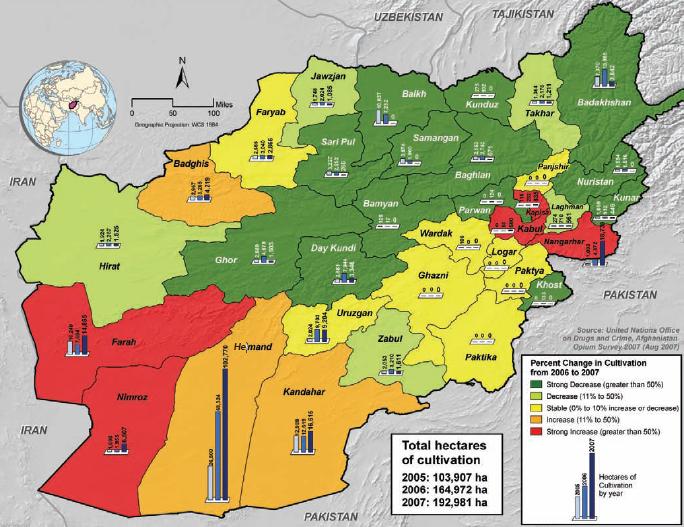
+ Hashish = April 2010 report: Afghanistan Hashish, (not only opium) Declared World’s Largest Producer

+ Minerals = US geologists, Pentagon, Indian firms claim 1-3 trillion dollar value of mineral wealth in Afghanistan
and “Afghanistan's resources could make it the richest mining region on earth” and more importantly, this being ‘known' in 2007. (direct: USGS link) and that the Soviets were aware of mineral wealth during their Afghanistan occupation.
+ Gas Pipeline attempts = 1998 Congressional record related to Unocal/U.S. interests in Central Asia & November 2001 Asia Times article about the book “Bin Laden, la verite interdite (Bin Laden, the forbidden truth)” mentioning the US government's main objective in Afghanistan was to consolidate the position of the Taliban regime to obtain access to the oil and gas reserves in Central Asia.

BBC in 2002 mentions Unocal (Unocal.com is now Chevron.com) and others abandoning pipeline plans due to U.S. missile attacks in 1999. Reports on Enron attempts to make a deal with the Taliban (this 2002 CounterPunch article too). Encyclopedia of Earth also has a short mention of this topic
+ HistoryCommons.org Unocal profile timeline on their Central Asia activities
+ HistoryCommons.org timeline of president Karzai (election organized by the United Nations).
+ Corruption in Afghanistan = Transparency International ranks Afghanistan 179th of 180 countries. And Afghan corruption has doubled since 2007 (IntegrityWatch survey).
Pre-existing plan to attack Taliban before 9/11 was even posted in the BBC and a variation of this was posted at MSNBC in 2002.
“To be truthful about it, there was no way we could have got the public consent to have suddenly launched a campaign on Afghanistan but for what happened on September 11”
-Tony Blair (London Times, 7/17/02)
originally at http://www.timesonline.co.uk/article/0,,2-358038,00.html but no longer at that URL
Related:
+ Karzai Aide in Corruption Inquiry Is Tied to C.I.A. (Aug 26, 2010)
+ Corruption Suspected in Airlift of Billions in Cash From Kabul (WSJ: June 25, 2010)
+ Event Report: 20 Nov 09 NYC, Counterinsurgency–America’s Strategic Burden
+ (Book) Taliban: Militant Islam, Oil and Fundamentalism in Central Asia by Ahmed Rashid – Mar. 1, 2001
+ Afghan War Diaries Explorer
+ UN/World Bank Afghanistan Drug Industry Report (2006)
+ SourceWatch: Opium economy in Afghanistan
+ GlobalSecurity.org: Afghanistan Opium cultivation
+ Wkipedia: Trans-Afghanistan Pipeline
+ Free Book: “The Politics of Heroin in Southeast Asia by Alfred W. McCoy“

Below and at the link is a comprehensive discussion of the emerging grand strategy that is shaping Turkey's foreign initiatives. It deserves careful reading.
Stealth Superpower: How Turkey is chasing China to become the next big thing
by John Feffer
John Feffer is the co-director of Foreign Policy in Focus at the Institute for Policy Studies, writes its regular World Beat column, and co-directs its Balkans Project. His past essays, including those for TomDispatch.com, can be read at his Web site. He would like to thank Alexander Atanasov, Rebecca Azhdam, and Noor Iqbal for research assistance.
Why doesn’t Turkey have a comparable grip on American visions of the future? Characters in science fiction novels don’t speak Turkish. Turkish-language programs are as scarce as hen’s teeth on college campuses. Turkey doesn’t even qualify as part of everyone’s favorite group of up-and-comers, that swinging BRIC quartet of Brazil, Russia, India, and China. Turkey remains stubbornly fixed in Western culture as a backward-looking land of doner kebabs, bazaars, and guest workers.
But take population out of the equation – an admittedly big variable – and Turkey promptly becomes a likely candidate for future superpower. It possesses the 17th top economy in the world and, according to Goldman Sachs, has a good shot at breaking into the top 10 by 2050. Its economic muscle is also well defended: after decades of NATO assistance, the Turkish military is now a regional powerhouse.
Perhaps most importantly, Turkey occupies a vital crossroads between Europe, the Middle East, and Central Asia. A predominantly Muslim democracy atop the ruins of Byzantium, it bridges the Islamic and Judeo-Christian traditions, even as it sits perched at the nexus of energy politics. All roads once led to Rome; today all pipelines seem to lead to Turkey. If superpower status followed the rules of real estate – location, location, location – then Turkey would already be near the top of the heap.
Latest:
The Intelligence Community: New Challenges, Sources, and Methods
Congress and the Intelligence Community: Rebuilding Trust
Intelligence Support to Critical Infrastructure Protection
Enabling a Responsive and Agile Intelligence Enterprise
Information Sharing and Collaboration: Planning, Budgeting, and Execution
The Need to Share: The U.S. Intelligence Community and Law Enforcement
The Last Tactical Mile…and the First
Lessons Learned: Building a New National Intelligence Partnership
Intelligence: The Way Forward
Making Analysis Relevant: It's More than Connecting the Dots
Intelligence and the New National Security Environment
National Security and Horizontal Integration
Iran-Turkey: Iranian President Ahmadi-Nejad said on 13 June that the United States pressured Turkey to abstain on a U.N. Security Council vote approving new sanctions against Iran, instead of voting against the sanctions, Islamic Republic TV reported. Ahmadi-Nejad said Turkish Prime Minister Erdogan told him US President Obama spoke with Erdogan on the telephone requesting Turkey's abstention for 90 minutes. Erdogan also allegedly told Ahmadi-Nejad that Obama said he needed to “do something” about Iran, that he was under pressure from the US Congress and that the sanctions were not strong and would have no effect on Iran.
Comment: If Ahmadi-Nejad's statements are accurate, the Turkish prime minister committed an egregious betrayal of confidence. If the Turkish government does not deny this report, the US is entitled to consider it and treat it as authentic. Turkey is behaving as an ally of Iran more than an ally of the US.
Many commentators have warned about Turkey's aspirations for leadership in the Gaza confrontation. A point overlooked is it is not a Muslim problem, so much as an Arab political problem. Turks are not really welcome except to the extent that they provide diversion from Arab handling of the problem. The same is also true of the Persians in Iran.
Support for HAMAS is not a path to leadership in the Arab world for outsiders. Arab leaders also apparently judge that strong support for HAMAS does not advance their interests.
Iraq: For the record. A one-hour meeting between Iraqi Prime Minister Nouri al-Maliki and al-Iraqiya leader Iyad Allawi on 12 June ended with both parties agreeing to form a national partnership government encompassing all groups, Aswat al-Iraq reported.
This announcement did not state who will be the prime minister.
Saudi Arabia: For the record. On the afternoon of 12 June responded to The Times of London report that the Saudi forces would allow Israeli jets to use Saudi airspace to bomb Iran's nuclear facilities, Jerusalem Post reported. The Saudi Defense Ministry described the report as being baseless and untrue.
Comment: This minor fracas looks like a Saudi reminder to the Persians of what can happen if they continue to intrude in Arab affairs, such as Gaza, or are shown to have developed a nuclear weapons capability. A Saudi denial is required and an important part of the message that will feed Iranian anxiety.

The International Crisis Group is pleased to announce its new premiere annual event in Brussels: The Global Briefing. This two-day exclusive gathering – involving over thirty of Crisis Group’s senior staff and expert Board members – will take you beyond the headlines to examine urgent issues and solutions to the major conflict flashpoints across the globe today. The briefing is targeted at mid-level and senior representatives from governments, multilaterals, think tanks, NGOs, media, foundations, corporations and universities and will be limited to 120 participants. Details on the agenda, format, cost, and registration process will be posted on Crisis Group’s website at the end of June.
Related:
CrisisGroup update: Conflict in Congo
 Excellent May 31, 2010 New Yorker article by William Finnegan called Letter from Mexico, Silver or Lead which is unfortunately only available by subscription only (click here for link to abstract also pasted below) The most telling two words of the article = “state capture.”
ABSTRACT: LETTER FROM MEXICO about La Familia Michoacana and the pervasive power of drug traffickers in the country. Writer visits the hill town of Zitácuaro in the Mexican state of Michoacán. On the morning before his arrival, the dismembered body of a young man was left in the middle of the main intersection. It was an instance of what people call corpse messaging. Usually it involves a mutilated body and a handwritten sign. “Talked too much.” “You get what you deserve.” The corpse’s message—terror—was clear enough and everybody knew who left it: La Familia Michoacana, a crime syndicate whose depredations pervade the life of the region.
Mexico’s president, Felipe Calerón declared war—his metaphor—on the country’s drug traffickers when he took office, in December, 2006. It was a popular move. Although large-scale trafficking had been around for decades, the violence associated with the drug trade had begun to spiral out of control. More than twenty-three thousand people have died since Calderón’s declaration. La Inseguridad, as Mexicans call it, has become engulfing, with drugs sliding far down the list of public concerns, below kidnapping, extortion, torture, unemployment, and simple fear of leaving the house. The big crime syndicates still earn billions from drugs, but they have also diversified profitably. In Michoacán a recent estimate found eight-five per cent of legitimate businesses involved in some way with La Familia. Among Mexico’s drug trafficking organizations, La Familia is the big new kid on the block. It first gained national attention in September, 2006, when five severed heads rolled onto the dance floor at a night club in Uruapan, Michoacán. A senior American official in Mexico City told the writer, “La Familia is looking more and more like an insurgency and less like a cartel.” Mentions one of La Familia’s leaders, Nazario Moreno González, who is also known as El Chayo, or El Más Loco (the Craziest). Writer discusses La Familia’s activities with a local politician and relates how the cartel has, in some places, filled the vacuum created by public distrust of the police and the courts.
The overwhelming growth of organized crime in Mexico in the past decade is often blamed on multiparty democracy. Until 2000, the country was basically a one-party state for seventy-one years under the Institutional Revolutionary Party (PRI). Drug trafficking flourished, but its practitioners enjoyed stable relations with officialdom. Describes how the election of Vicente Fox in 2000 changed the status quo between drug traffickers and government. Writer gives a survey of other significant Mexican drug cartels, including the Sinaloa cartel, and the Zetas, who had previously occupied Michoacán. Tells about the rise of La Familia in 2006 and its expansion into nearby states. Discusses U.S.-Mexico relations and the drug trade. Writer visits a drug-rehabilitation center in Zamora. Describes acts of kidnapping and extortion perpetrated by La Familia.
Links Connecting Police Corruption + Narcosphere + U.S. + North Mexico/Chihuahua/Juarez & Beyond: Continue reading “The Mexico + American Narcosphere (Calling Carlos “Slim” Helu)”

