COMMENT: Ten years the FBI has been watching this do-nothing network and this breaks now? The contempt for Obama appears to have reached uncontrollable levels. Fact #1: the network was launched ten years or more ago. Fact #2: the network has not actually done any spying. The timing of this action appears extraordinarily contemptuous of the White House.
At The Next HOPE, we have three scheduled tracks and one unscheduled one which will result in well over 100 hour long presentations. There are several ways for you to browse the schedules and more on the way.
We’re happy to announce that Julian Assange of Wikileaks will be one of the keynote speakers at The Next HOPE, taking place in New York City July 16-18, 2010.
Over the years and particularly within the past couple of weeks, Julian has demonstrated some of the key values of those in the hacker and journalist community who strive to get real information out of the hands of bureaucracy and cover-ups and share it with the rest of the world, all the while protecting the sources.
Julian has been on the front page of newspapers worldwide with the revelation by Wikileaks of a videotape showing a U.S. Army Apache helicopter attack in Baghdad that killed a dozen people in Baghdad, including two Reuters news staff. Previous attempts at uncovering the tape through the government had failed and its release clearly showed that there was no active firefight between U.S. forces and those killed, as had been maintained in official statements.
“WikiLeaks has probably produced more scoops in its short life than the Washington Post has in the past 30 years.” — The National, November 19, 2009
Recently, he has appeared on “Off The Hook” {listen to the episode} and “The Colbert Report” as well as in just about every newspaper in the world. In addition, Julian has been active in the recently announced project to help make Iceland a journalism haven.
For further updates, please follow @thenexthope on Twitter.
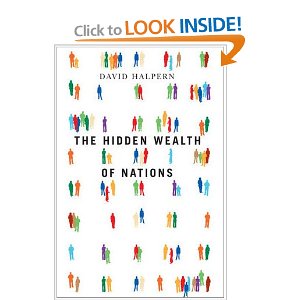
Beyond 5 Stars, a Cornerstone Book, Most Extraordinary Strategic Depth
June 30, 2010
David Halpern
Amazon has recently been allowing longer reviews by inserting a “Read More” line and I hope this entire review is allowed to stand. It will also be posted to Phi Beta Iota the Public Intelligence Blog, with links back to Amazon.
This is a Beyond Five Stars book. Although there is a fine literature emerging on collective intelligence and wealth of networks–and there is an increasingly robust Open Money movement that also includes local communities currencies that keep the wealth local–this book does something no other book has done–it connects economics to humanity and reality and the intangibles in all their forms.
This is not a book about underground economies, barter systems, alternative currencies, etcetera. It is one of the most profoundly relevant, erudite yet easy to read books I have ever read, with a direct bearing on every aspect of human life, and in particular the role of government as it should be.
The author specifically quantifies the financial and intangible value of “getting along” and being part of deep interconnections that define, drive, and develop (or not) the hidden wealth of nations.
The author has provided an extraordinarily well-organized book with a well-presented series of chapters that left me with so many flyleaf notes I fear I will not do the author and the intellectual tour de force he has provided, quite enough justice. Buy and read the book. Tell elected and appointed leaders about it–or send them a copy of this review. [I am stunned that there are no other reviews as this book was published in 2009.]
Major Contribution, Itself a Bit Turgid, Easily in the Dirty Dozen MUST READS
June 30, 2010
Daniel T. Willingham
I struggled a bit with this book, which is ably and logically presented but does not tell a story as much as it delivers a lecture piece by piece. No doubt my own limitations in play, but this book is so important that I would recommend the publisher sponsor a very small round table including the authors or intellectual sponsors of such books as the five below, with a view to creating a new version of this book that is holistic and actionable on a much larger canvas. Without having read these other books listed below, I would not have appreciated this one as much.
Afghanistan: A report by the US Special Inspector General for Afghanistan Reconstruction reported that the United States does not know the capability of the Afghanistan security forces at this time, Reuters reported 28 June, citing U.S. auditors.
According to the report, rankings used to grade Afghan forces varied greatly from one region to another, personnel numbers for the Afghan army were overstated and widespread corruption and drug abuse among Afghan security forces as well as logistics issues plagued the effort to develop independent Afghan forces.
Comment: Open source information on Afghan security force casualties in April and May tends to reinforce the IG report. As US and Western force casualties began to rise, Afghan Army and Police casualties declined, in open source reporting. The data suggested the Afghans were sitting back, letting US and Western forces engage and be engaged by the Taliban, even in joint operations.
Enlistment in the security forces is a jobs program, rather than a career in the Western sense. There is a strong military tradition in Afghanistan, but it resides primarily in the Pashtuns, who are the Taliban today. When Pashtuns enlist, they are infiltrators from the Taliban. The numbers of Afghan army and police personnel are fictitious, but that should not be news.
(FREE): Global Alert Map from the National Association of Radio-Distress Signalling and Infocommunications Emergency and Disaster Information Services (EDIS) Budapest Hungary
(FREE): Canadian/Mexican/USA Border Security Incidents Alert MapSite link (PAY/SUBSCRIPTION for details and no cost for the global overview)
Comment: An interesting idea for an alert map would be for “outbreaks of viral inaccuracies.”



 Beyond 5 Stars, a Cornerstone Book, Most Extraordinary Strategic Depth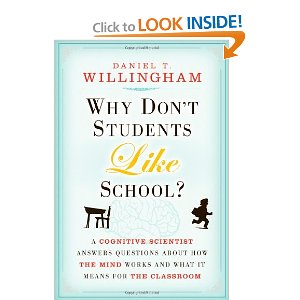
 Major Contribution, Itself a Bit Turgid, Easily in the Dirty Dozen MUST READS

