Journal: ‘Systemic Corruption’–Daunting Challenge in Globalized Era

03 Economy, 07 Other Atrocities, 11 Society, Budgets & Funding, Money, Banks & Concentrated Wealth, Power Behind-the-Scenes/Special Interests
DefDog Recommends...

Around 60 countries worldwide are viewed as “systemically corrupt,” and with globalization multiplying the avenues by which corrupt practices cross borders and span the globe, experts are debating the nature of corruption and how to stop it.

By Robert Coalson for Radio Free Europe/Radio Liberty (RFE/RL)

ISN ETH Zurich 10 December 2010

EXTRACT: Systemic corruption cuts across key state institutions, runs from the top to the bottom, and is fundamentally political in nature. University of Colorado political scientist Christoph Stefes, who studies corruption in post-Soviet countries, says systemic corruption is qualitatively different from traditional notions of case-by-case malfeasance.

EXTRACT: In an interview with RFE/RL in August, Janine Wedel, a professor of public policy at George Mason University and author of Shadow Elite: How The World's New Power Brokers Undermine Democracy, Government, And The Free Market described this “shadow elite” in the United States and other democracies as playing “multiple, overlapping, and not fully disclosed roles” in politics, the media, think tanks, and business.

Continue reading “Journal: ‘Systemic Corruption'–Daunting Challenge in Globalized Era”

Journal: Crowd Fund-Raising Here to Stay….

03 Economy, Civil Society, Collective Intelligence, Commercial Intelligence

Crowd-Fundraising For Causes Adds Up Fast

Phi Beta Iota: Excellent story, with $200,641 being the top funded project so far.  Imagine the day when the public refuses to pay taxes but contributes to what it really wants, cutting out the carpet-bagging intermediaries.  Missile defense and most Pentagon pork would NOT get funded by an informed engaged public.  The game has changed.

Online:

http://www.indiegogo.com

http://www.kickstarter.com

http://spot.us (reporting)

http://pledgie.com

Reference: Innovation From, By, and For Africa

08 Wild Cards, Collective Intelligence, Collective Intelligence, Commercial Intelligence, Communities of Practice, Cultural Intelligence, IO Mapping, IO Sense-Making, Methods & Process, Mobile, Policies, Reform
Jerri Chou

Jerri Chou

Co-Founder All Day Buffet, The Feast, TBD and Lovely Day

Posted: December 10, 2010 12:39 PM

Innovation From, By and For Africa

Collaboration is never easy, particularly when dealing with complex issues like development. So imagine an attempt at galvanizing an entire continent to collaborate for societal change and innovation and the task seems daunting, difficult, if not impossible. Well turns out it's always worth trying and that the results can be greatly inspiring.

I'm talking about The Open Innovation Africa Summit (OIAS) I recently attended, hosted by Nokia, The World Bank and Cap Gemini. Over the course of three days, 200-plus leaders and innovators convened in the Rift Valley of Kenya, Africa to share, connect, and take action toward fostering innovation in and from Africa.

. . . . . . .

Facilitated by Cap Gemini's exploratory process, this remarkable body of people broke out into working groups to focus and dive deep into four specific areas:

  • African Innovation Ecosystem
  • Emerging Business Models for the BoP
  • Human Capital — Education for All
  • Mobile Information Society.

Read rest of article….

Worth a Look: Macrowikinomics Hyper-Transparency

Worth A Look
Don Tapscott
Anthony Williams

Don Tapscott and Anthony Williams

Posted: December 10, 2010 11:08 AM

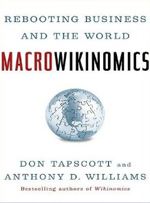
Macrowikinomics: Thriving in the Age of Hyper-Transparency

2010-11-05-51wLr9RFQdL._SL500_AA300_.jpg
Amazon Page

This article is the fifth installment in series to be written by Don Tapscott and Anthony D. Williams, authors of the newly released book Macrowikinomics: Rebooting Business and the World. Mark Parker, the CEO of Nike calls it “A masterpiece. An iconic and defining book for our times.” The Economist says it's a Schumpeterian story of creative Destruction.”

The book argues that many of the institutions of the industrial age have finally come to the end of their lifecycle, and are now being reinvented around a new set of principles and a networked model.

Today's blog looks this new age of WikiLeaks and hyper-transparency

****

The arrest of Julian Assange doesn't change the new reality faced by governments and corporations that have always craved secrecy. Even if Assange is put behind bars for an extended period, others will be happy to take his place. Think of the whack-a-mole game at the arcade. Hit one on the head and another will pop up.

The WikiLeaks episode is just a hint of the world to come. We are entering an era of hyper-transparency. Courtesy of the Internet, people everywhere have at their fingertips the most powerful tool ever for finding out what's really going and informing others. They are gaining unprecedented access to all sorts of information about governments, corporations and other organizations in society.

Read rest of the posting that  summarizes the reality and the value of hyper-transparency.

Reference (2): Income Inequality in the USA

03 Economy, 07 Other Atrocities, 11 Society, Commerce, Commercial Intelligence, Corruption, Cultural Intelligence, Government
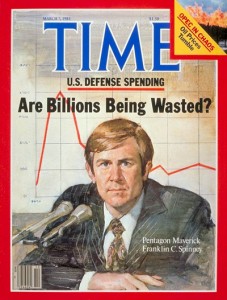
Chuck Spinney Sounds Off

It is becoming increasingly clear that the United States passed through some kind of fork in the economic road in the aftermath of the Vietnam War and has now landed on onto an evolutionary pathway toward some kind of decline.  The questions of what interplay of chance and necessity created the turning movement in the pathway of socio-economic evolution, how enduring that new pathway is, or where it is leading no one can answer; but with the advantage of hindsight, it is becoming empirically clear that most of the adverse economic trends of de-industrialization, deregulation, increasing debt, a collapsing trade balance, the stagnation of real wages, rising income inequality, etc., took a systemic turn for the worse during the five years between 1977 and 1982.

Attached are two reports (in pdf format) on one aspect of anatomy of decline: rising income inequality.  They build on the seminal research (which can be downloaded here and here) of Professors Emanuel Saez's (Univ. of Calif. Berkeley) and Thomas Piketty (Paris School of Economics), which quantified and analyzed the size, nature, and effects of rising income inequality in the United States.

The first report has been  prepared by the democratic majority staff of the Joint Economic Committee in Congress and therefore may be discounted by some as partisan — to those readers inclined to dismiss this report, I suggest that they compare its results of the Saez-Piketty analyses before jumping to any conclusions.

The second report is a non partisan analysis produced by Frank Levy and Peter Temlin of Industrial Performance Center of MIT.

Reference A: The Senate Report (2010)

Reference B:  The MIT Report (2007)

See Also:

Journal: Financial Crime versus Financial Sense

Journal: Simpson-Bowles Deficit Reduction All Lies?

Journal: Rug Mechants & Tax Traps

Reference: Wall Street Does NOT Produce Value

Journal: Deficit Reduction Plan Hoses Everyone BUT the 10% at the Top

noble gold