
David Isenberg (Military): Government Contractors at War

03 Economy, 09 Justice, 10 Security, 11 Society, Commerce, Commercial Intelligence, Corruption, IO Deeds of War, Military, Officers Call
David Isenberg

War and Private Contractors: Can't Live with Them, Can't Live Without Them

David Isenberg

Huffington Post, 9/2/2011

EXTRACT:

The number of Department of Defense (Defense), Department of State (State), and the U.S. Agency for International Development (USAID) contractor employees in Iraq and Afghanistan has varied, but exceeded 260,000 in 2010. The contractor employee count has at times surpassed the number of U.S. military personnel in the two countries.

. . . . . . .

Although contract activity has taken on increasing importance, the resources devoted to managing contracts and contractors have not kept pace. The number of contract specialists — an occupation critical to the execution of contingency contracting — rose by only 3 percent government-wide between 1992 and 2009, despite an enormous increase in contracting activity during that period.

That last point is a diplomatic way of saying that even after 10 years of extensive use of contractors to enable and facilitate military, diplomatic and reconstruction operations, government still doesn't know how, or even worse, doesn't care, to carry out due diligence on the activities it contracts out.

. . . . . . .

Also, speaking of big firms, pause to consider the similarities between large PMCs and the financial services industry. The CWC did and found, “Because the U.S. government relies on only a handful of contractors to provide most of the support for the contingencies in Iraq and Afghanistan, this reliance potentially presents a situation analogous to the U.S. financial industry's “too big to fail” calamity.”

Read full article including list of top contractors.

Phi Beta Iota:  So much for Bob Gates doing anything useful at DoD.  He combined “civility” with maintenance of the status quo, ignoring both the fact that the US Government is incapable of contracting at scale, and the fact that 4% of the force takes 80% of the casualties and gets 1% of the budget.  Shame everlasting.  Defense is long past due for a Secretary of Defense able to combine intelligence with integrity….but that needs a restoration of integrity to the electoral process and the governance process.

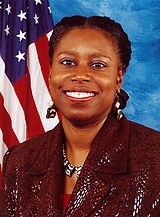
Cynthia McKinney: Don DeBar With Truth on Libya

03 Economy, 04 Inter-State Conflict, 05 Civil War, 06 Genocide, 07 Other Atrocities, 08 Wild Cards, 09 Terrorism, 10 Security, 10 Transnational Crime, 11 Society, Articles & Chapters, Civil Society, Commerce, Corruption, Cultural Intelligence, Government, IO Deeds of War, Media, Military
Cynthia McKinney

Don DeBar has been instrumental in sharing the truth on Libya.  Here is his latest interview.

BSNews interviews Don DeBar

Don DeBar is an independent journalist who has recently travelled to Libya before the NATO invasion. BSNews emailed him some questions regarding the conflict.

1/  We know that the intervention in Libya was not humanitarian – some suggest oil others, including Ellen Brown, have suggested it was more to do with money and central banking. Do you have a theory on the real reasons for the invasion?

Don DeBar, Morning News Headlines Editor-in-Exile

There is first and foremost the geopolitical consideration – that the US and EU are determined to take direct control of Africa's resources. Libya was – and, thus far, remains – the single largest impediment to this effort, with Gadhaffi personally being the single human being who is the largest obstacle.

Begin with the fact that one of Gadhaffi's first acts after deposing the western puppet King Idris was to evict the US from its only military base on the continent. This act, taken four decades ago, left the US in the position of having to base its AFRICOM force, established in October, 2008, in Stuttgart, Germany, laying bare the nature of this “alliance.”

More immediately, in terms of geopolitical irritations, Libya has heavily invested in African infrastructure, such as telecom system construction, an African satellite, and other communications projects. The revenue which now stays in Africa – hundreds of millions of dollars a month – comes directly out of the pockets of US, EU and other global telecom companies, a trend that is in exactly the opposite direction sought by US/EU power elites.

Even more to the point is that Gadhaffi has been pushing for – and funding the enabling of – an independent and united African economic entity that could rival the EU and other global economic powers. Among the tasks underway at the time of the invasion was the creation of an African sovereign bank and an African currency printed in Africa under African control. This would wrest control over African resources from the French and others whose power to print African currency translates into economic and, ultimately, political control.

One more extremely important point: Libya since 1969 has offered an economic and political model to Africans and others suffering colonial control that stands in stark contrast to the models of such as Nigeria and South Africa. The country's natural wealth has been directly applied to the economic needs of the population, with the result that every Libyan owns their home – without mortgage encumbrance or rent or property tax burdens; a first-rate health care system was built and operated that is free and available to all; a first-rate education system was built and operated through the post-graduate level that is free and available to all; the oil revenues are distributed to the people in the form of a monthly stipend in the thousands of dollars; and public infrastructure – such as roads, water systems, electricity, etc., were constructed and operated efficiently and made available to all.

So the threat is a.) a plan to democratize control of Africa's wealth and b.) a successful example of doing this in Libya, demonstrating that it is possible and offering a “how-to” model to the people of the continent. A serious threat to colonial ambition that is perhaps unmatched in the world at present.

Event: 13 Sep 0930 DC State of the Future 2011 Launch

Earth Intelligence

For those in the Washington, DC area, you are invited to the Washington launch of the 2011 State of the Future at the Woodrow Wilson International Center for Scholars at 9 AM (breakfast) September 13th with discussions 9:30 – 10:30 AM:

http://www.wilsoncenter.org/event/report-release-2011-state-the-future

For those outside the Washington, DC area, please forward this to you colleagues in the DC area.

AND… for those outside the DC area, the event will be taped and available on line at http://www.wilsoncenter.org several days later.

DefDog: Skilluminati Invocation–Manifesto for Action

07 Other Atrocities, Advanced Cyber/IO, Blog Wisdom, Civil Society, Counter-Oppression/Counter-Dictatorship Practices, Cultural Intelligence, Ethics
DefDog

Disgust is gaining traction…..

An Invocation Against the Inevitable

1 September 2011

“There is absolutely no inevitability as long as there is a willingness to contemplate what is happening.” – McLuhan

Skilluminati Research has been a very cynical project…until now. Change of policy: there are no sufficient excuses for inaction. There is no point to all this research if I'm not capable of using it for something real. What interests me now is Synthesis. How can we build a politics that takes all of this horrible shit for granted and still provides a master plan?

In 2011, Hope and Change are hollow brand names and representative Democracy itself is hollowed out, broken for decades. Distrust of government has gone from a fringe position to a bipartisan consensus. If you think all that adds up to a “Now is the Time” pep talk, you're not hearing me at all. We are more fucked than ever. The situation is not “ripe,” it is fundamentally out of control and irreversible. …so what then?

The Machine is bigger than you can think. It snakes through every aspect of your life, it networks an entire planet of political powerbrokers, banking cartels, intelligence agencies, arms dealers, cult leaders, secret societies and royal families. From cynical operatives to true believers, from corporate boardrooms to secret bases, the Machine is too vast an ecosystem to model accurately. Both in human terms and hardware specs, much of the infrastructure is classified — and that's just the stuff the military is doing. Every serious effort to reform this system to date has gotten nowhere. …so what now?

Read full manifesto….

Safety copy (text only) below the line.

Continue reading “DefDog: Skilluminati Invocation–Manifesto for Action”

Chuck Spinney: Remaking the Arab State w/o the US

08 Wild Cards, Civil Society, Counter-Oppression/Counter-Dictatorship Practices, Cultural Intelligence, Government, Peace Intelligence
Chuck Spinney

A good summary of the Arab Revolt and explanation of why the West ought to let Arabs sort out things for themselves

Remaking the Arab State

by Patrick Seale

Agence Global, 30 Aug 2011

The Arabs face a formidable task — nothing less than rebuilding the entire state structure and system of government in countries as diverse as Tunisia and Egypt, Libya and Yemen. In Syria, too, the Ba‘thist state is almost certainly doomed, whether President Bashar al-Asad survives at its head or not. It has lasted 48 years, ever since the Ba‘th party seized power in 1963. If it is to outlast the present uprising, it would need to be profoundly recast and remade in order to accommodate several neglected forces in Syrian society — sects, ethnicities, tribes, disgruntled intellectuals and the rural poor among others.

What form of government will replace the rickety Arab structures, some of which have already been brought down it, while others are still fighting to survive? What state structures will replace the old autocracies, with their bankrupt one-party rule and their all-powerful military and security apparatus? This is the key question posed by events not only in Damascus, but also in Tunis, Cairo, Tripoli and Sanaa. This is the great unknown.

The monarchies of the Arabian Peninsula (with the exception of Bahrain) stand out as islands of relative stability in the current upheaval — possibly the most radical since the fall of the Ottoman Empire. They are protected by their oil wealth, but not by that alone.

Modernised and reformed over the years, their traditional systems of government have, in most cases, proved responsive to the needs of their citizens. They have provided reasonably good governance, whether in the United Arab Emirates or Qatar, in Kuwait or Oman, or indeed in Saudi Arabia itself, the dominant power in the Peninsula. Good governance would seem to be the secret of their continued legitimacy.

We all know — because it has been said so often — that the revolutionaries of the Arab Spring want social justice, jobs, freedom from police brutality and arbitrary arrest, a chance to advance in life, better prospects for themselves and their families, a fairer distribution of their country’s resources, an end to corruption by a privileged elite, dignity and respect from their rulers. In a word, good governance.

That, above all, is what the Arab world would seem to want, rather than democracy on the Western model, of which the Arabs have had little experience; and for which they have little appetite, if it means any form of Western tutelage.

Read rest of article….

noble gold