Worth a Look: Citizen Science

Collective Intelligence, Commercial Intelligence, Communities of Practice, Earth Intelligence, Key Players, Mobile, Policies, Real Time, Threats, Worth A Look

Wikipedia Page

Citizen science is a term used for projects or ongoing program of scientific work in which individual volunteers or networks of volunteers, many of whom may have no specific scientific training, perform or manage research-related tasks such as observation, measurement or computation.

The use of citizen-science networks often allows scientists to accomplish research objectives more feasibly than would otherwise be possible. In addition, these projects aim to promote public engagement with the research, as well as with science in general. Some programs provide materials specifically for use by primary or secondary school students. As such, citizen science is one approach to informal science education.

Phi Beta Iota: Citizen Science is in its infancy, but with the emergence of open source software and open source intelligence combinations such as represented by SourceMap.org, Citizen Intelligence and Citizen Counterintelligence are sure to be coming along soon….and if combined with multi-lingual networks such as provided by Telelanguage, a global multinational citizen information-sharing and sense-making grid can be created that implements the Swedish vision of M4IS2: Multinational, Multiagency, Multidisciplinary, Multidomain Information-Sharing and Sense-Making.  This has enormous implications for both real-time science and real-time warning as well as real-time Emergency Action.

Journal: What Al Qaeda Et Al Can and Cannot Do

08 Wild Cards, 09 Terrorism, Cultural Intelligence, Government, Military, Peace Intelligence

[gerecht]The Meaning Of Al Qaeda's Double Agent:  The jihadists are showing impressive counterintelligence ability that the CIA seems to have underestimated.

Wall Street Journal Reuel Marc Gerecht January 8, 2010  [safety copy of entire piece below the fold]

Amid the Hysteria, A Look at What al-Qaeda Can't Do

TIME Magazine By Peter Beinart Monday, Jan. 18, 2010

Wanted: Dead': With little public debate or notice, the Obama administration has significantly stepped up its targeted assassinations.

National Journal By James Kitfield Saturday, Jan. 9, 2010 [Subscription]

Hidden behind walls of top-secret classification, senior U.S. government officials meet in what is essentially a star chamber to decide which enemies of the state to target for assassination. There is no single master list, but all names pass through an elaborate, multi-agency vetting process that ends at the level of the National Security Council and ultimately requires presidential approval.

Overwhelm. Divide. Spread. Bankrupt. Diversify: Al Qaeda's new grand strategy

Washington Post By Bruce Hoffman  January 10, 2010

Human Rights Gagged MI5 Over Abdulmutallab: Intelligence on Muslim radicals cannot be passed to the US because of privacy fears

London Sunday Times By David Leppard and Hala Jaber January 10, 2010

Continue reading “Journal: What Al Qaeda Et Al Can and Cannot Do”

Worth a Look: SourceMap (Supply Chain)

Commercial Intelligence, Earth Intelligence, Worth A Look
SourceMap Home Page

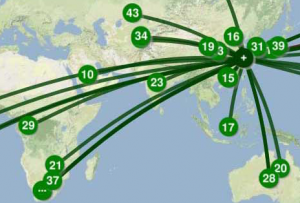
Sourcemap is a platform that enables users to contribute to and share ideas about sustainability. Whether you are inviting people to an event, buying ingredients for a recipe, or designing a product, your choices have a significant impact. Some decisions have impacts that stretch across the world, whereas others are entirely regional. Understanding the reach of our actions and facilitating positive change is fundamental to improving economic, social, and environmental conditions.

With a tip of the hat toleonardo bonanni doctoral candidate at the MIT Media Lab, a designer and an artist. He teaches the MIT class Future Craft: Radical Sustainability in Product Design on the social aspects of mass design. You can also find his blog, photos, and videos. To find out more and for contact information, download his resume.

Journal: CIA as Poster Child For Dull US Intelligence

08 Wild Cards, 09 Terrorism, 10 Security, Cultural Intelligence, Ethics, Government, Law Enforcement, Military, Peace Intelligence

Terrorism Fight Requires Intelligence Accountability (Senator John Kerry)

Frankly, we don’t need more commissions or bureaucracies. We do need intelligence professionals and their managers who are committed to a new culture of quality, cooperation, and accountability.

Two attacks highlight counterterrorism's bureaucratic bog (David Ignatius)

Talking to veteran counterterrorism officers, I hear a common theme that unites these two disastrous lapses: The CIA has adopted bureaucratic procedures that, while intended to avoid mistakes, may actually heighten the risks. In the words of one CIA veteran, “You have a system that is overwhelmed.”

But those standard agent-handling rules have been violated routinely, in Iraq and now Afghanistan, because senior officials have concluded it's too dangerous outside the wire. “At least 90 percent of all agent meetings are conducted on bases,” estimates one CIA veteran. The agency wants to protect its people, understandably — but the system actually works to increase vulnerability.

The Khost tragedy shows that the CIA needs to take the counterintelligence threat from al-Qaeda more seriously. Intelligence reports over the past year have warned that groups linked with al-Qaeda were sending double agents to penetrate CIA bases in Afghanistan.

The brave CIA officers serving overseas deserve a better system than this.

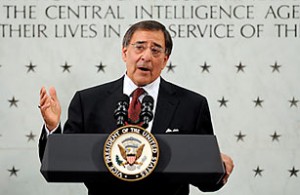
CIA Director Leon Panetta should use these searing events to foster a culture of initiative and accountability at a CIA that wants to do the job — but that needs leadership and reform.

Holes For The CIA To Close (David Ignatius)

A replay of long-standing criticisms of CIA's short-tours, lack of memory, refusal to take counterintelligence seriously, and general ineptitude outside the Embassy cocktail circuits.

Confusion Grows Over How Bomber Infiltrated CIA Base (Los Angeles Times)

A CIA inquiry is focused on two main questions: why the bomber was not more thoroughly screened and where he received the training and explosives used in the attack.

Deja Vu Stories

U.S. Saw A Path To Qaeda Chiefs Before Bombing

Suicide bomber who attacked CIA post in Afghanistan was trusted informant from Jordan

Journal: CIA’s Poor Tradecraft AND Poor Management

05 Civil War, 08 Wild Cards, 10 Security, Cultural Intelligence, Ethics, Government, Methods & Process

Full Story Online

The CIA is proud to be on the front lines against al-Qaeda

By Leon Panetta

Sunday, January 10, 2010; A13

. . . . . . .

We have found no consolation, however, in public commentary suggesting that those who gave their lives somehow brought it upon themselves because of “poor tradecraft.” That's like saying Marines who die in a firefight brought it upon themselves because they have poor war-fighting skills.

. . . . . . .

From: Robert Steele, KR-594

To: Leon Panetta

Subj: Getting in touch with reality

As someone who scored in the top ten of their 65 person clandestine Ops I and Ops II training, and then went on to achieve five times the regional recruiting average across three tours focused on terrorists and extremists, ultimately serving in three of the four Directorates and being selected for the CIA Mid-Career Course; and as someone who has actually served in the US Marine Corps and in zones of conflict, I beg to differ with your Washington Post Op-Ed.

A number of us have tried to help you, from the day we intuited your selection, a selection I applauded because of your unique background as both a Chief of Staff in the White House (knowing what the President needed to know) and as a Director of the Office of Management and Budget (understanding means in relation to ways and ends).

The death of so many CIA personnel was a failure of tradecraft at multiple levels and also, I am sorry to have to point out, a failure of management. Were you to demand an honest report of the skills and experience of all those associated with this incident, you would learn two things:

Continue reading “Journal: CIA's Poor Tradecraft AND Poor Management”

Journal: The Chinese Crash or the Chinese Solution?

Cultural Intelligence, Gift Intelligence, Key Players, Peace Intelligence
The New York Times
Full Story Online

Contrarian Investor Sees Economic Crash in China

by David Barboza   Friday, January 8, 2010

James S. Chanos built one of the largest fortunes on Wall Street by foreseeing the collapse of Enron and other highflying companies whose stories were too good to be true.

Now Mr. Chanos, a wealthy hedge fund investor, is working to bust the myth of the biggest conglomerate of all: China Inc.

As most of the world bets on China to help lift the global economy out of recession, Mr. Chanos is warning that China's hyperstimulated economy is headed for a crash, rather than the sustained boom that most economists predict. Its surging real estate sector, buoyed by a flood of speculative capital, looks like “Dubai times 1,000 — or worse,” he frets. He even suspects that Beijing is cooking its books, faking, among other things, its eye-popping growth rates of more than 8 percent.

Phi Beta Iota: We agree with Minister Mentor Lee Kuan Yew of Singapore when he says that demography, not democracy, will shape the future.  While the other seven demographic powers (Brazil, India, Indonesia, Iran, Russia, Venezuela, and Wild Cards such as Turkey) will be extraordinarily influential as well, China is the only one that is:

Continue reading “Journal: The Chinese Crash or the Chinese Solution?”

Journal: Iran, Sacred Nukes, & US Ignorance

05 Energy, 05 Iran, 08 Proliferation, 10 Security, 11 Society, Cultural Intelligence

Full Story Online

When Nukes Become Sacred

The psychology behind Iranian support for the country's nuclear program

Newsweek, Sharon Bagley, 8 January 2010

With sacred values, this cost-benefit calculus is turned on its head, explains anthropologist Scott Atran of the National Center for Scientific Research in Paris, who has studied Islamic terrorist groups. When Atran asked Palestinians if they would be willing to give up their claims to Jerusalem (a sacred value) in return for their own state, most said no, and—here is where the topsy-turvy thinking caused by sacred values came in—when he then asked if they would give up Jerusalem if the U.S. and Europe also gave every Palestinian family substantial financial assistance for a year, even fewer said yes. That is in sharp contrast to the rational-actor perspective that has long dominated diplomacy (and economics).

Continue reading “Journal: Iran, Sacred Nukes, & US Ignorance”