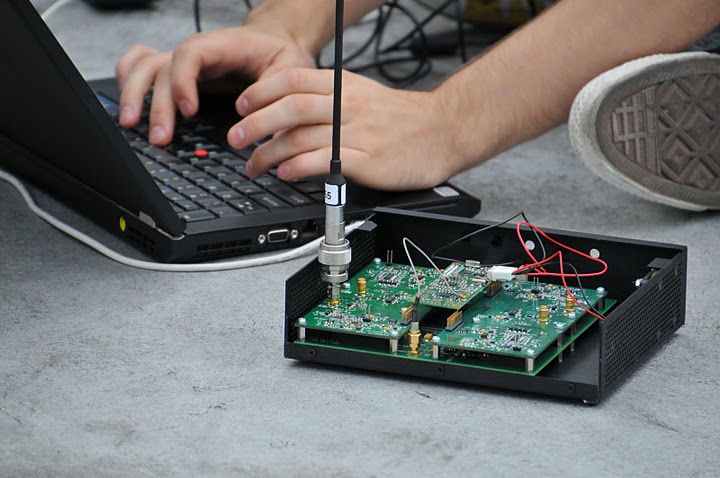
MoblleActive.org recently had the opportunity to test an off-the-grid GSM base station. Kurtis Heimerl presented The Village Base Station (VBTS), (link is a PDF) a low-power means of providing mobile network service without grid power or network infrastructure.
Phi Beta Iota: As best we can tell, OpenBTS is central–vital–to the achievement of Open Society as well as Open Government, and is the only way that we can reasonably scale free to very low cost Internet access to the five billion poor.
The Wall Street crew that wants to cut your Social Security and Medicare benefits are sensing that victory is in sight. They have managed to knock jobs completely off the agenda and have made deficit reduction the near exclusive focus of economic policy in Washington. They are now setting the stage to have the Congressional “super committee” produce a deal that will mean large cuts in both programs.
The backdrop for these cuts is that the country is in crisis and that we have no choice. A central part of this story is that the stock market crashed last week in response to the Standard & Poor's (S&P) downgrade of US government debt. The Wall Street crew and their allies in the media and Congress will tell the country that if we don't have the cuts in Social Security and Medicare demanded by S&P then we run the risk of further downgrades. This raises the prospect of further market panics and the complete wreckage of the economy.
This story has as much credibility as John Edwards' tales of marital bliss during his presidential campaign.
Phi Beta Iota: A couple of things are clear, the first being that Barack Obama is not in charge of anything, the second being that New York–Wall Street, Goldman Sachs, the Koch Brothers–is. From the Tea Party funded and manipulated by the Koch brothers, to the idiotic lack of intellent analysis from the newspapers and broadcast stage, what we have here is theater. The truth is nowhere to be found between New York and Washington.
I am quite excited about the progress that has been made in various citizen political participation proposals. All of these clearly have tremendous potential and the articulations of their rationales are becoming quite compelling.
With such innovative deliberative democracy proposals, I want them to be thought through well beforehand, engaging a variety of authorities and perspectives in a search of answers that can embrace that diversity with greater wisdom than otherwise. I am especially interested in finding out people's concerns and what solutions appear when we seriously seek to understand and address those concerns (this being a basic principle of creative consensus processes and of collective wisdom in general). I consider this vital if we seek to inject sane, powerful initiatives into the kind of toxic political environment that exists today. There is just too much at stake to fail simply because we didn't explore our design issues sufficiently ahead of time.
With that intention in mind, I have the following twelve thoughts and inquiries to offer. I would love to be part of a serious inquiry into questions like these, both in person and online.
Portland Oregon is working on revising zoning regulations regarding urban market farms. Early debate indicates that the protection of traditional approaches to real-estate value (ornamental residences, noise/traffic abatement, etc.) is the priority. Given the scale of the economic crisis that is already upon us, this approach is completely broken. They should be focused on building a simple platform for accelerating a local food economy.
Phi Beta Iota: Portland in particular, and the Pacific Northwest generally, keep popping up as bastions of ethical sanity. The combination of intelligence and integrity visible there is quite heartening.
The Tsunami or the Earthquake Preceding the Tsunami?????
Below is another pathbreaking report in Counterpunch on the Fukushima question. Fukushima may be off the front pages, but the catastrophe is still generating serious questions with profound ramifications. In a few days, I will forward another blaster will showing how the some of these ramifications this catastrophe reaching into the good ole USA. In the meantime, I urge you to read this report.
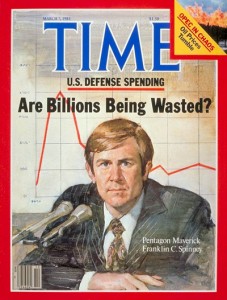
Chuck Spinney
Nice, France
The Fukushima Daiichi Reactors Were in Meltdown After the Earthquake, But Before the Tsnumami Hit
It is one of the mysteries of Japan’s ongoing nuclear crisis: How much damage did the March 11 earthquake do to the Fukushima Daiichi reactors before the tsunami hit? The stakes are high: If the quake structurally compromised the plant and the safety of its nuclear fuel, then every other similar reactor in Japan will have to be reviewed and possibly shut down. With virtually all of Japan’s 54 reactors either offline (35) or scheduled for shutdown by next April, the issue of structural safety looms over the decision to restart every one in the months and years after.
. . . . . .
Problems with the fractured, deteriorating, poorly repaired pipes and the cooling system had been pointed out for years. In 2002, whistleblower allegations that TEPCO had deliberately falsified safety records came to light and the company was forced to shut down all of its reactors and inspect them, including the Fukushima Daiichi Power Plant. Sugaoka Kei, a General Electric on-site inspector first notified Japan’s nuclear watchdog, Nuclear Industrial Safety Agency (NISA) in June of 2000. The government of Japan took two years to address the problem, then colluded in covering it up — and gave the name of the whistleblower to TEPCO.
Synchronized action is a powerful form of resistance against repressive regimes. Even if the action itself is harmless, like walking, meditation or worship, the public synchrony of that action by a number of individuals can threaten an authoritarian state. To be sure, synchronized public action demonstrates independency which may undermine state propaganda, reverse information cascades and thus the shared perception that the regime is both in control and unchallenged.
Great article. Starts with Citigroup's Plutonomy report (the report has been ruthlessly removed from the Web by Citi's lawyers) — wherein they show that, in the US, the middle class doesn't really exist. In reality, there are only two groups, a small percentage of rich households (that drive all consumption and investment) and the rest (that live hand to mouth). The last time this happened (in the 1920s) a global depression was the inevitable result
The Great Recession has accelerated the hollowing-out of the American middle class. And it has illuminated the widening divide between most of America and the super-rich. Both developments herald grave consequences. Here is how we can bridge the gap between us.