Beyond Data Monitoring – Achieving the Sustainability Development Goals Through Intelligence (Decision-Support) Integrating Holistic Analytics, True Cost Economics, and Open Source Everything
BACKGROUND RESEARCH PAPER
Submitted to the High Level Panel on the Post-2015 Development Agenda
Translatable Full Text Below the Fold
배 아래에 번역 전체 텍스트
Traduzível texto completo abaixo da dobra
النص الكامل للترجمة تحت طية
翻译全文下方折
Diterjemahkan Full Text bawah Lipat
ਫੋਲਡ ਹੇਠ ਅਨੁਵਾਦ ਪੂਰਾ ਪਾਠ
Перевести Полный текст ниже раза
University wants scientists to make their research open access and resign from publications that keep articles behind paywalls
Exasperated by rising subscription costs charged by academic publishers, Harvard University has encouraged its faculty members to make their research freely available through open access journals and to resign from publications that keep articles behind paywalls.
Dmitry Orlov on Ebola and the Five Stages of Collapse
Orlov is one of the best futurists writing on society collapse, having witnessed and personally experienced the collapse of the Soviet Union. His book, Reinventing Collapse: The Soviet Experience and American Prospects http://www.amazon.com/Reinventing-Collapse-Experience-American-Prospects/dp/0865716854, is one of the best ever written in the collapse genre and necessary reading for anyone who is interested in this theme.
Scott W. Carmichael, a recently retired counterintelligence investigator with the Defense Intelligence Agency, has accused Donald Krapohl, Special Assistant to the Chief, National Center for Credibility Assessment (NCCA) and longtime editor of the American Polygraph Association quarterly, Polygraph, of violating the Espionage Act of 1917. In an e-mail message to retired FBI polygraph examiner Robert Drdak dated 3 September 2014, a copy of which was received by AntiPolygraph.org, Carmichael alleges that Krapohl manipulated Drdak in an elaborate scheme to funnel classified information about polygraph countermeasures to the government of Singapore.
Carmichael theorizes that Krapohl encouraged Drdak to write a paper on polygraph countermeasures that was ultimately based on a classified study conducted in 1994 by Dr. Gordon H. Barland, then a researcher with the Department of Defense Polygraph Institute (now the NCCA), and to sell that paper to the Lafayette Instrument Company, knowing that the information in the paper would make its way to the Singaporean government.
Carmichael concludes his e-mail by urging Drdak to “[call] the FBI before they begin to look at you as a suspect.”
Carmichael played a key role in the investigation of Cuban spy Ana Belen Montes (who incidentally beat the polygraph), about which he has authored a book, True Believer.
The full text of Carmichael’s e-mail to retired FBI polygraph examiner Robert Drdak (with one redaction) follows:
From an expert observer upset with CDC's betrayal of the public trust. We believe the US Government should nationalize the patents on Ebola, and radically over-haul CDC as well. The nationalization of the atomic bomb patents provides a precedent.
The U.S. Centers for Disease Control and Prevention (CDC) guidelines published for health care professionals attending to an Ebola, or suspected Ebola, patient, in a hospital or other healthcare setting, recommends a minimum of an N-95 mask during aerosol generating procedures [emphasis added] such as intubation.This recommendation may be dangerously inadequate and raises the specter of not only recklessly endangering health care workers, but also the public at large, undermining confidence in the health care system.
In the 24 hours since I wrote that opening paragraph, and submitted the first version of this article for publication, the Washington Post reported that a health care worker who attended to the Ebola patient in Dallas has since tested positive for Ebola. As further indictment of the dangerous insufficiency of the CDC guidelines, the article had this to say:
Google Inc.’s 2013 book The New Digital Age, authored by Google chairman Eric Schmidt and Google Ideas director Jared Cohen, was showered with praise by many, but attacked in a review by Julian Assange for the New York Times, where it is described as a “love song” from Google to the US state. Also addressed in Assange’s subsequent book When Google Met WikiLeaks, Google’s book makes an unconvincing effort to depict the internet as a double-edged sword, both empowering (p. 6) and threatening our lives (p. 7).
The popular internet, Google argues, might help defeat the US’s “authoritarian” opponents, but also threatens to aid “terrorism” (p. 9) (Google’s word for cypherpunks and anti-statists) against the US itself. Thus, Google argues, the internet is potentially disruptive and harmful to US national security priorities – as is the possibility of individuals being personally empowered by technology. Google laments the “anarchy” being caused by the “agents of chaos”: generations of tech-savvy individuals armed with modern personal technologies (p. 46-47, 59, 207-208). Anonymous and other clans of hackers, we are told, “might as well be terrorists” (p. 151-182).
This is fairly consistent with the ideas of former President George W. Bush, who famously warned graduates at West Point that the gravest danger to the United States is “at the crossroads of radicalism and technology.” This point of view, alongside its knuckle-dragging obsession with defeating “rogue states” and “terrorists”, places Google’s apparent value-system unambiguously within the neoconservative ideological camp. The case for “guiding” the path of the internet (p. 11, 36-39), in particular, sounds equally shy and unsustainable as the authoritarian regimes (p. 6) Google claims to oppose.
If you still have any question as to whether the health of the population takes precedence over oil company profits this report on the situation in California should settle it. Profit is much more important than the health of families particularly children. That this is happening in a state with the drought problems California has is all the more amazing.
After California state regulators shut down 11 fracking wastewater injection wells last July over concerns that the wastewater might have contaminated aquifers used for drinking water and farm irrigation, the EPA ordered a report within 60 days.
It was revealed yesterday that the California State Water Resources Board has sent a letter to the EPA confirming that at least nine of those sites were in fact dumping wastewater contaminated with fracking fluids and other pollutants into aquifers protected by state law and the federal Safe Drinking Water Act.
The letter, a copy of which was obtained by the Center for Biological Diversity, reveals that nearly 3 billion gallons of wastewater were illegally injected into central California aquifers and that half of the water samples collected at the 8 water supply wells tested near the injection sites have high levels of dangerous chemicals such as arsenic, a known carcinogen that can also weaken the human immune system, and thallium, a toxin used in rat poison.

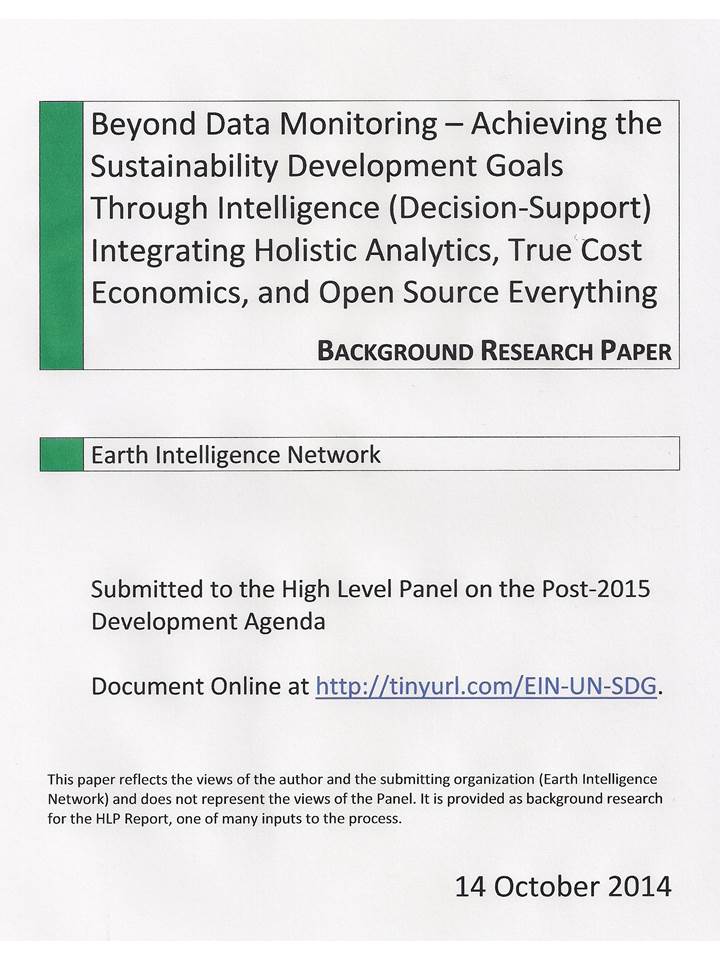 SHORT URL: http://tinyurl.com/EIN-UN-SDG